


Enterprise leaders who want to drive real pipeline should build a hybrid visibility stack anchored in citable IP, structured partnership channels, targeted ABM, owned media optimized for SEO/AEO/GEO, and creator or channel-agent programs. Start with one concrete action: run a short sprint to produce one citable asset and launch one partner pilot simultaneously.
A few grounding points worth keeping front of mind as you plan:
- Enterprise buying committees typically include multiple stakeholders, which means single-channel visibility rarely reaches everyone who influences the final decision.
- Citable IP — proprietary frameworks, original data, and named methodologies — compounds in value because AI models and industry publications preferentially surface original sources, turning content into a durable authority signal.
- Pre-entry visibility programs built several months before market entry warm target accounts through role-specific messaging before buyers enter formal evaluation cycles.
- Kontrol Media Consultancy applies this exact mix across partnership builds, retail/commerce media networks, and citable IP programs for mid-market and enterprise clients.
Table of Contents
- The major types of market visibility strategies, mapped to enterprise goals
- How to match each strategy to your objective and timeline
- How to choose the right visibility mix and evaluate partners
- Building citable IP and partnership machines that compound over time
- Measurement and governance: connecting visibility to revenue
- How Kontrol Media applies these strategies: three brief examples
- Key Takeaways
- Why partnerships plus citable IP is the right bet for enterprise visibility
- What Kontrol Media can do for your visibility program
- Useful sources and further reading
The major types of market visibility strategies, mapped to enterprise goals
Each strategy type below serves a distinct purpose. The right mix depends on your objective, buyer complexity, and how quickly you need results.
- Owned media and SEO/AEO/GEO. Publish answer-first content optimized for search, AI answer engines, and generative platforms. Best for long-term discoverability and compounding authority. Time to impact: 6–12 months. Resource intensity: medium.
- Citable IP and original research. Proprietary frameworks, benchmark reports, and named methodologies that AI models and industry sources cite. Highest-leverage B2B visibility investment. Time to impact: 6–18 months. Resource intensity: medium to high.
- Paid media (programmatic and retail). Targeted display, video, and sponsored placements to accelerate reach. Best for demand gen and retargeting known accounts. Time to impact: immediate. Resource intensity: high.
- Strategic and channel partnerships. Structured co-marketing, distribution agreements, and channel programs with clear attribution. Best for partner-led revenue and new audience access. Time to impact: 3–9 months. Resource intensity: medium to high.
- Retail and commerce media networks. First-party data-driven ad placements within retailer or publisher ecosystems. Best for brands targeting purchase-intent audiences at scale. Time to impact: 3–6 months post-launch. Resource intensity: high.
- ABM and intent-driven outreach. Account-based targeting using intent signals to concentrate visibility on the 6 to 13 stakeholders inside each buying group. Best for competitive defense and late-stage pipeline acceleration. Time to impact: 0–3 months. Resource intensity: medium.
- Events and virtual experiences. Executive roundtables, webinars, and hosted summits that let buyers experience your methodology firsthand. Best for credibility transfer and mid-funnel engagement. Time to impact: 1–3 months. Resource intensity: medium.
- Creator, influencer, and community partnerships. Collaborations with trusted voices in niche professional communities. Best for authenticity and early-funnel awareness in hard-to-reach segments. Time to impact: 1–4 months. Resource intensity: low to medium.
- Product integrations and co-marketing. Joint product features, bundled offers, or co-branded campaigns with complementary vendors. Best for distribution unlocks and cross-sell into partner audiences. Time to impact: 3–9 months. Resource intensity: medium to high.
- Channel and agent-based programs. Structured outreach through trusted intermediaries — real estate agents, brokers, or industry specialists — who carry your message to end buyers. Best for brands needing trusted last-mile distribution. Time to impact: 3–6 months. Resource intensity: medium.
- Thought leadership and PR. Guest articles, podcast appearances, and earned media placements that transfer credibility from trusted publications to your brand. Best for authority building and shortlist positioning. Time to impact: 2–6 months. Resource intensity: low to medium.
How to match each strategy to your objective and timeline
The decision is rarely about which strategy is “best” in the abstract. It comes down to what you need to accomplish, how complex your buying committee is, and how fast you need results.
| Strategy | Primary objective | Time to impact | Resource intensity |
|---|---|---|---|
| ABM and intent outreach | Demand gen, competitive defense | 0–3 months | Medium |
| Paid media pilots | Demand gen, brand awareness | Immediate | High |
| Events and roundtables | Credibility, mid-funnel | 1–3 months | Medium |
| Creator and community | Awareness, authenticity | 1–4 months | Low–Medium |
| Channel and agent programs | Partner-led revenue | 3–6 months | Medium |
| Strategic partnerships | Revenue, distribution | 3–9 months | Medium–High |
| Retail/commerce media | Purchase-intent reach | 3–6 months post-launch | High |
| Thought leadership and PR | Authority, shortlist | 2–6 months | Low–Medium |
| Owned media and SEO | Long-term discoverability | 6–12 months | Medium |
| Citable IP and research | Compounding authority | 6–18 months | Medium–High |
For enterprise buyers with 6 to 13 stakeholders in the room, a single channel rarely covers the full committee. ABM and intent outreach handle the named accounts; citable IP and thought leadership reach the researchers and influencers inside the buying group who never attend a sales call. All-bound go-to-market programs that combine open educational assets with targeted outreach consistently outperform gate-heavy lead-gen approaches in complex enterprise cycles.
Quick wins for resource-limited leadership: launch an ABM intent pilot and a paid media test in the first 90 days. Medium-term: stand up a partnership pilot and host one executive event. Long-term compounders: invest in citable IP and a retail or commerce media network.

How to choose the right visibility mix and evaluate partners
Choosing well means asking the right questions before you commit budget. Here is the framework Kontrol Media uses with enterprise clients.
Selection criteria to apply to every strategy or vendor:
- Does this strategy produce a measurable commercial outcome, not just reach?
- Can the partner or vendor provide CRM-level attribution, UTM tracking, or pipeline influence reporting?
- Is there a defined partner onboarding plan with timelines and deliverables?
- What SLAs exist for placements, co-marketing activations, and content distribution?
- What are the typical conversion rates from this channel in your category?
Red flags to walk away from:
- Reach-only commitments with no pipeline or revenue attribution.
- No repeatable partner onboarding process.
- Ambiguous revenue attribution (“we drove awareness” with no data).
- Lack of CRM or UTM integration.
- Inability to provide analytics access before full payment.
Budget and timeline ballparks:
- Content and citable IP pilot: $15,000–$50,000 for original research design, authoring, and initial distribution.
- Partner pilot (co-marketing or channel program): $20,000–$75,000 for onboarding, asset design, and 90-day activation.
- Commerce media pilot: $50,000–$150,000+ depending on network complexity and data infrastructure.
Pro Tip: Require partner-level analytics access before paying for indexed distribution. If a partner cannot show you pipeline contribution data from comparable programs, treat that as a structural gap, not a negotiation point.
| KPI | Definition | Reporting cadence |
|---|---|---|
| Branded search lift | Increase in branded query volume | Monthly |
| AI/AEO citation frequency | How often your brand appears in AI answers | Quarterly |
| Influenced pipeline | Deals where a visibility touchpoint was recorded | Monthly |
| Partner-sourced leads | Leads attributed to a specific partner channel | Weekly (pilot phase) |
| Content downloads | High-intent asset engagement | Weekly |
Content partnerships measured by pipeline contribution — sourced leads, influenced deals, and sales attribution — consistently outperform those measured by impressions alone.
Building citable IP and partnership machines that compound over time
This is the highest-leverage play for enterprise visibility, and it is also the most underbuilt. Most organizations produce content. Far fewer build assets that become sources other publications and AI engines cite repeatedly.
90 to 180-day sprint checklist to stand up a citable asset and partner pilot:
- Define the research question or proprietary framework your buyers cannot find elsewhere.
- Design the data collection or methodology (surveys, first-party data, expert panels).
- Author the report with named contributors and a clear methodology section for citation credibility.
- Build a distribution plan: owned channels, partner co-distribution, PR outreach, and community seeding.
- Identify three to five partner organizations to co-publish or co-distribute the asset.
- Negotiate attribution contracts and analytics access before launch.
- Seed citations in relevant communities, publications, and partner content.
- Measure citation frequency, backlinks, and AI answer presence at 30, 60, and 90 days.
Joint research and original data reports attract durable backlinks and high-intent downloads that feed sales engagement and earned media coverage. That is why they sit at the top of the B2B content partnership hierarchy.
Partnership machines work differently from one-off deals. Successful channel programs require standardized onboarding templates, defined sponsorship assets, contractual attribution, and partner analytics as core infrastructure. Without those elements, you have a handshake agreement, not a revenue channel.
Pro Tip: Build your attribution contract before you build your content. Agreeing on how pipeline influence is tracked and credited is harder to retrofit after launch than it looks.
For brands targeting home buyers and homeowners, Kontrol Media’s channel-agent model routes visibility through real estate agents as trusted intermediaries, combining the reach of a structured partnership program with the credibility of a trusted last-mile relationship.
Measurement and governance: connecting visibility to revenue
Visibility metrics only matter when they connect to commercial outcomes. Here is the framework that keeps programs honest.
| Metric | Definition | Target | Cadence |
|---|---|---|---|
| AEO/GEO citation presence | Brand appears in AI-generated answers | Increasing quarter over quarter | Quarterly |
| Branded search lift | Growth in branded query volume | Positive trend vs. baseline | Monthly |
| Influenced pipeline | Pipeline where a visibility touchpoint was recorded | Tracked per channel | Monthly |
| Partner-sourced leads | Leads attributed to a specific partner | Defined per pilot SLA | Weekly |
| Content engagement | Downloads, webinar attendance, time on page | Benchmarked per asset | Weekly |
| Close rate uplift | Win rate for accounts with multiple visibility touches | Compared to control group | Quarterly |
Recommended attribution approach: multi-touch attribution combined with influenced pipeline tracking inside your CRM. No single touchpoint closes an enterprise deal, so last-click attribution systematically undercounts the contribution of visibility programs.
Reporting cadence: weekly ops reviews during pilots, monthly executive visibility scorecards, and a quarterly LLM/AEO citation review. Weak-signal monitoring — tracking job postings, community thread topics, and technology adoption signals — feeds the monthly review as an early-warning input before trends go mainstream.
How Kontrol Media applies these strategies: three brief examples
These vignettes are anonymized composites drawn from Kontrol Media’s work with enterprise and mid-market clients across fintech, media, ecommerce, and real estate verticals.
- Partnership channel build for a B2B SaaS company. Objective: generate partner-sourced pipeline in a new vertical. Tactics: structured partner onboarding, co-branded content series, and UTM-tracked distribution through three channel partners. Outcome: partner-sourced leads became a measurable pipeline contributor within the first 90 days of the pilot.
- Retail media network launch for a consumer brand. Objective: monetize first-party audience data and create a new revenue stream. Tactics: network architecture design, advertiser onboarding, and KPI framework setup. Outcome: the network moved from concept to first advertiser revenue within six months. Kontrol Media’s retail media network practice covers the full build-operate-grow cycle.
- Citable IP program for an enterprise services firm. Objective: increase AI answer presence and shortlist positioning in a competitive category. Tactics: original benchmark report, co-distribution with two industry partners, and PR seeding. Outcome: the report generated backlinks, media coverage, and measurable branded search lift within the first quarter post-launch.
Kontrol Media’s client roster includes organizations like Experian, BuzzFeed, HuffPost, REMAX, Enthusiast Gaming, and West Monroe, reflecting the range of enterprise and mid-market contexts where these visibility programs have been applied.
Key Takeaways
A hybrid visibility stack combining citable IP, structured partnerships, ABM, and owned media is the most durable approach for enterprise leaders who need both near-term pipeline and long-term discoverability.
| Point | Details |
|---|---|
| Start with a 90-day sprint | Produce one citable asset and launch one partner pilot simultaneously to generate early proof points. |
| Match tactics to timelines | ABM and paid pilots deliver in 0–3 months; citable IP and commerce media compound over 6–18 months. |
| Require commercial attribution | Demand CRM-level pipeline tracking from every partner and vendor before committing full budget. |
| Monitor weak signals | Job postings and community thread topics provide early-warning inputs for GTM pivots before trends mainstream. |
| Kontrol Media as execution partner | Kontrol Media designs and operates partnership programs, retail/commerce media networks, and citable IP sprints for mid-market and enterprise clients. |
Why partnerships plus citable IP is the right bet for enterprise visibility
The conventional wisdom says to pick a channel and go deep. I think that framing misses the structural reality of enterprise buying. When 6 to 13 people influence a purchase decision, no single channel reaches all of them at the right moment. The executives who sign off rarely read the same content as the practitioners who shortlist vendors. That asymmetry is why a hybrid approach is not a hedge — it is a structural requirement.
What I find most underappreciated is the compounding dynamic between citable IP and partnership distribution. A well-designed benchmark report does not just generate downloads. It becomes a source that partners co-distribute, that journalists cite, and that AI engines surface when buyers ask category questions. That compounding effect is what separates a visibility program from a campaign. Campaigns end. Sources persist.
The organizations that build this well treat their IP as infrastructure, not content. They design the research question, the methodology, and the distribution plan before they write a single word. That discipline is rare, and it is exactly where the gap between visibility and pipeline gets closed.
What Kontrol Media can do for your visibility program
Kontrol Media works with mid-market and enterprise leaders who need more than a strategy deck — they need someone who will build and run the program alongside them. The engagement model starts with a 90-day sprint: one citable asset, one partner pilot, and a measurement framework that connects visibility signals to pipeline from day one.
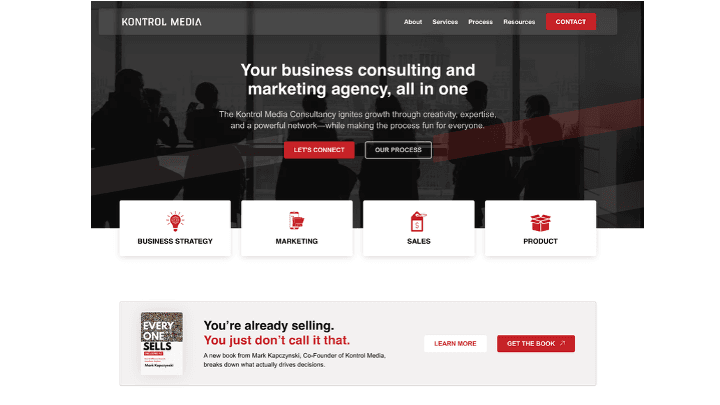
Services directly tied to the strategies in this article include citable IP creation and distribution, partnership program design and operations, retail and commerce media network build-out, ABM and intent program design, channel-agent programs for brands reaching home buyers through real estate agents, and measurement and attribution setup. Clients like Experian, REMAX, and West Monroe reflect the enterprise contexts where this work has produced measurable outcomes.
If you are ready to move from planning to execution, start with a conversation about where your visibility program stands today and what a 90-day sprint could produce for your pipeline.
Useful sources and further reading
Research sources cited in this article:
- What Is Digital Visibility? A B2B Guide — MQL Magnet
- Building Market Visibility: The Pre-Entry Strategy for B2B Leaders — Laaster
- Content Partnership Strategy: Proven Growth Tactics — Chris Robino
- Partnership Development Strategy — Brawin Rajadurai
- Market Visibility Competitive Advantage — Marketing Decision
Kontrol Media resources:
- Strategies for Expanding Your Business into New Markets
- Stand Up a Retail or Commerce Media Network
- Strategic Partnerships: How to Form Win-Win Collaborations
- Public support strategies for business development — partner resource on public and community channel programs
- Contact Kontrol Media
Recommended
- Strategies for Expanding Your Business into New Markets | Kontrol Media Consultancy
- Business Strategy | Kontrol Media Consultancy
- How to Create a Marketing Strategy from Scratch in 2026 | Kontrol Media Consultancy
- Navigating Uncertainty: Creating a Resilient Business Strategy | Kontrol Media Consultancy