
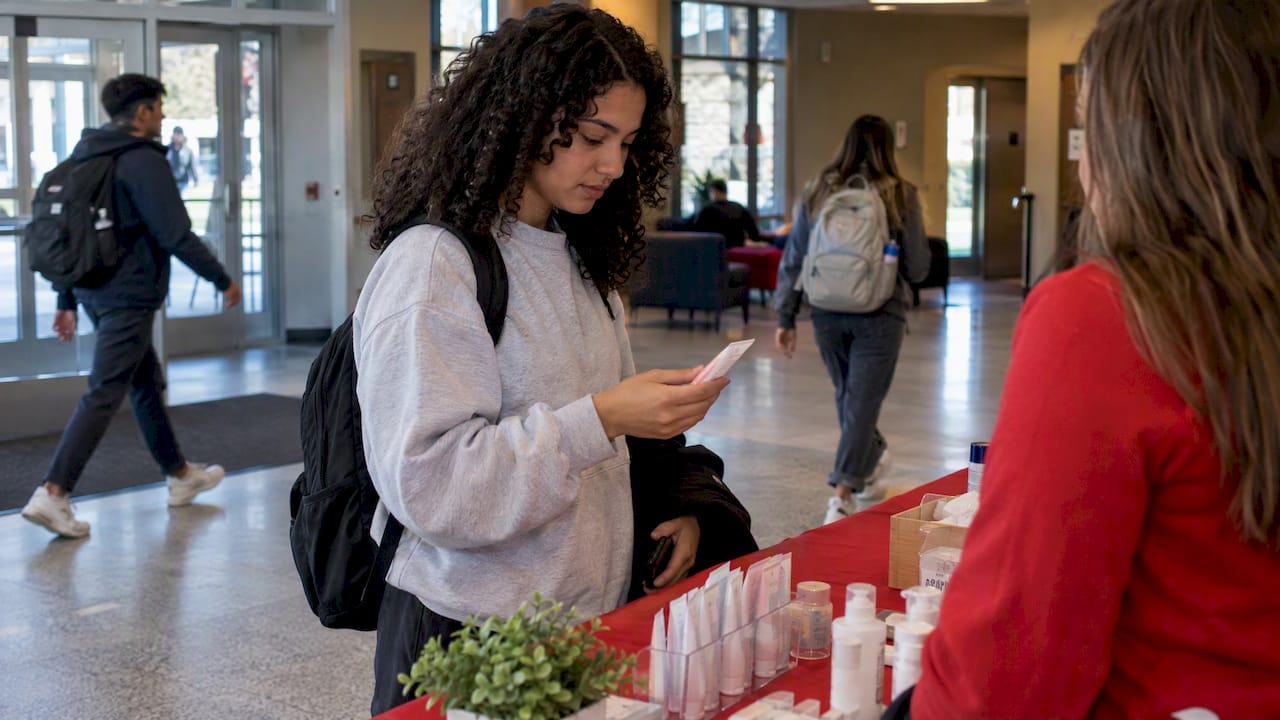

The brands that win college students do three things: they show up after move-in, when habits are still forming, they hand students real creative ownership instead of a script, and they connect every campus moment to a place where students can buy. Sampling tables and a hashtag are not a strategy. A campus program built around peers, content and a clear path to purchase is.
I have spent years on both sides of this problem, building media and partnership programs for consumer brands and watching which campus ideas survive contact with an actual semester. Below is how I would approach it if a beauty CMO sat across from me today.
TL;DR
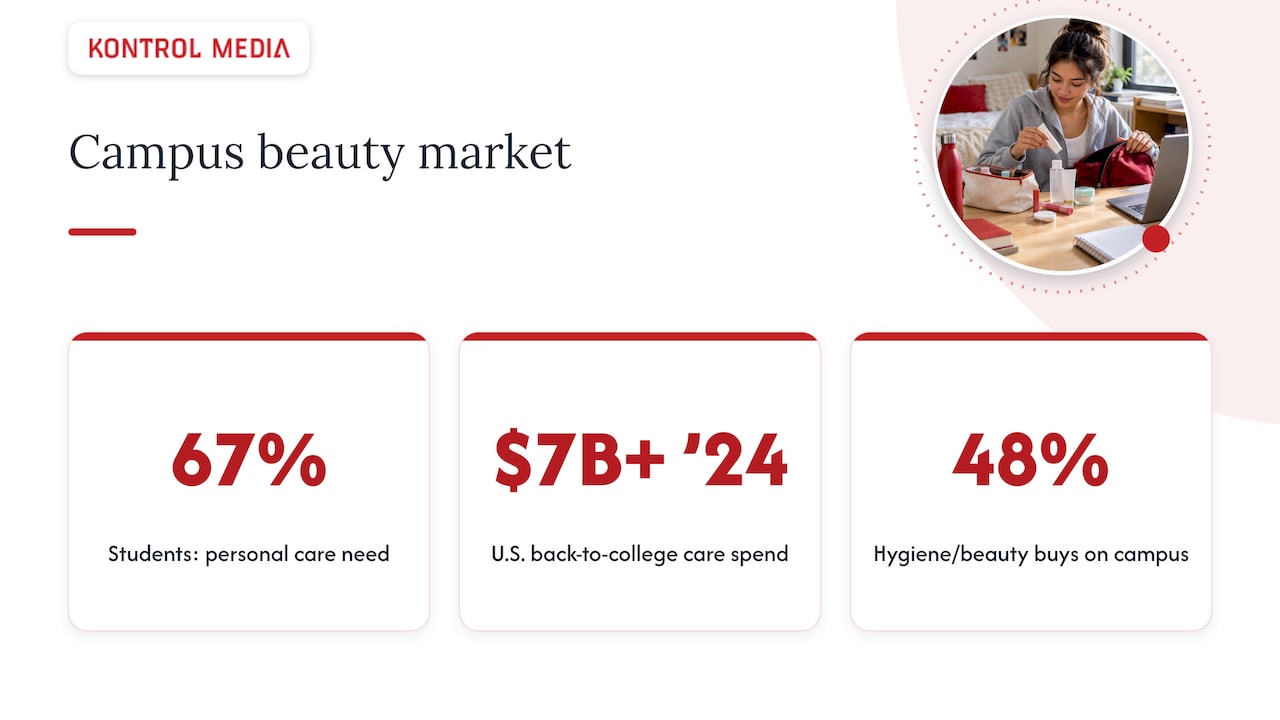
- Students are a large, early-habit audience: 67% see personal care as a necessity, and about 48% of hygiene and beauty purchases happen only after arriving on campus.
- Treat students as contributors, not targets: co-creation, innovation challenges and creator clubs earn more trust than posters and free samples alone.
- Map the campus social graph (Greek life, club officers, creators) and give ambassadors latitude to adapt the campaign to their own campus.
- Put FTC disclosures inside the post itself, sign agreements and keep records.
- Connect activation to retail so you can measure what the campus work actually sells.
Table of Contents
- Why the campus window matters for beauty
- Start with the campus, not the channel
- Build a peer-to-peer ambassador program that actually works
- Treat students as co-creators
- Plug into the creator clubs and hubs already on campus
- Make the physical moments count
- Close the loop between campus and the cash register
- Keep every ambassador post FTC compliant
- Our perspective: community first, then conversion
- Where we can help
- FAQ
- Sources
Why the campus window matters for beauty
College is where routines get rewritten. Students leave a bathroom shelf curated by a parent or a hometown drugstore and start choosing for themselves, often in a dorm with a roommate, a shared sink and a constant stream of social content. BeautyMatter’s reporting on Gen Z loyalty puts numbers on it: 67% of students consider personal care products a necessity, U.S. back-to-college personal care spending topped $7 billion in 2024, and roughly 48% of hygiene and beauty purchases happen only once students are on campus.
That last figure changes how I think about timing. Most brands pour budget into the August back-to-school rush, when students are buying what they already know. The post-move-in weeks are when they discover what they forgot, what their new friends use and what a creator on their floor swears by. If your plan ends at the first week of September, you are leaving nearly half the purchase decisions to someone else.
There is also a meaning problem to respect. Windsor Hanger Western of Her Campus Media describes beauty for this audience as a way to navigate individuality and connect with peers, as reported by BeautyMatter. Students are not just buying a serum. They are deciding who they are in a new place. A brand that understands that sells community first and units second.
Start with the campus, not the channel
Most campus plans begin with a list of tactics: ambassadors, sampling, a TikTok push. I prefer to begin with a map. Every campus has its own rhythm, and a program that works at a large state school with a heavy Greek presence can fall flat at a commuter campus or a small arts college.
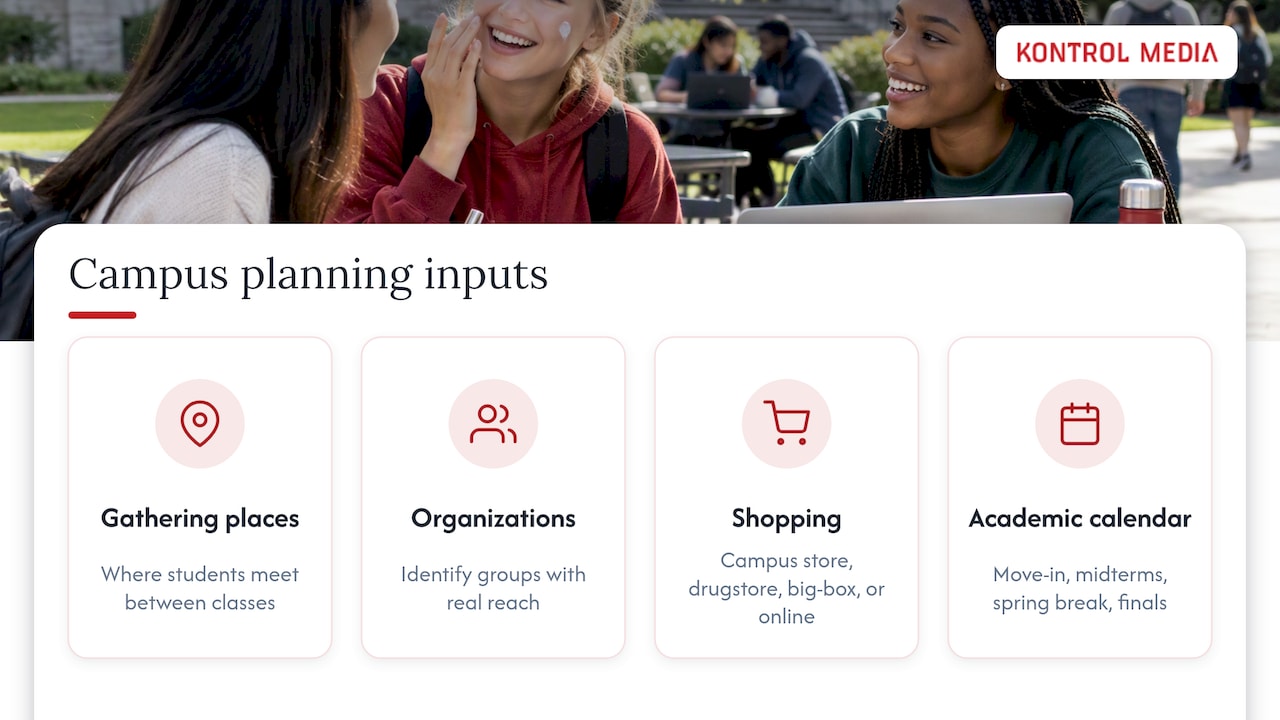
Before you commit budget, answer a few plain questions for each target school. Where do students gather between classes? Which student organizations have real reach, and which just have a nice logo? Where do students buy, whether that is the campus store, a nearby drugstore, a big-box retailer or an online cart? And what does the academic calendar look like, with move-in, midterms, spring break and finals each creating different moods?
This is less glamorous than a launch event, but it is what separates brands that feel native from brands that feel parachuted in. Students reject content that feels overly corporate or out of step with their campus reality, and they can tell within seconds.
Build a peer-to-peer ambassador program that actually works
The campus ambassador is the oldest tool in this category, and it is still the best one when it is run well. Clinique’s Clinique on Campus program is a useful public example of the format: students create social content, plan on-campus sampling and receive full-size product and merchandise in return. It shows what the basic bargain looks like, a real role, real product and something that helps a resume.
Choose connectors, not just followers
The strongest ambassadors are not necessarily the ones with the biggest follower counts. They are connectors who know who runs the sorority, who chairs the pre-professional club, which residence hall has the unofficial skincare guru. Research highlighted through the University of Cincinnati’s work with a skincare brand points to students who identify key stakeholders like club officers and campus influencers, then bring them into the activation. Micro-creators in the 10,000 to 50,000 follower range are a common target, and that is the size range one skincare call for student creators currently asks for, but reach alone is a weak filter. Ask how many people on campus would take their recommendation seriously.
Give them room to adapt
Top-down messaging is the quickest way to flatten a good ambassador. In the campus work I find most convincing, students are given the brand’s goals, product knowledge and guardrails, then enough latitude to shape the campaign for their own school. A first-year at a rural campus in the Midwest will not talk about skincare the way a junior in Los Angeles does, and your program should not pretend otherwise.
Pay and recognize the work
Students ask whether ambassadors get paid, and the honest answer is that it varies by program. Some offer product and merch, some offer stipends or commissions, and many treat the role as a professional credential. Whatever you choose, be explicit about the exchange in writing. An unpaid student doing a part-time job’s worth of content is a reputational risk for you and a bad deal for them.
Treat students as co-creators
The most interesting campus work I have seen moves students from audience to collaborators. The University of Cincinnati described how Bioré, a skincare brand owned by Kao Corporation, tasked students with helping launch a new acne product as part of an innovation challenge. Students got a real brief and professional experience. The brand got fresh thinking from the exact people it wants to reach, and a group of students who now understand the product from the inside.
That is the pattern worth borrowing. When a student has helped shape the content, the pitch or the launch, the product stops being something advertised to them and becomes something they have a stake in. It also solves a practical problem. Students have professional ambitions, and a brand that offers a portfolio piece or a real project earns attention that a free lip balm cannot.
STEM-minded partnerships work in the same spirit. Purdue and e.l.f. Cosmetics announced a collaboration around a STEM-themed makerspace event, promoted in part through the university’s Women in Engineering Program. Notice what is happening: the brand is tied to something the campus already values, not asking the campus to care about the brand on its own terms.
Plug into the creator clubs and hubs already on campus
Many campuses now have student-run creator communities, and they are a gift to beauty marketers. Boston University student Dylan Huey describes how his group REACH grew out of a clear gap for collegiate students passionate about the creator economy, giving members a place to practice content creation and brand pitching. At Texas A&M University-San Antonio, the Influencer Club grew from a student’s belief that if something meaningful does not exist on campus, you create it.
These groups give a brand a low-friction, high-trust entry point. Members already want brand experience, already make content and already have a peer audience. A well-designed partnership might include a product briefing, a paid content challenge, a guest session on how a beauty marketing team works, and a clear showcase for the best student work. It feels organic because it is. Everyone gets something they came for.
Make the physical moments count
Sampling still has a role, but it needs a reason to exist beyond handing something out. The best physical activations I have seen are built to create content and conversation, not just distribution. Think of a pop-up in a residence hall lobby with good lighting and a prompt worth posting, or a getting-ready station timed to a campus event like homecoming or a formal.
A few principles hold across schools. Place activations where students already are, instead of asking them to come to you. Make the experience photogenic enough that students choose to share it. Capture permission and contact details so you can follow up. And always give the student a way to buy the full-size product that same week, because interest fades fast between a dorm hallway and a checkout page.
Timing matters as much as location. Because so many purchases happen after arrival, I would weight activity toward the first several weeks of each term and the stretches when students are stressed and looking for self-care, such as midterms and finals, instead of spending everything in one August burst.
Close the loop between campus and the cash register
This is where most beauty campus programs quietly fail. The activation is fun, the content is lovely, and nobody can say what it sold. When a student engages with a campus moment, there should be a clear next step that is trackable: a code, a retailer landing page, a campus-store placement or a retail media placement that reaches them where they shop.
We have written separately about how this works in practice, including turning campus activations into store sales with a retail media first approach and reaching students through campus advertising. For marketers weighing paid reach against grassroots work, our comparison of how a campus-focused media network stacks up against traditional media walks through the trade-offs, and the 12 week playbook for reaching students at key moments maps the calendar.
The point is not that grassroots and paid media compete. They reinforce each other. Ambassadors and clubs create the credibility, and paid placement near the point of purchase turns that credibility into measurable trial. Plan for incrementality testing from the start, so you can compare campuses with the full program against similar ones without it, and learn what is truly driving sales.
Keep every ambassador post FTC compliant
Student programs create a compliance risk that is easy to underestimate. If a brand has a material connection to an endorser, which includes free product, payment or an ambassador title, the FTC expects that connection to be disclosed. Its guidance on endorsements, influencers and reviews says disclosures must be clear and conspicuous, placed in the endorsement message itself rather than buried in a profile or behind a “Show More” link, and written in simple terms such as “Ad” or “[Brand] Partner.” The FTC also publishes a short, plain-language disclosures guide for influencers that is worth handing to every student you onboard.
In practice, I would build five habits into the program:
First, write the disclosure rule into the ambassador agreement and have each student sign it. Second, train students in the first week, with examples of what a good disclosure looks like on a video and on a photo. Third, put the disclosure on the content, superimposed on visuals where needed, not just in a caption. Fourth, monitor posts after they go live and correct them quickly. Fifth, keep records of agreements, instructions and corrections. None of this is exciting, but it protects the brand and teaches students professional habits they will carry into their careers. A bio line that says “ambassador” or “collab” is not enough.
Our perspective: community first, then conversion
We come at campus marketing from the media and partnership side, and that shapes what we believe. Too many beauty brands treat campuses as a place to blast impressions, then wonder why the spike never turned into a habit. At Kontrol Media, our work in retail media, commerce media and channel partnerships has taught us that audiences respond when a brand takes up space alongside them instead of interrupting them.
For college students, that means two things at once. The brand has to earn its place in the social fabric, through peers, clubs and real creative ownership. And the brand has to be findable and buyable where students shop, with measurement that connects the two. Strategy without execution gives you a lovely deck, and execution without strategy gives you a busy semester with no learning. The programs that last do both, and they are honest about what they can and cannot prove.
If I could give one piece of advice to a CMO starting out, it would be to run a smaller program on fewer campuses, with better ambassadors and tighter measurement, before scaling. Authenticity does not scale by decree. It scales when you learn what works at five schools and let the next ten adapt it.
— Mark Kapczynski
Where we can help
If you want a partner who can design the strategy and run the execution, we work with consumer brands on go-to-market, marketing and sales through our business strategy, marketing and sales services. For retailers and consumer businesses that want to reach students through their own audiences, we also stand up retail and commerce media networks and operate them day to day.
FAQ
How do you promote a brand in college?
Start with peers. Recruit a small group of student ambassadors and creators, give them product and creative latitude, and partner with existing campus clubs and creator groups. Pair that with activations in high-traffic spots and a clear way to buy. Make sure every endorsement is properly disclosed.
Do student ambassadors get paid?
It depends on the program. Some brands pay stipends or commissions, while others offer product, merchandise and professional experience, as Clinique’s public ambassador program describes. Whatever the arrangement, put it in a signed agreement so both sides know what is being exchanged.
When is the best time to reach college students with beauty products?
Do not limit yourself to the pre-semester shopping rush. Reporting from BeautyMatter indicates that around 48% of hygiene and beauty purchases happen only after students arrive on campus, so the first weeks of each term deserve real budget. Stressful periods like midterms and finals can also suit skincare and self-care messages.
Do campus ambassador posts need to be labeled as ads?
If the student has a material connection to your brand, such as free product, payment or an ambassador role, the FTC expects a clear and conspicuous disclosure within the post itself. Use plain terms like “Ad” or “Partner,” not a buried hashtag or a bio line. Keep records so you can show you trained and monitored your ambassadors.
Sources
- The Road to Gen Z Loyalty Begins on Campus, BeautyMatter
- Endorsements, Influencers, and Reviews, Federal Trade Commission
- Disclosures 101 for Social Media Influencers, Federal Trade Commission
- Innovation challenge to zap pimples, University of Cincinnati
- Purdue, e.l.f. Cosmetics announce STEM Era collaboration, Purdue University
- Dylan Huey on innovative marketing, Boston Hospitality Review
- Big Impressions, Adelante Magazine, Texas A&M University-San Antonio
- Clinique on Campus, College Fashionista