
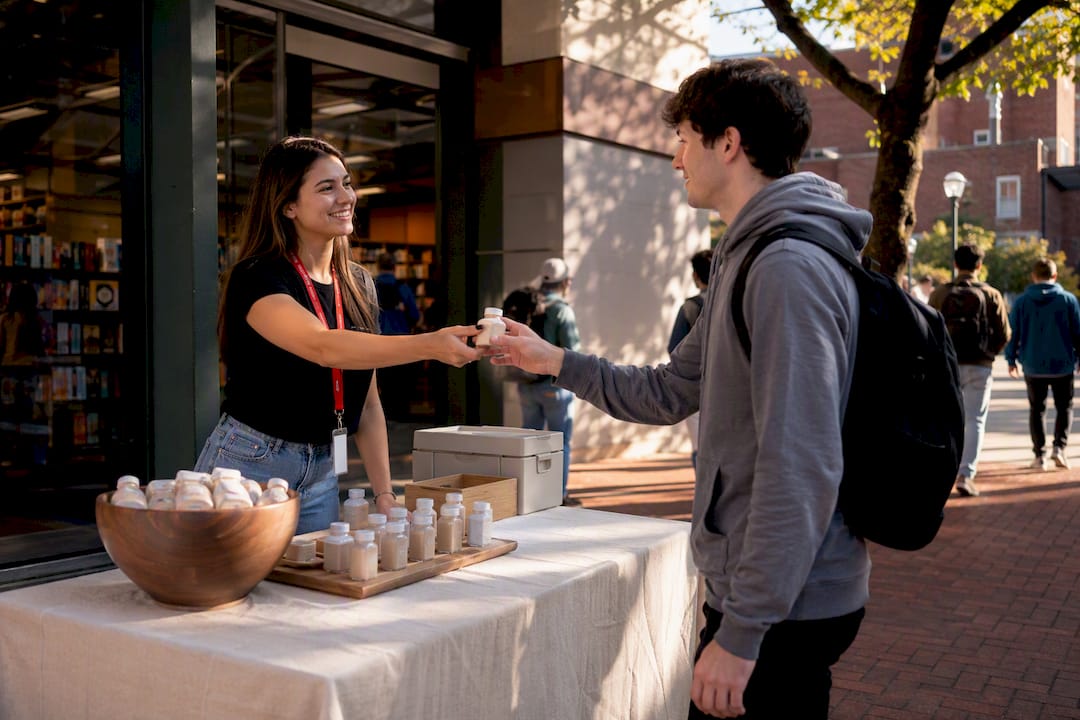

The most effective way to target college students with retail media is an integrated program: retail media placements plus on-campus activations plus creator-led social content, all anchored to a verified, exclusive student offer that redeems at retail. This model has been proven effective through implementations with campus bookstore networks. Students trust peer recommendations more than brand ads, and platforms like TikTok and Instagram now double as search engines for that peer input, which is exactly why the mix works.
TL;DR:
- Campus retail media campaigns combined with on-campus activations and creator content significantly increase product usage, with tests showing nearly five times more lift than digital-only efforts.
- Staggering campaign components, such as launching in-store digital signage 48 hours before sampling events, enhances student engagement and conversion rates.
- Verified student discount offers using authoritative data verification and strict redemption tracking result in higher margins and more accurate measurement of retail lift.
- Moving-in and welcome week are the optimal times to start campaigns, requiring at least four to six months of planning to align inventory, permits, and staffing.
- Running matched-market tests with control campuses demonstrates the effectiveness of campus media, emphasizing the importance of attribution infrastructure for proven ROI.
Table of Contents
- What Drives College Students to Discover and Buy Products?
- How Do Campus Activations, Retail Media, and Creators Work Together?
- How Should You Design and Verify Student Discount Offers?
- When Should You Plan Campus Retail Media Campaigns, and What Do They Cost?
- What KPIs Prove Retail Lift From Campus Media?
- How Do You Execute a Campus-to-Retail Campaign Step by Step?
- How Does Kontrol Media Use the Follett Network in Practice?
- Why Most Brands Get Campus Marketing Backward
- Ready to Run a Campus-to-Retail Program?
- Sources
- FAQ
What Drives College Students to Discover and Buy Products?
Peer influence beats brand messaging on campus, and it isn’t close. When students see a product show up in multiple places at once, a bookstore display, a friend’s Instagram Story, an ambassador handing out samples near the quad, they read that repetition as popularity rather than advertising. Campus media has an outsized ability to manufacture that perception, because a residential campus is a closed loop where the same 3,000 to 30,000 people cross paths daily.
Platform habits matter just as much as psychology. Nearly all Gen Z college students use Instagram and most use TikTok (https://www.sheerid.com/business/blog/marketing-to-college-students-the-2026-guide-for-brands/), and both platforms function less like broadcast media and more like search engines students query before they buy anything from a dorm fridge to a laptop bag. Add in the fact that students are online for a large share of their waking hours between class, study, and social apps, a pattern documented in EDUCAUSE’s research on undergraduate technology habits, and you get an audience that is always reachable but tuning out anything that doesn’t feel earned.
Exclusivity closes the gap between attention and purchase. Students actively look for a student discount before checkout, and a verified offer that only they can access reads as respect rather than a gimmick.
A few segment differences change how you time and place all of this:
- Freshmen are more receptive to on-campus sampling and bookstore proximity during their first eight weeks.
- Seniors respond better to loyalty and repeat-purchase offers tied to brands they already use.
- Residential students see more campus media touchpoints daily than commuter students, who need off-campus retail and digital reinforcement.
Statistic to watch: matched-market testing found that high-intensity campus media produced a 7.90 percentage-point lift in incremental product usage over digital-only exposure, roughly five times the lift digital alone delivered. That gap is the entire argument for spending on campus, not just in the feed.
How Do Campus Activations, Retail Media, and Creators Work Together?
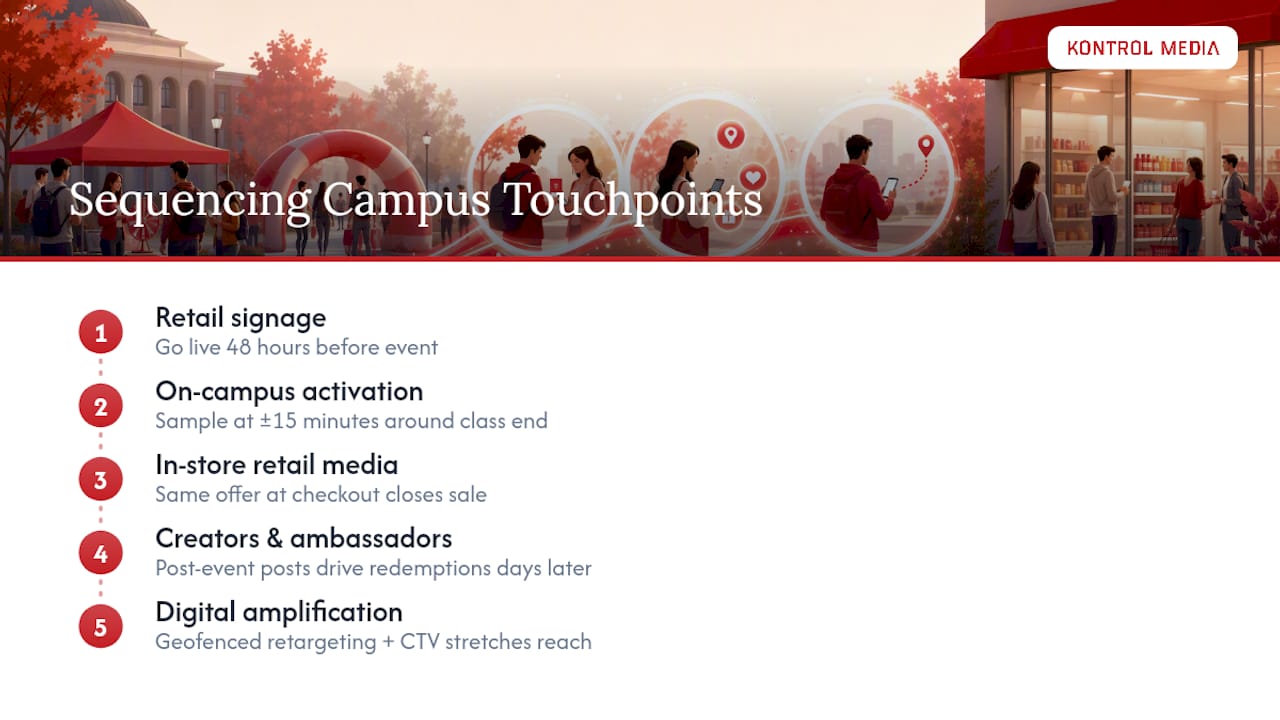
Each channel does a different job, and the sequencing matters more than the budget split.
1. On-campus activations create the first physical touchpoint. Sampling tables outside the bookstore, pop-ups during high-footfall hours between classes, and product placement in dorm lobbies give students something to hold before they’re asked to buy anything. The tactical detail most brands miss: timing sampling to the 15 minutes before and after common class-block end times captures far more traffic than an all-day static table.
2. Retail media placements close the loop inside the store. This is where collaboration with campus bookstore networks becomes the operational hinge. Follett’s campus bookstore network gives brands in-store digital screens, endcap placement, and point-of-sale messaging tied directly to the same student offer promoted outside the store. A student who saw a sample table an hour earlier walks in and sees the identical discount reinforced at checkout, which is what actually converts a sample into a sale rather than a shrug.
3. Creators and student ambassadors manufacture local proof. A national influencer feels distant. A junior who lives two dorms over, posting about the same offer, feels like a recommendation. Ambassador programs and campus-specific creator content give the offer a second life online after the physical activation ends, and that rediscovery loop is often where the bulk of redemptions actually happen, days after the event, not during it.
4. Digital amplification extends the moment past the event window. Social ads retargeted to geofenced campus zip codes, paired with streaming or connected TV placements timed to move-in season, stretch the campaign’s reach beyond who physically walked past the table. Amazon Ads has described this kind of layered approach, blending streaming content, campus experiences, and creator activations, as effectively “buying a moment” rather than buying a single ad slot. That framing is useful: you’re not purchasing impressions, you’re purchasing a window of campus attention and trying to hit it from three directions at once.
Pro Tip: Don’t launch the retail media placement and the campus activation on the same day. Stagger the in-store digital signage to go live 48 hours before the sampling event so students see the offer before they see the ambassador, then feel like they’re “in on it” when the sampling table confirms what they already noticed.
Kontrol Media’s guidance on campus advertising breaks down how to sequence these touchpoints by campus size and academic calendar, which matters because a 40,000-student flagship school moves on a very different rhythm than a 6,000-student liberal arts campus.
How Should You Design and Verify Student Discount Offers?
The offer is the mechanism that turns three separate channels into one measurable funnel, and getting the verification method wrong either kills your margin or kills your redemption rate.
Two verification paths dominate right now. Instant micro-verification checks a school email domain or a quick self-attestation, which is fast and low-friction but easy to abuse. Authoritative-data verification cross-references enrollment records or ID.me-style systems, which is slower to set up but nearly eliminates leakage from non-students grabbing a discount meant for a captive audience. For a high-margin category, the slower method usually pays for itself.
Offer mechanics need equal thought. A single-use code tied to one student’s verified email prevents screenshot sharing across group chats, a real problem with open coupon codes. Redemption path matters too: an in-store barcode or QR code that scans at Follett’s point-of-sale gives you a hard retail-lift number, while an online-only code makes attribution murkier and complicates inventory planning at the physical store.
Data capture should stay lean. Ask for email, class year, and major or program interest, nothing more. Every extra field drops completion rate, and class year alone is often enough to build a useful remarketing segment for next semester’s campaign.
- Collect only fields you’ll actually use for segmentation or remarketing.
- Always get explicit opt-in permission at the point of redemption, not buried in fine print.
- Route permissioned data straight into a remarketing list before the semester ends, not after.
Verified offers that capture this kind of permissioned data tend to drive higher acquisition and stronger lifetime value than open, unverified discounts, because the brand can keep talking to that student after the initial redemption.
One compliance note that gets skipped too often: if a student ambassador or creator is promoting the offer in exchange for product, payment, or commission, FTC disclosure rules apply exactly the same as they would for any paid influencer. A vague “thanks to X brand” tag in a caption isn’t sufficient; the disclosure needs to be clear and hard to miss.
When Should You Plan Campus Retail Media Campaigns, and What Do They Cost?
Move-in and welcome week are the highest-leverage windows on the entire academic calendar, and they require real lead time. Start planning at least four to six months out, since bookstore inventory commitments, ambassador recruiting, and campus permit approvals all have their own lag times that stack up fast if you start late.
A workable budget model splits into categories including activation and sampling, ambassador and creator fees, media buy, and measurement and verification tooling, though exact percentages vary by campaign.
Scaling should follow a pilot, then matched-market, then full-scale sequence. Run the full program on one or two campuses first, ideally ones with strong Follett bookstore presence and clean baseline sales data. Compare results against a similar but unexposed control campus before committing budget to a national rollout. Choosing a pilot campus with messy or incomplete baseline retail data will make your lift numbers impossible to defend to a CFO later.
Before launch, confirm this short operational checklist:
- Campus activation permits are filed and approved.
- Retail partner (bookstore) has confirmed inventory levels for the offer period.
- Ambassador contracts and FTC disclosure language are signed off.
- Verification and redemption tracking are tested end to end before the first student sees the offer.
What KPIs Prove Retail Lift From Campus Media?
Redemption rate is the first number executives will ask for, but it’s the least interesting one on its own. The metrics that actually prove the campaign worked are store-level sales lift compared to a control campus, repeat purchase rate among students who redeemed the offer, and cost per acquisition once you divide total spend by verified redemptions.
Matched-market testing is the methodology that makes these numbers defensible. Run the full activation, retail media, and creator stack on one campus while a comparable campus gets digital exposure only or no exposure at all. The 7.90 percentage-point usage gap found in this kind of testing is the type of number that turns a campus media line item from a guess into a justified budget request.
Attribution mechanics need to be built in from day one, not bolted on afterward. Unique redemption codes per channel, geofenced tracking on any QR landing page, and timestamped coupon data all let you separate “this student saw the ambassador” from “this student only saw the Instagram ad.”
| Metric | What it tells you | Typical data source |
|---|---|---|
| Redemption rate | Offer relevance and awareness | POS scan data, unique codes |
| Store-level sales lift | Real incremental retail impact | Matched-market comparison |
| Repeat purchase rate | Whether trial converted to loyalty | CRM tied to permissioned email |
| Cost per acquisition | Efficiency of total spend | Spend divided by verified redemptions |
Report on a biweekly cadence during an active campaign window, then shift to monthly once the activation period ends and you’re tracking repeat purchase. Kontrol Media’s breakdown of retail media KPIs goes deeper into how to build executive-ready reporting templates around these same four numbers.
How Do You Execute a Campus-to-Retail Campaign Step by Step?
Pre-event. Confirm the campus activation date with student affairs or the bookstore operations team at least six weeks ahead. Build a dedicated offer landing page with a QR code that routes straight to redemption instructions. Coordinate with the retail partner, Follett in most campus deployments, to confirm shelf stock matches expected sampling volume; running out of inventory mid-event kills momentum instantly.
Ambassador training. Give ambassadors a script under 15 seconds: name the product, name the exact discount, and point to a specific aisle or store location. Train them to prompt an immediate phone-out scan on the spot rather than “check it out later,” because later rarely happens.
During the event. Apply a two-mile radius rule: every activation should point students to a retail location no more than two miles away, ideally the campus bookstore itself. Track redemptions in real time so staff can flag any code that isn’t scanning correctly. Brief retail staff on peak days, typically Friday and Saturday, so they’re not caught flat-footed by a rush.
- Confirm inventory and staffing at the retail location 24 hours before the event.
- Deploy ambassadors at peak foot-traffic windows, not fixed shift times.
- Monitor live redemption data and troubleshoot scan failures within the hour.
- Reconcile total redemptions against inventory pulled at day’s end.
Post-event. Reconcile redemption counts against the retail partner’s inventory draw, run the matched-market comparison against the control campus, and push every permissioned student email into a remarketing sequence within a week, while the brand is still fresh in their mind.
Pro Tip: Train ambassadors as retail scouts, not just promoters. Have them walk the exact aisle path a student would take from the store entrance to the product, then build that path into the script. A vague “check out our stuff at the bookstore” line converts far worse than “turn left at the entrance, it’s on the second shelf.” A partner resource on influencer program design covers similar scripting discipline for creator-led campaigns beyond the campus context.
How Does Kontrol Media Use the Follett Network in Practice?
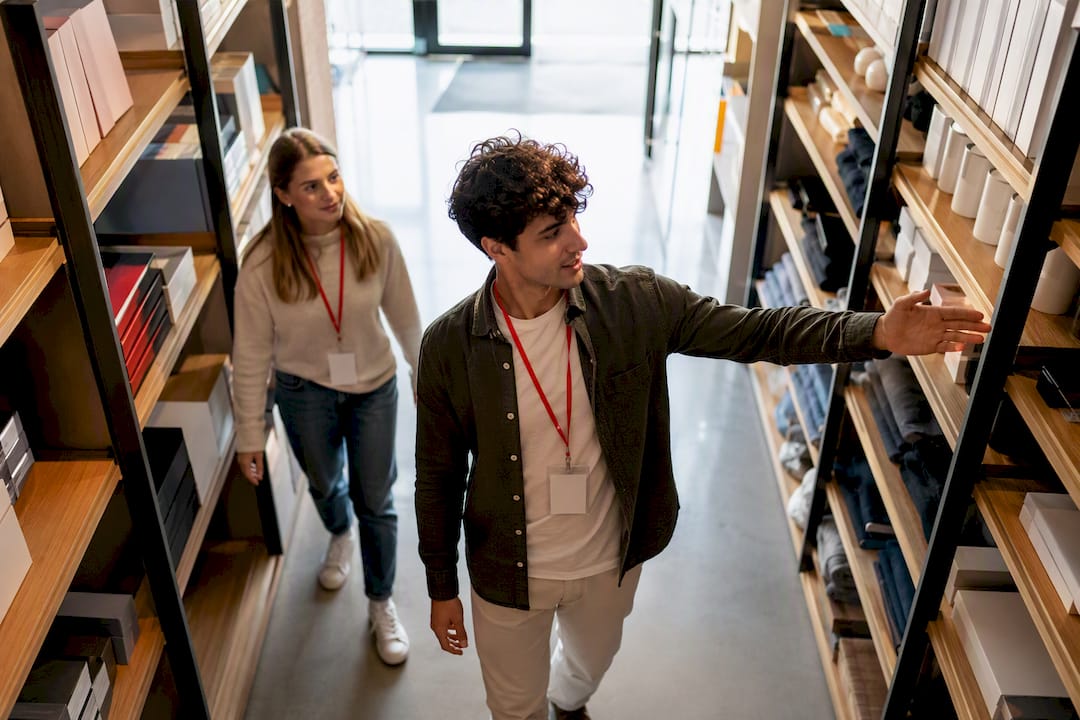
A specialized operator manages and drives revenue for Follett’s retail media network across its US campus bookstore footprint, giving brands a direct path to in-store placements, digital signage, and point-of-sale messaging tied to student offers. Beyond the media buy itself, the operation extends that footprint with in-store activations, staffed by trained student brand ambassadors and campus creators, designed to drive physical foot traffic into the bookstore and toward the brand’s activation.
That combination, retail media inventory plus staffed campus execution, is what closes the gap between a digital impression and a verified retail sale…
Why Most Brands Get Campus Marketing Backward
Too many brand managers still treat campus marketing as a brand-awareness line item, a sponsorship you buy for goodwill and measure with a survey six months later. That’s backward. The research on matched-market campus testing shows a nearly five-times usage lift over digital-only exposure, which means campus media isn’t a soft-touch nice-to-have. It’s a direct-response channel that happens to run through physical space instead of a browser.
The conventional advice tells marketers to pick either digital or campus, whichever fits the existing media plan more easily. That’s a false choice. The real failure mode isn’t picking the wrong channel, it’s running channels in isolation instead of sequencing them toward one verified offer.
If you take one thing from this, prioritize the offer verification and redemption tracking before you spend a dollar on ambassadors or media. Without that instrumentation, you’ll generate plenty of campus energy and no defensible number to bring back to finance. The brands that treat retail media, campus activation, and creator content as three legs of one measurement plan are the ones who can prove it worked, not just claim it felt good.
— Mark Kapczynski
Ready to Run a Campus-to-Retail Program?
There are operators who build and operate the model described here: retail media network setup, Follett bookstore placements, ambassador program management, and the measurement infrastructure to prove retail lift, not just campus buzz. Unlike a standalone media buyer or a campus events agency, these operators run the full chain from the in-store screen to the sampling table to the redemption report, so clients get one accountable partner instead of three vendors pointing fingers at each other.
If you’re planning a back-to-college or welcome week push and want a program built around verified offers and real sales lift rather than impressions, start with Kontrol Media’s retail media network operations overview, or reach out directly through the contact page to scope a pilot campus for your next semester.
Sources
- Amazon Ads Launches “First Day Ready,” a Multi-Brand Campaign Connecting Brands to Gen Z at College’s Biggest Moment | INN
- College 2026: Understanding today’s student, how they buy, and what it means for brands
- Marketing to College Students: The 2026 Guide for Brands – Market Insights
- Disclosures 101 for Social Media Influencers | FTC
FAQ
What Is Retail Media Targeting for College Students?
It’s advertising placed inside retail environments college students actually shop, like campus bookstore digital signage and point-of-sale messaging, combined with campus activations and verified student offers to drive a measurable purchase.
How Do You Verify a College Student for an Exclusive Offer?
Brands typically use either instant micro-verification through a school email domain or authoritative-data verification against enrollment records, with the latter offering stronger fraud protection for higher-margin offers.
What’s the Best Time to Launch a Campus Retail Media Campaign?
Move-in and welcome week deliver the highest concentration of captive attention, and campaigns need four to six months of lead time to secure permits, bookstore inventory, and ambassador staffing.
How Do You Measure Retail Lift From Campus Activations?
Run a matched-market test comparing an exposed campus against a similar control campus, tracking redemption rate, store-level sales lift, and repeat purchase rate; campus media has produced a nearly five-times usage lift over digital-only exposure in this kind of testing.
Does Kontrol Media Run Campus Bookstore Retail Media Campaigns?
Yes. Kontrol Media operates and drives revenue for Follett’s campus bookstore retail media network and extends it with staffed in-store activations and student ambassador programs across US campuses.