


Follett Media Network gives consumer brands direct, repeatable access to campus audiences, and that access converts because it lands at moments students already trust: move-in day, tailgates, finals week. The network reaches more than 6 million students and logs over 61 million site visits a year, according to Follett’s brand partner materials, which makes it a legitimate awareness and conversion channel, not just a nice-to-have sponsorship line. Brands that time their campaigns to the academic calendar and pair them with digital measurement tend to see the clearest results.
TL;DR:
- Follett Media Network reaches over 6 million students and 61 million site visits annually, with high engagement during key campus moments like move-in and finals week.
- In-store sampling and point-of-sale displays are most effective early in the semester for product trial and precise measurement, especially when paired with digital retargeting.
- Activation planning requires at least 90 days’ lead time for key events like orientation and back-to-school campaigns to secure optimal in-store real estate and digital placements.
- Engagement metrics such as dwell time, interaction rates, and student content shares provide better insight into campaign effectiveness than reach numbers alone.
- Costs vary by activation type and campus, with pricing based on logistics, fulfillment, and campaign duration, making early planning and creative readiness crucial for success.
Table of Contents
- Scale and audience: the network footprint and student profile
- Channels and ad products available through Follett Media Network
- How brands benefit: concrete use cases and outcomes
- Measurement and proof: metrics, case studies, and expected outcomes
- How to work with Follett Media Network: media kit, timelines, and activation process
- Competitive differentiation and unique selling points of Follett Media Network compared to other advertising platforms
- Typical pricing models and cost structure for advertising with Follett Media Network
- Brand safety and compliance measures to ensure appropriate ad placement
- Details on audience engagement metrics beyond reach, such as dwell time or interaction rates
- Kontrol Media perspective: practitioner guidance on maximizing campus media
- How Kontrol Media helps brands design and run campus and retail media campaigns
- Sources
- FAQ
Scale and audience: the network footprint and student profile
I have sat across the table from enough CMOs to know the first question is always the same: how big is this, really? Follett Higher Education manages relationships with more than 1,000 campus store partnerships, and its Follett Discover platform drives high-intent student traffic into those retail environments by supporting faculty course-material adoption, according to Shu. That adoption workflow matters more than it sounds: when a professor assigns materials through Discover, students are funneled toward a purchase decision they have to make, not one they might make.
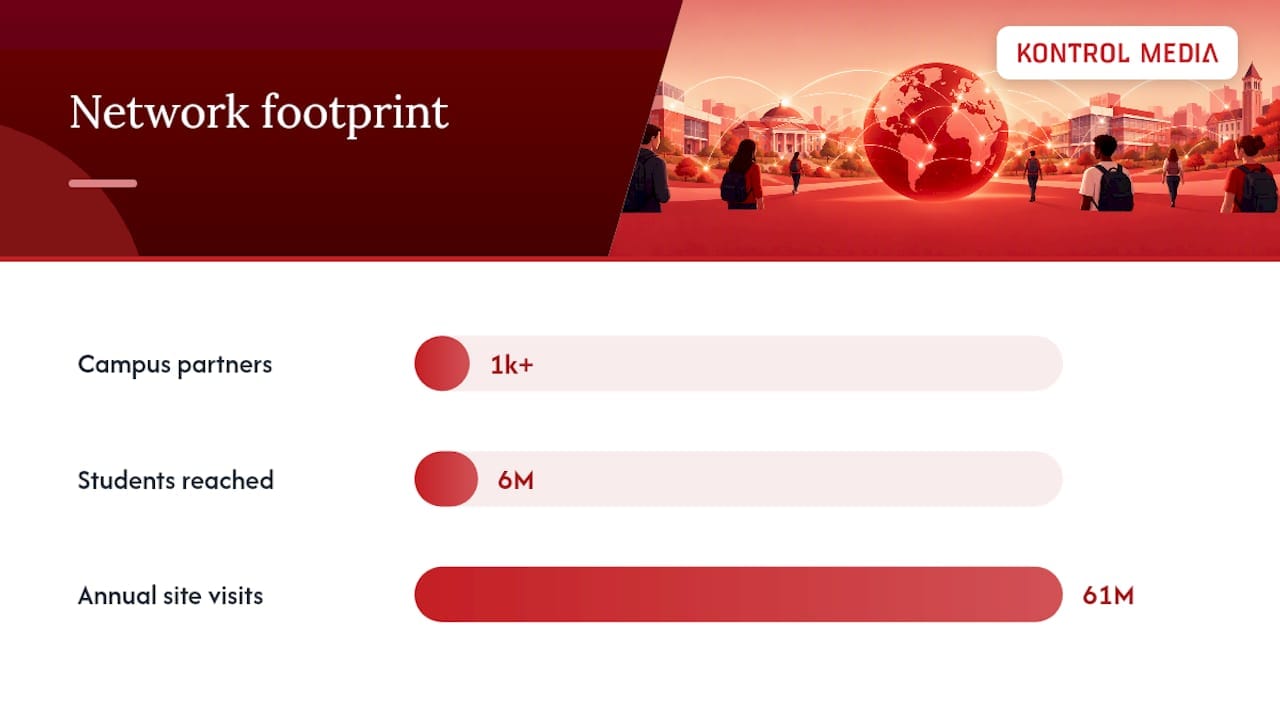
Follett’s own brand partner materials put headline reach at over 6 million students and 61 million site visits annually, spread across an omnichannel mix of in-store, digital marketplace, email, and event touchpoints, per Follett’s brand partner overview.
The audience itself is layered, and that layering is the point:
- Undergraduate and graduate students, the core Gen Z segment, who visit campus stores repeatedly across a semester.
- Faculty, who influence purchase behavior indirectly through course-material adoption.
- Parents and family members, especially during move-in and orientation windows.
- Alumni and returning visitors during game day and homecoming events.
Campus reach converts differently than a generic digital placement because it relies on habit and proximity. Students pass the same bookstore, the same dining hub, the same email inbox dozens of times a semester, and that repetition builds the kind of familiarity paid social rarely earns on its own.
Channels and ad products available through Follett Media Network
The product menu is broader than most marketers expect walking in. On the physical side, brands can secure in-store placements, product sampling, bag inserts, point-of-sale displays, and merchandising positioned near checkout, all of which put a product in a student’s hand at the exact moment they are already spending money on campus.
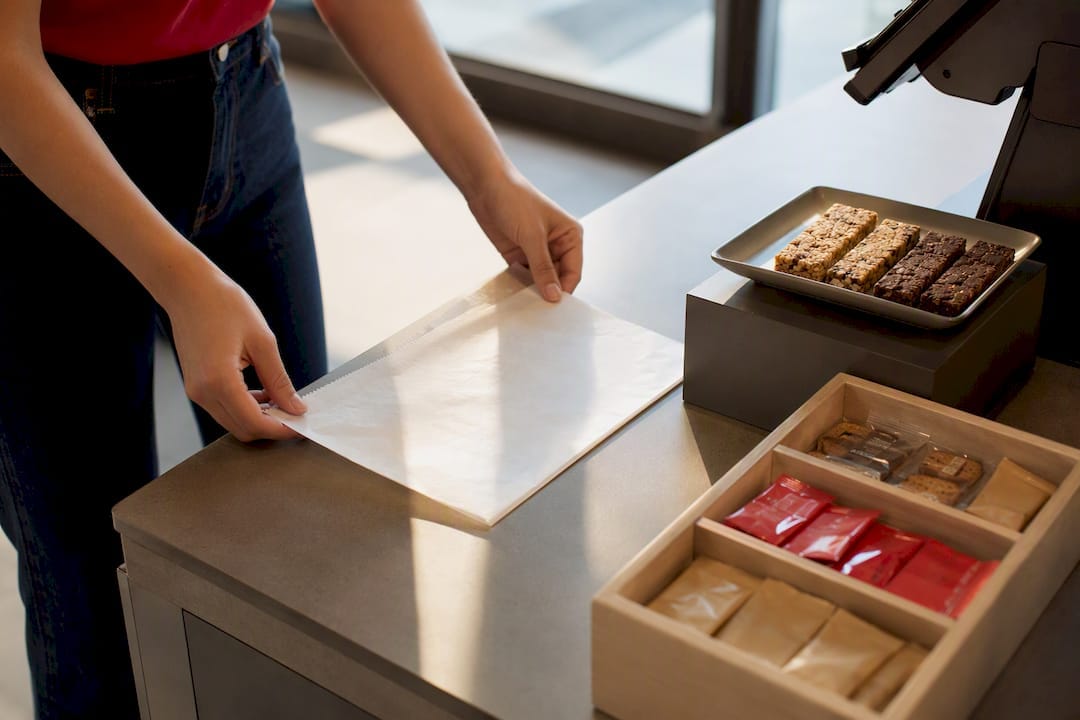
On the digital side, the network runs a digital marketplace with sponsored product placements and email marketing that reaches students, faculty, and parents through channels they already check. Layer in events, and you get orientation sponsorships, game-day activations, and student creator programs that turn the campus itself into a media environment rather than a backdrop for one.
A few patterns worth knowing before you commit budget:
- In-store sampling performs best for new product trial and works particularly well in the first weeks of a semester.
- Digital marketplace ads suit brands with a clear SKU and a direct path to purchase.
- Orientation and game-day sponsorships build awareness at scale but need creative built for a crowd, not a feed.
- Student creator programs generate organic-feeling content that a studio shoot cannot replicate.
Pro Tip: Book orientation and back-to-school placements at least 90 days ahead. Campus calendars fill fast, and the best in-store real estate goes to whoever commits early.
How brands benefit: concrete use cases and outcomes
The channels only matter if they map to a goal, so here is how the mapping tends to work in practice.
- Awareness plays: Orientation and game-day activations work best with creative built for shared, social moments, think sampling stations and branded photo spots rather than a single static banner. These placements build top-of-mind recognition among students who are forming brand habits for the first time.
- Conversion plays: Back-to-school windows and limited in-store SKUs give brands a measurement-ready setup, since a unique product code or a dedicated in-store display makes attribution far cleaner than a general awareness buy.
- Loyalty plays: Alumni touchpoints and long-tail engagement with returning students reward brands that invest beyond a single semester, and these plays make the most sense once a brand has already proven a lift in awareness or trial.
The sequencing matters. A brand that jumps straight to a loyalty play without first earning trial recognition is spending on an audience that does not yet know it should care.
Measurement and proof: metrics, case studies, and expected outcomes
Before you sign off on a campus media buy, ask for specific numbers, not a deck full of adjectives. The KPIs worth requesting are impressions, transactions, return on ad spend, site visits, and conversion lift, each tied to a defined campaign window.
A public case study gives a sense of scale. Follett scaled a student-led social program across dozens of universities and reported 77 million organic impressions, while unified analytics cut manual reporting by 95%, according to an Emplifi case study on Follett Higher Education. That kind of organic reach is difficult to buy through paid media alone, and it says something about how much trust a student audience extends to peer-created content.
Campus media performs best when it does not stand alone. Layering physical campus presence with a digital paid and social campaign tends to increase both trust and conversion behavior, according to industry guidance on integrated campus campaigns. Practically, that means:
- Pair in-store sampling with a retargeting pixel on the campaign landing page.
- Use unique coupon codes to trace in-store redemption back to a specific activation.
- Run a short post-campaign survey to capture loyalty signals that a transaction log will not show.
Kontrol Media’s own framework for measuring the ROI of marketing and advertising campaigns walks through how to structure that attribution before the campaign launches, not after.
How to work with Follett Media Network: media kit, timelines, and activation process
Getting started is less complicated than most brands assume, but it does require lead time. The media kit typically outlines audience statistics, available ad products, and channel specifications, and it is the starting point for any conversation with the network’s client team.
Lead times vary by activation type:
- Orientation sponsorships generally need to be locked in months before the fall semester starts.
- Game-day activations require coordination with athletic department calendars, so earlier outreach avoids scheduling conflicts.
- Back-to-school in-store placements have the tightest turnaround window and the highest demand from competing brands.
Before reaching out, prepare creative assets sized for both physical and digital placements, a clear point of contact for approvals, and any compliance documentation your legal team requires for on-campus promotions. Brands that show up with these ready move through the activation process faster than those still drafting creative after the calendar is booked.
Competitive differentiation and unique selling points of Follett Media Network compared to other advertising platforms
Most advertising platforms sell you attention. Follett Media Network sells you proximity, and the difference shows up in how the audience behaves. A student walking past a campus store display multiple times a week is a different kind of prospect than someone scrolling past a sponsored post once.
The network’s tie to Follett Discover is a genuine differentiator, since the platform’s role in faculty course-material adoption creates a built-in reason for students to visit campus retail locations, according to Shu.edu’s coverage of the platform. Few advertising channels can claim a captive, recurring reason for their audience to show up in person.
The network’s reach across more than 1,000 campus store partnerships also gives it a scale that most niche campus marketing vendors cannot match, per Follett’s brand partner materials. That said, scale alone is not the whole story. What sets campus media apart from broad digital advertising is the trust context: students engage with in-store and event moments inside an environment they already associate with their daily routine, not an ad they are trying to scroll past. Brands evaluating campus advertising strategies should weigh that trust context against the more granular targeting available on programmatic platforms, since the two approaches solve different problems rather than competing head to head.
Typical pricing models and cost structure for advertising with Follett Media Network
Follett does not publish a standardized rate card, and that is fairly typical for campus and retail media networks, where pricing tends to depend on activation type, campus count, and campaign duration rather than a fixed menu. Brands should expect to request a quote through the media kit process rather than find a published price list.
That said, the cost structure generally follows the logic of the activation itself. In-store placements and sampling are often priced per campus or per region, since they require physical setup and staffing. Digital marketplace ads and email placements tend to follow more familiar impression-based or flat-fee models, similar to other retail media networks. Event sponsorships, such as orientation or game-day activations, are usually priced as a package that bundles physical presence with some digital promotion.
For brands used to buying programmatic media by the impression, this can feel like a different negotiation altogether. It is worth budgeting time, not just money, since campus media pricing often reflects logistics (staffing, shipping, local coordination) as much as reach. Kontrol Media’s work helping brands stand up retail and commerce media network partnerships involves exactly this kind of cost modeling, translating a network’s activation menu into a budget a finance team will actually approve.
Brand safety and compliance measures to ensure appropriate ad placement
Campus environments carry their own compliance considerations, and any brand running promotions on or near a college campus needs to think through more than just creative approval. Age-appropriate messaging matters, particularly for alcohol, financial products, or anything with legal restrictions tied to a student’s age.
Operational governance is where this gets tested in practice. Centralized brand guidelines paired with localized creative brief templates let student creators keep their content authentic while still complying with disclosure rules and brand safety standards, a balance the Emplifi case study on Follett’s student-led programs points to directly. Local store managers also need training so that in-store placements match brand expectations consistently across a large network of campuses, not just at a handful of flagship locations.
Brands should ask their campus media partner how creative gets reviewed before it appears in a student’s inbox, on a bag insert, or on a table at orientation. A clear approval chain, one that includes both the brand’s legal team and the network’s compliance staff, prevents the kind of placement mistake that damages trust with an audience that notices when something feels off.
Details on audience engagement metrics beyond reach, such as dwell time or interaction rates
Reach numbers get the headlines, but they do not tell you whether a student actually engaged with a display, opened an email, or picked up a sample. Engagement metrics fill that gap, and they matter more for campus media than for most digital channels because so much of the activity happens in person.
Event dwell time, how long a student spends at a sampling table or orientation booth, signals genuine interest rather than passive exposure. Interaction rates on digital marketplace placements and email opens give a comparable signal for the online side of a campaign. Student-led content adds another layer entirely: the 77 million organic impressions reported in the Emplifi case study came from engagement patterns, shares, comments, saves, that a paid impression count simply cannot capture.
Brands running campus campaigns should request these engagement figures alongside raw reach, since a display that gets seen but not touched is a very different result from one that draws a line of students. Academic research on campus promotions backs this up qualitatively: promotions that match student interests and allow for interactivity tend to increase both engagement and purchase likelihood, per research on brand promotion effectiveness among university students. Reach opens the door. Engagement tells you whether anyone walked through it.
Kontrol Media perspective: practitioner guidance on maximizing campus media
Here is what I have learned watching brands run campus campaigns: the ones that win do not treat every activation as equally important. A quick-win sampling event tells you whether the product resonates before you commit to a semester-long sponsorship, and that sequencing saves budget that would otherwise get spent learning a lesson the hard way.
Pairing a Follett activation with owned and paid channels is where the real lift shows up. A retargeting pixel on your campaign landing page, a unique coupon code tied to the in-store display, an email capture at the orientation booth, none of these are complicated, but they are the difference between a campaign you can measure and one you can only describe.
Pro Tip: Give your student creators a two-page brief, not a twenty-page deck. The best content comes from students who understand the goal but still sound like themselves.
Local-store coordination is the unglamorous part that determines whether any of this works at scale. One well-briefed store manager beats ten enthusiastic emails that never get read.
— Mark Kapczynski
How Kontrol Media helps brands design and run campus and retail media campaigns
Running a campus campaign well means someone has to own the logistics: the store coordination, the creative approvals, the measurement plan that ties an in-store sample back to a sale. That is the gap Kontrol Media fills. We build and operate retail and commerce media network partnerships, and we bring the same hands-on execution to campus channels like Follett Media Network, turning a media kit into a scoped, measured campaign rather than a line item that never gets reported on.
Our services cover strategy and execution across marketing, sales, and partnership development, and our work helping brands stand up a retail or commerce media network applies directly to scoping a campus program from first outreach to measurement. If you are weighing a campus media buy and want a partner who has run retail media network operations before, get in touch and we will map the right activations to your goals.
Sources
FAQ
What colleges use Follett?
Follett Higher Education manages relationships with more than 1,000 campus store partnerships across colleges and universities. The exact list of partner institutions is not publicly listed in a single directory.
What products does Follett sell?
Follett’s campus retail operations sell course materials, general merchandise, and branded campus products, alongside advertising products like in-store placements, digital marketplace ads, and event sponsorships for brand partners. The mix varies by campus location and store format.
What is the Follett Discover program?
Follett Discover is a platform that supports faculty course-material adoption and drives student traffic into campus retail environments, according to Shu.edu’s coverage of the program. It has since been updated and is also referenced as Follett Student Experience, or My Materials, in more recent platform documentation.
Where is Follett Higher Education Group’s corporate headquarters located?
Follett Higher Education Group’s corporate headquarters location is not publicly listed in the sources reviewed for this article. Brands seeking that detail should confirm directly through Follett’s official brand partner contact channels.