


Gift guides are not a tactic you bolt onto a holiday plan. Treated well, they are the spine of it: one curated set of products that earned media, paid media, email, social and retail media can all point at. The catch is timing. As of mid-October, the long-lead editorial windows have closed, but the part of the season where gift guides do the most work, the weeks leading into Black Friday and the last-minute scramble after it, is wide open.
This is how we plan holiday media around gift guides for brands, retailers and the executives who answer for growth, including what to do if you are starting later than you wanted.
TL;DR
- Build the plan around one product edit and one tracked link structure, then adapt it for editors, owned channels, paid social and retail media.
- Editorial gift guide windows close early, but digital guides, creator guides and your own guide keep running into December, so late is not the same as lost.
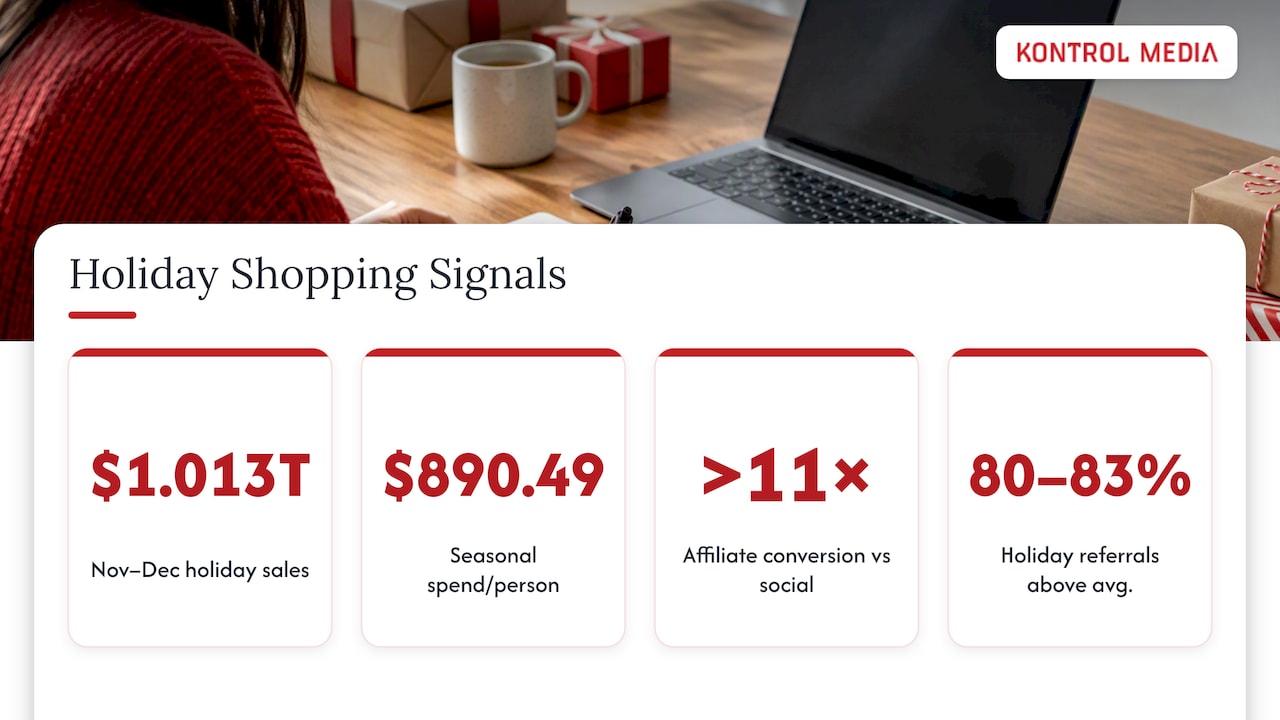
- Spend is high but shoppers are cautious: NRF forecasts $1.013 trillion in November and December 2026 sales, up 4.2% over 2025, so curation and value framing matter.
- Measure incrementality, not just clicks and ROAS, or you will pay for sales you would have had anyway.
- Inventory, affiliate tracking and landing pages are part of media planning, not an afterthought.
Table of Contents
- Why gift guides deserve a seat at the planning table
- Start with the edit, not the channel
- A realistic timeline for 2026
- Layer the media around the guide
- Budgeting without guessing
- Measure what actually moved
- Our perspective
- When to bring in help
- A short checklist for the next 14 days
- FAQ
- Sources
Why gift guides deserve a seat at the planning table
A gift guide solves the problem the shopper actually has: too many options and not enough time. That makes it one of the few formats that serves discovery and conversion in the same click. Shoppers arrive without a brand in mind, and a trusted list hands them one.
The money is there. NRF’s forecast calls for holiday sales of $1.013 trillion in November and December this year. Last year, NRF’s consumer survey put planned spending at $890.49 per person on gifts, food, decorations and other seasonal items. Yet Experian’s 2025 holiday report described consumers as cautious, with tight budgets and tariff worries shaping behavior. A cautious shopper leans harder on someone else’s curation, which is exactly the job a guide does.
Social and creator-led discovery has become part of the same story. Adobe’s data showed that social media affiliate strategies converted at more than 11 times the rate of standard social network marketing in 2025, with social referral volume surging 80% to 83% above yearly averages during the holiday season. Read that as a signal about format: product curation by a person someone trusts outperforms generic ads.
Start with the edit, not the channel
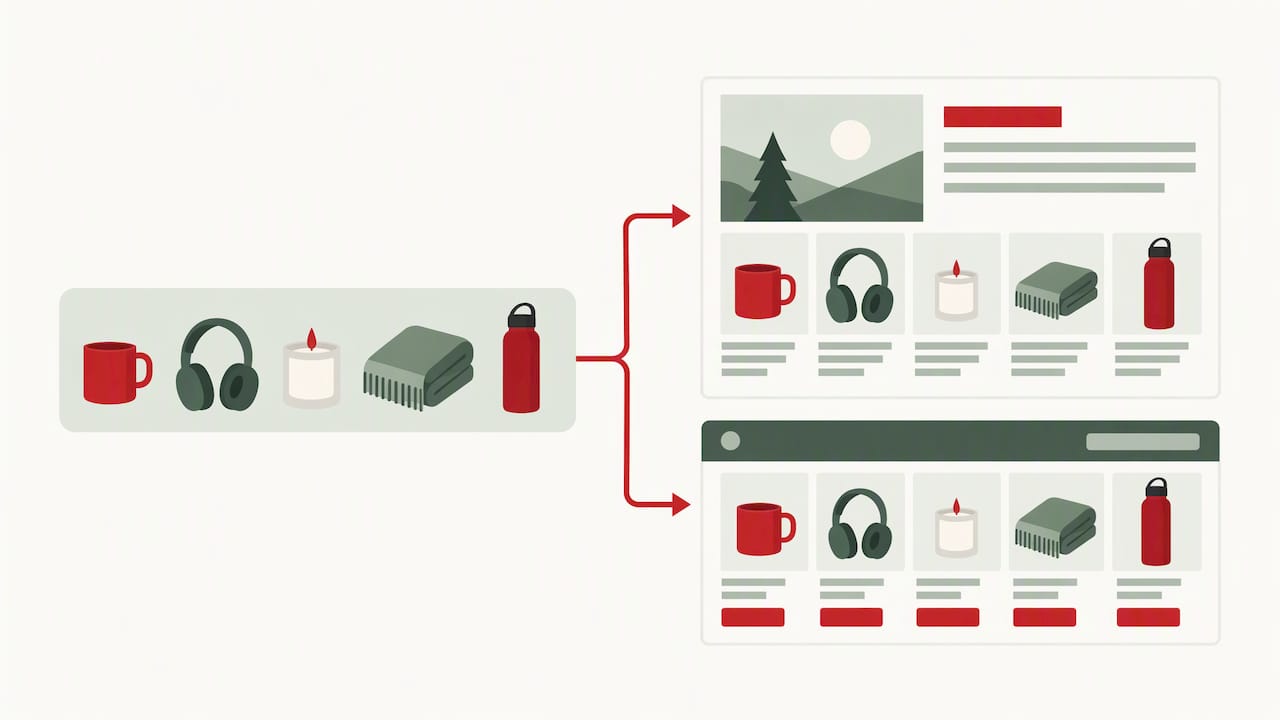
Most gift guide plans fail before a single pitch goes out, because the brand has no edit. A guide with 50 products is a catalog. A guide with 8 to 12 products that clearly fit together is a point of view.
Before you plan any media, make four decisions.
Who is the gift for? “Gifts for the home cook,” “gifts under $50,” and “gifts for the new homeowner” each imply different editors, different creators and different keywords. Pick two or three audiences, not eight.
Which products can carry the season? Choose items with healthy margin, deep inventory and a story that fits in one sentence. If a hero product sells out on the first Tuesday of December, every dollar of media after that is wasted.
What is the value frame? With cautious shoppers, price tiers, bundles and shipping cutoffs often matter as much as the product itself. Spell out the guarantee, the return window and the last order date for delivery by December 24.
What does the shopper land on? One page, built for the guide, with the same products in the same order the editor or creator showed them. Mismatch between the guide and the landing page is the quietest conversion killer in the season.
We go deeper on the operational side in our piece for small ecommerce teams on holiday ads, gift guides and execution, and the short version is the same: operations first, ads second.
A realistic timeline for 2026
Published guidance on pitching suggests print and long-lead magazine guides close months ahead, while digital guides run well into December. That matches what we see. Here is how we think about the calendar when the date is mid-October.
| Window | What is still possible | What to do |
|---|---|---|
| Now to late October | Digital editor and freelancer guides, creator guides, regional outlets, newsletters | Send complete pitches with samples, tracked links and inventory confirmation |
| Early to mid November | Black Friday and Cyber Week roundups, deal-driven guides, creator gift hauls | Lead with price tiers, bundles and deadlines |
| Late November to mid December | Last-minute and shipping-cutoff guides, email and retail media placements | Emphasize delivery dates, gift cards and in-store pickup |
| After December 25 | Gift card, post-holiday and New Year lists | Keep a lighter-touch plan and collect data for 2027 |
If your brand missed the early windows, do not abandon guides. Build your own, pitch the late-stage digital ones, and write down this year’s gaps so you can start in June next year.
Layer the media around the guide
The strongest holiday plans we see treat each channel as a different way of putting the same curated edit in front of a shopper at a different moment.
Earned: editors, freelancers and creators
Earned guide placements are the least predictable and the most credible. The pitch has to make an editor’s job easy: a short note about who the product is for, images in the format they use, a sample, a price, a working link and proof you can ship. Search last year’s guides from the outlets you want, and write to the person who actually assembled them. A pitch that fits a guide the writer already runs beats a generic holiday blast every time.
Creators belong in this layer, too. In categories tied to the home, we have seen real estate agents act as unusually credible influencers because their audiences trust them on moving, hosting and gifting for new homes. That is the thinking behind our work on real estate agents as social media influencers for brands.
Owned: your own guide, email and site
Your own gift guide is the one asset nobody can close the window on. Publish it early, update it weekly, and give it a clean URL you can use in email, social bios and paid ads. A guide with 7 to 15 pieces that fit a theme will usually serve readers better than an exhaustive one. Seasonal content can also build search traffic over time: one seasonal content case study shows a Christmas-themed site growing from 511 to 3,540 clicks, which is a useful reminder that holiday pages compound when you keep them live and refresh them each year.
Paid social and creator amplification
Paid social is where a good guide gets a second life. Put budget behind the creator content and guide placements that are already performing, rather than starting from scratch with brand creative. We cover the mechanics in our article on integrating social media into your advertising strategy.
Audience matters here, too. Gamers are a large, underserved holiday gifting audience for many consumer brands, and our seven-step playbook for reaching gamers walks through how to approach them without simply buying a sponsorship.
Retail and commerce media
For brands that sell through retailers, gift guide logic extends onto the retailer’s own properties. Amazon Ads’ 2025 holiday guide describes an extended shopping period spanning multiple events, which means retail media planning needs to cover the whole stretch, not just Black Friday week. Sponsored placements, onsite gift collections and offsite audiences all behave like a guide when they present a curated set of products at the point of decision.
If you are on the retailer side, the same logic runs in reverse: your holiday gift guide is inventory. Featured collections, sponsored guide slots and email placements are things brands will buy if you package and measure them well. Our commerce media guide for marketers explains the structure, and our thinking on shopper marketing strategy shows how to connect the in-store and online moments.
Budgeting without guessing
There is no single correct split between earned, paid and retail media, and anyone who gives you a universal percentage is guessing. What we do instead is rank each layer on three questions.
How fast can it scale? Paid social and retail media can be turned up in days. Earned placements cannot.
How measurable is it? Retail media usually has closed-loop sales data. Earned and creator content often needs promo codes, tracked links and holdout comparisons.
How exposed is it to inventory risk? Anything that drives demand to a product you may not have in stock is a liability, so pace spend to your supply chain.
Then we hold back a flexible reserve, often a meaningful slice of the budget, to move toward whatever is working by the second week of November. The season rewards teams who can reallocate quickly.
Measure what actually moved
Clicks from a gift guide are a start, not an answer. A guide may deliver sales that were already coming, or it may introduce your brand to people who would never have found it. The difference is incrementality.
As one industry committee put it in a Q&A on retail media metrics, incrementality testing helps brands and agencies see which channels, audiences and keywords drive demand by isolating causal effect. The IAB’s guidance on retail media advanced measurement and data collaboration goes into incrementality measurement and data collaboration in more detail, and it is worth reading if retail media is a major part of your holiday budget.
In practice, here is what we set up before launch:
- Unique tracking links or codes for every guide, creator and placement, so you can compare sources cleanly.
- A holdout where possible, such as a region or audience that does not see a paid push, so you can estimate lift.
- A weekly read on new versus returning customers, because the best guides bring new buyers.
- A post-season file that records every placement, cost and result, which becomes next year’s pitch list.
Our perspective
We spend our days on both sides of this problem: helping brands reach shoppers through retail and commerce media, and helping media owners package their own inventory so brands will buy it. That vantage point makes one thing obvious. Gift guides work when somebody has done the unglamorous work of making the whole chain agree.
The pattern we see most often is not a creative problem. A brand has a lovely product edit, a pitch that lands, and a landing page that does not match what the editor showed. Or the hero product is under-stocked. Or the creator link is untracked, so nobody knows whether the partnership worked. Strategy and execution sit in different departments, and the shopper falls through the gap.
That is why we insist on staying close to execution. Planning a holiday season on slides is easy. Making sure the retail media team, the creator team, the email team and the operations team are all working from the same edit and the same numbers is the part that decides results. We would rather help a client run five things well than announce fifteen.
And we think the season should have some joy in it. Gift giving is a human moment, and the best campaigns we have seen carry that warmth through the product story, the creator voice and the way the page feels. Shoppers can tell when a brand is simply pushing inventory.
— Mark Kapczynski
When to bring in help
If holiday planning keeps stalling at the handoffs, between brand, agency, retailer and sales, that is usually where outside help pays for itself. We work with CMOs, retailers and portfolio companies on business strategy, marketing and sales execution, and with retailers and consumer businesses that want to stand up a retail or commerce media network or run one day to day through retail media network operations. For brands that sell to homeowners and buyers, we also build partnerships through the real estate channel, described on our real estate page.
A short checklist for the next 14 days
If you read nothing else, do this in order. Lock the edit of 8 to 12 products and confirm inventory depth. Build the landing page and the tracking links. Send the pitches that can still land with digital editors, regional outlets and creators. Publish your own guide and put it in email. Stage paid social behind whatever is already getting traction. Set up the holdout and the reporting file. Then check in every Monday through the end of December and move money toward what is working.
FAQ
When should we start holiday media planning with gift guides?
For print and long-lead outlets, the work happens in the early summer, so for next year, start planning in the first half of the year. For this season, digital editors, creators and your own guide are still available. Prioritize pitches that arrive complete, with samples and tracked links.
How many products should a gift guide include?
There is no fixed number, but a tight edit of roughly 7 to 15 items that fit a theme tends to serve readers better than a catalog of 50 or 100. Group products by recipient or price tier so the shopper can decide quickly. Make sure every item is in stock and links to a page that matches the guide.
Are gift guides worth it if our budget is small?
Often yes, because your own guide, email and creator content cost far less than broad paid reach. Start with the edit and the landing page, then put modest paid budget behind what already works. Keep inventory in mind, since a small team cannot afford to promote items that sell out.
How do we measure whether a gift guide actually drove sales?
Use unique links or codes for every placement, and compare new versus returning customers. Where you can, run a holdout to estimate incremental lift instead of relying on last-click results. Industry bodies such as the IAB publish guidance on incrementality measurement in retail media.
Should retailers think about gift guides as ad inventory?
Yes. Featured collections, sponsored guide slots and email placements are formats that brands buy when they are packaged and measured clearly. The key is closed-loop reporting that shows incremental sales, not only impressions.
Sources
- NRF: Winter Holiday Data and Trends, 2026 forecast
- NRF: Consumers to Spend Second-Highest Amount on Record
- Experian: Holiday spending trends and insights, 2025
- Adobe: holiday social and affiliate data
- Amazon Ads: Trends for 2025 holiday marketing strategies
- IAB Europe: Measuring What Matters, retail media metrics Q&A
- IAB: Retail Media Advanced Measurement and Data Collaboration