


Prioritize move-in and orientation week, back-to-school, homecoming, and graduation on the Follett Media Network, and run one activation first: coordinated bookstore displays paired with a QR-driven digital coupon that captures data at the point of sale. That single combination turns foot traffic into trial, and trial into a measurable purchase lift within the same semester.
TL;DR:
- Align activations with key campus moments, such as move-in, back-to-school, and graduation, scheduling campaigns 6 to 16 weeks in advance depending on the event.
- Use targeted in-store displays, point-of-sale promos, sampling, and event sponsorships tailored to each moment to maximize relevant student engagement.
- Leverage digital tools like QR codes and promo codes to drive immediate conversions and gather first-party data for remarketing efforts.
- Focus on timing precision and channel-moment pairing, as foot traffic and purchase intent are tightly linked to academic calendars and specific student behaviors.
- Measure success through sales uplift, redemptions, and foot traffic, with attribution built into campaign mechanics using unique promo codes and comparative sales analysis.
Table of Contents
- Key campus moments and precise timing windows
- Follett channels and activation formats mapped to each moment
- Audience behavior and market evidence that inform timing and creative choices
- Measurement, KPIs, and budgeting for Follett activations
- Tactical checklist and 12-week activation timeline brands can copy
- Kontrol Media perspective: translating moments into measurable revenue
- How Kontrol Media helps brands plan and execute Follett campus activations
- Primary sources and further reading
- Sources
- FAQ
Key campus moments and precise timing windows
Every campus calendar has a rhythm, and Follett’s retail footprint sits right on top of it. The trick is not finding a moment to show up. It’s knowing how far in advance to plan so your creative, inventory, and staffing land exactly when student intent peaks.
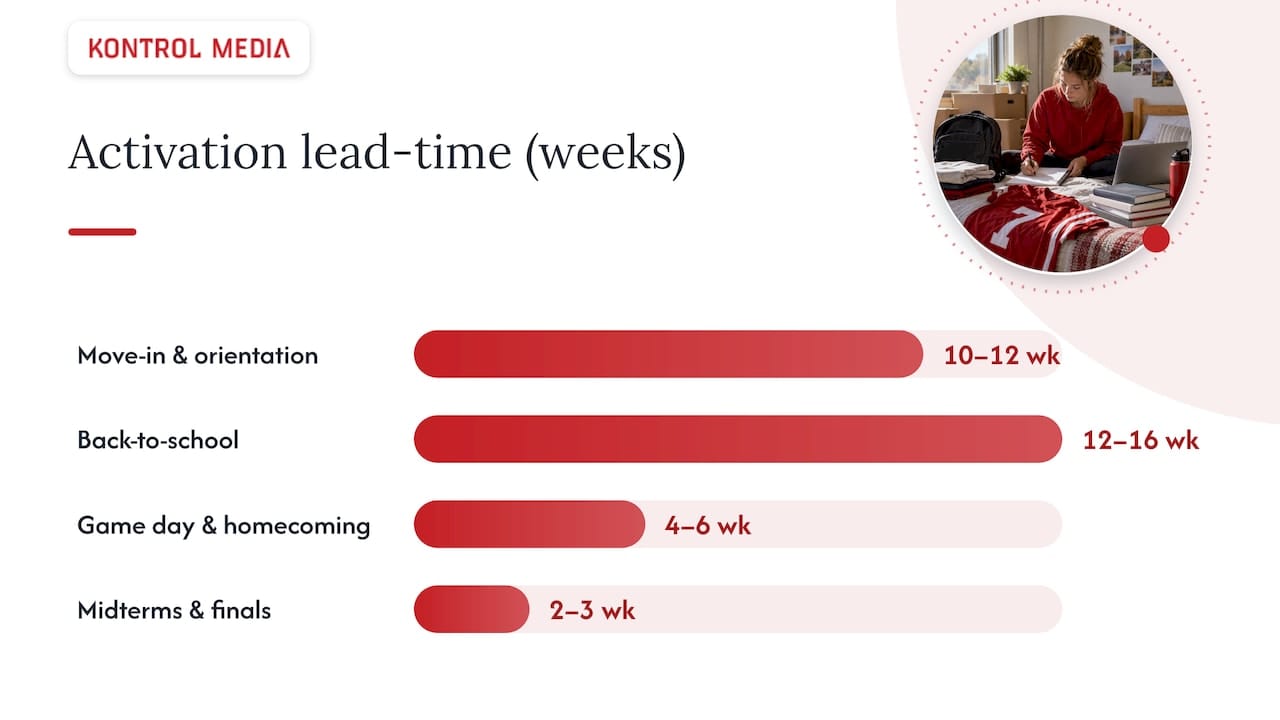
Move-in and orientation come first, and they move fast. Plan 10 to 12 weeks out, then launch during move-in week itself, when dorm setup and first-time purchases dominate. Students are outfitting a room, buying school supplies, and forming brand impressions that stick for the semester. Follett’s bookstore is often the first physical retail touchpoint a new student sees on campus, which makes it a strong place to build early brand familiarity rather than compete for attention later.
Back-to-school runs longer and deserves more lead time. Plan 12 to 16 weeks ahead, with the two weeks before classes start carrying the heaviest volume. This window covers apparel, tech, and course materials, and it’s the moment when back-to-school shopping shifted later in 2025, so media weight should lean into those final pre-term weeks even as production wraps earlier.
Game day and homecoming are shorter sprints. Give yourself four to six weeks for creative and logistics, then activate the week of the event. Students are spending on apparel, social experiences, and branded merchandise, and Follett highlights these moments as high-attention windows that suit fast creative cycles and experiential sampling.
Midterms and finals shift the mood entirely. Students want convenience, comfort, and stress relief, not aspirational purchases. Plan two to three weeks out and keep messaging practical: energy, snacks, study tools.
Graduation closes the calendar with gifting and nostalgia. Plan six to eight weeks ahead, since families and students are buying regalia, keepsakes, and celebration items on a fixed date that never moves.
A few patterns hold across every one of these moments:
- Bookstore traffic spikes around fixed academic dates, so timing precision matters more than creative polish.
- Students treat the campus bookstore as a trusted hub, which lends borrowed credibility to brands that show up there.
- Shorter moments like game day reward fast production, while longer moments like back-to-school reward sustained media presence.
Follett channels and activation formats mapped to each moment
Follett’s network gives brands several distinct entry points, and each one fits certain moments better than others. Matching the channel to the moment, rather than defaulting to the same tactic every time, is what separates a campaign that gets noticed from one that gets ignored.
- On-campus bookstore displays work best for back-to-school and graduation, when students are already browsing with purchase intent. A themed end-cap or entry display with a QR code linked to a limited-time bundle converts foot traffic without requiring staff.
- Point-of-sale promotions suit any moment with a transaction already happening, since a small discount or bundled add-on at checkout costs little and lifts basket size.
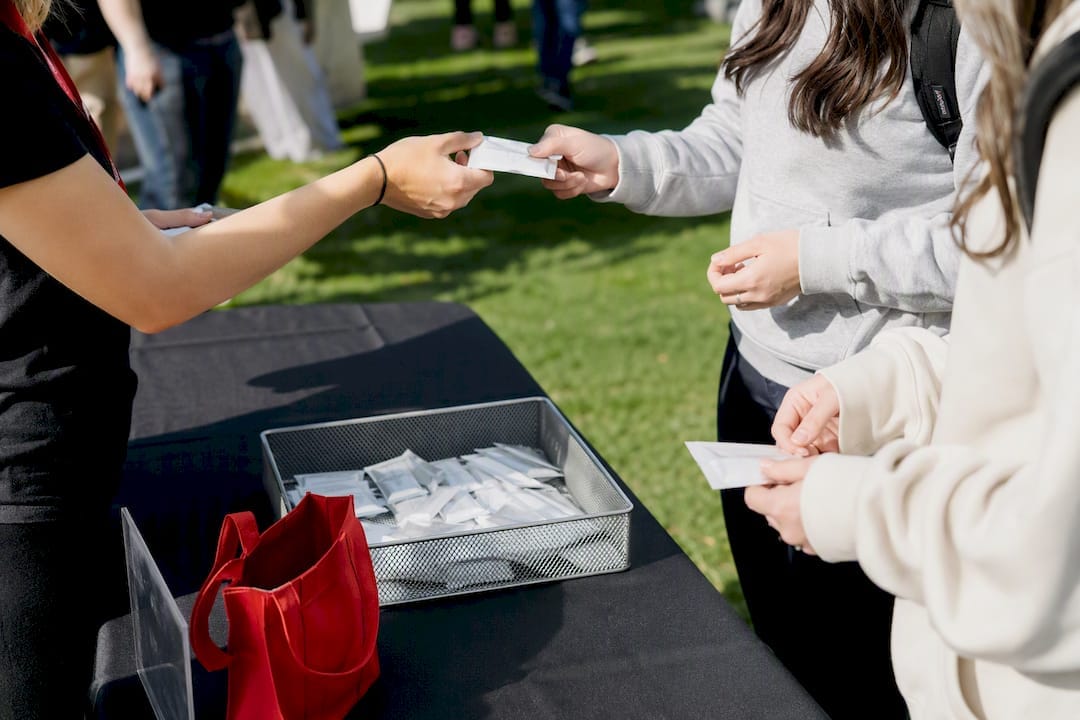
- Sampling at orientation fairs fits move-in week and welcome weeks, when students are open to trying new products and have time to stop at a table.
- Event sponsorships are the natural home for game day and homecoming, where a branded presence at a tailgate or campus event earns visibility that a static display cannot.
- Digital bookstore inventory extends any in-store push online, letting brands run the same offer for students shopping course materials remotely.
- Email and promotional messaging through the bookstore’s existing communications reinforces timing windows, particularly for finals-week convenience items and graduation gifting.
The mechanics matter as much as the channel. A QR code that unlocks a discount does two jobs at once: it moves product and it captures a first-party contact for remarketing later in the semester. Limited-edition merch tied to homecoming or graduation creates urgency without needing a price cut. Bundled offers, like a school-supplies kit at back-to-school, raise average order value while feeling like a deal to the student.
Logistics deserve attention early. Creative specs and approval windows typically need four to six weeks of lead time before a launch date, sampling programs require manifest approval and staffing coordination, and fulfillment for any physical giveaway should be locked in before the semester calendar, not during it.
Audience behavior and market evidence that inform timing and creative choices
The timing and channel choices above aren’t guesswork. They line up with how students actually behave and spend, and the research backs up why certain moments deserve more weight than others.
Online back-to-school spending rose to 45% of the category, up from 39% two years earlier, which means a bookstore-only strategy leaves real volume on the table. Pairing a physical display with a digital offer captures both halves of that spend instead of chasing one.
Peer influence is the other force worth building creative around. KPMG found that 66% of teen consumers say friends and peers shape their purchases more than traditional advertising does, which is exactly why sampling and visible campus presence outperform a banner ad. Students trust what they see other students using.
Budgets are tighter this cycle, and YPulse reports that peak back-to-school shopping shifted later in 2025, even as students remained trend-driven in tech, fashion, and dorm essentials. That combination argues for value-forward messaging, deals that feel earned rather than desperate, and media weight that holds through the final pre-term weeks instead of front-loading everything.
Tech adoption adds a creative wrinkle. KPMG’s back-to-school data shows 57% of students use GenAI extensively or moderately for schoolwork, a signal that laptop, software, and digital learning tool brands have a genuinely receptive audience on campus right now, not a hypothetical one.
Measurement, KPIs, and budgeting for Follett activations
Every objective needs its own yardstick, and campus activations tend to fail when brands measure trial the way they’d measure awareness.
- For awareness, track impressions and bookstore footfall against the campaign window.
- For trial, track samples claimed and promo redemptions, since these show intent rather than just exposure.
- For purchase, track uplift in in-store and online sales alongside the redemption rate on any unique promo code.
Attribution gets easier when you build it into the mechanic from day one. A unique promo code per moment or per location isolates which activation drove which sale. Post-campaign uplift testing, comparing sales in weeks with activation against weeks without, adds a second data point. Matching digital impressions against point-of-sale data closes the loop between the online push and the physical purchase.
Budget allocation should shift by objective.
Pro Tip: Lock in your promo code structure before creative is finalized, not after, so every asset can carry a trackable code without a last-minute redesign.
Tactical checklist and 12-week activation timeline brands can copy
A campus moment succeeds or fails on execution timing, so a reusable week-by-week structure removes the guesswork.
- Weeks 12 to 10: Confirm the moment, budget, and objective; reach out to your Follett contact and campus events staff to lock placement.
- Weeks 10 to 8: Finalize legal and compliance paperwork for sampling or sponsorship; draft the creative brief with offer mechanics, QR destination, and brand assets.
- Weeks 8 to 6: Approve creative; begin production on displays, merch, or sampling materials; confirm fulfillment and shipping timelines.
- Weeks 6 to 4: Finalize field staffing for sampling or event presence; test the QR code and promo redemption flow end to end.
- Weeks 4 to 2: Deliver final assets to Follett; confirm store or event placement; brief field staff on messaging and redemption process.
- Launch week: Execute the activation; monitor redemption in real time; adjust staffing or inventory if demand outpaces supply.
- Weeks 1 to 2 post-launch: Pull impressions, redemption, and sales data; compare against the pre-campaign baseline; report results to stakeholders.
Keep a standing creative brief template, a sampling manifest template, and a KPI dashboard with impressions, redemptions, and sales uplift as fixed fields, so the next moment on the calendar takes less setup than the last.
Kontrol Media perspective: translating moments into measurable revenue
Campus calendars reward brands that plan like retailers, not like broadcasters. The biggest mistake I see is treating every moment the same, running the same banner and hoping foot traffic does the rest. The moments that actually convert are the ones where timing, channel, and offer are built together from the start, not bolted on after a media plan is already locked.
— Mark Kapczynski
How Kontrol Media helps brands plan and execute Follett campus activations
Planning against a campus calendar is one thing. Standing up the operations, staffing, and measurement to run it well across a semester is another, and that’s where hands-on execution matters more than another strategy deck. Kontrol Media works with brands on retail and commerce media network setup and the day-to-day network operations that keep campaigns like these on schedule and measurable.
If you’re mapping a Follett activation for next semester and want a partner who can plan it and run it, see our full services and get in touch.
Primary sources and further reading
Research cited above comes from KPMG, YPulse, and Follett’s campus calendar positioning. For related planning frameworks, see our retail media playbook and campus advertising overview.
Sources
- Back to School Shopping Report – YPulse (2025-07-30)
- Follett: The campus calendar for brands (LinkedIn)
FAQ
What colleges use Follett?
Follett operates campus and digital bookstores across a large network of U.S. colleges and universities, giving brands access to students through both physical retail locations and online bookstore inventory. The exact list of partner schools is not publicly listed in a single directory, so brands typically confirm specific campus availability directly with Follett.
What brands are college students interested in?
Students respond strongly to brands that show up at the right calendar moment with a relevant offer, particularly in tech, apparel, and dorm essentials categories. Peer influence drives 66% of purchase decisions among teen consumers, which means visible campus presence and word of mouth often outperform traditional brand advertising.
What are the best ways to market to college students?
The strongest approach pairs a physical campus touchpoint, like a bookstore display or sampling table, with a digital mechanic such as a QR code or promo code that captures data and drives redemption. Timing the activation to a specific campus moment, rather than running a generic seasonal campaign, consistently produces better engagement because it matches what students are already doing that week.
What are some popular products among college students?
Course materials, tech and laptops, apparel, and dorm essentials see the heaviest demand across the academic calendar, with 57% of students using GenAI tools extensively or moderately for schoolwork. That tech adoption makes software, laptops, and digital learning tools a particularly receptive category for campus activations right now.