


Media partnership development is the systematic process of identifying, testing, and scaling collaborations that deliver measurable audience and revenue outcomes. The single most effective first move is a time-boxed pilot built around one shared KPI, something like incremental conversions, agreed on before either side commits budget. Measurement and mutual value aren’t nice extras here. They’re the whole point.
TL;DR:
- Successful pilots typically last long enough to capture a complete sales cycle or meaningful data before scaling decisions are made.
- Commercial terms should align with campaign goals, using performance-based deals for best trust and measurement clarity.
- Effective discovery includes assessing audience overlap, data sharing capabilities, and reach potential to ensure achievable KPI impact.
- Measurement should focus on incremental conversions and revenue lift, using credible methods like match-market tests or randomized controlled trials.
- Clear disclosures and governance processes are essential for compliance and building scalable, repeatable media partnership programs.
Table of Contents
- A step-by-step framework for building media partnerships
- Roles, commercial terms, and operational responsibilities
- Measurement and KPIs: choosing methods that prove incrementality
- Disclosure, compliance, and audience trust
- Scale and governance: turning pilots into repeatable programs
- Agency perspective: a 90-day approach to partnership development
- Three priorities for marketing leaders
- Kontrol Media: how we help and how to get started
- Sources
- FAQ
A step-by-step framework for building media partnerships
Every partnership that lasts started as a small, well-measured bet. The framework below moves in one direction, from discovery to scale, and skipping a step almost always shows up later as a billing dispute or a measurement argument.
- Discovery: Screen candidates against audience overlap, addressable reach, and whether they’ll actually share data you can act on.
- Value definition: Agree on the business outcome you’re both chasing and name one primary KPI, not five.
- Offer design: Scope the pilot, including creative specs, targeting logic, timeline, and a budget small enough to fail cheaply.
- Execution: Confirm tracking is live before launch, not after.
- Decision and scale: Set go or no-go thresholds before you see a single result, so the data decides instead of the relationship.
For discovery, a short checklist keeps the conversation grounded:
- Does the partner’s audience genuinely overlap with your buyer, not just adjacent demographics?
- Can they share hashed or aggregated data without violating either party’s privacy commitments?
- Do they have the reach and frequency to move a KPI, not just generate impressions?
The execution phase is where good intentions die quietly. Pixels go untested, reporting cadence never gets set, and three weeks in, nobody can agree on what the numbers mean. A pilot setup checklist covering data feeds, tracking tags, and a weekly reporting rhythm solves most of that before it starts. Our guide to media network best practices walks through the operational side in more depth.
Roles, commercial terms, and operational responsibilities
Commercial structure should follow the goal, not the other way around. Flat fees suit awareness plays with predictable delivery, revenue share works when both sides are motivated by the same sales outcome, and CPM or CPV fits reach-driven campaigns where exposure itself is the currency. Performance-based deals, tied to conversions or leads, tend to build the most trust over time because they force both parties to agree on measurement early.
- Creative and trafficking usually sit with the media partner, while measurement and data governance stay with the brand.
- Contracts should spell out SLAs, data rights, attribution rules, audit access, and clean termination terms.
- Watch for vague attribution language or partners who resist third-party measurement. Both are red flags worth pausing over.
Pro Tip: Put the KPI and measurement method in the contract itself, not just the marketing brief. It removes the argument before it starts.
Measurement and KPIs: choosing methods that prove incrementality
The KPIs that matter most in partnership work are incremental conversions, revenue uplift, engagement lift, and reach paired with frequency, in that rough order of importance. Vanity metrics like impressions tell you a partner delivered inventory, not that the partnership worked.
Method selection depends on stakes and budget. Quick lift studies and match-market tests work as low-cost proxies for smaller pilots, while randomized controlled trials and econometric modeling suit larger, higher-stakes programs. IAB’s guidelines for incremental measurement map these methods to use cases and stress credible counterfactuals and bias control as the foundation of any of them.
- Use match-market testing or lookalike holdouts before investing in a full RCT.
- Lean on data clean rooms and hashed-identifier matching to reduce attribution disputes between partners.
- Build a shared dashboard both teams can see, not two separate reports that never reconcile.
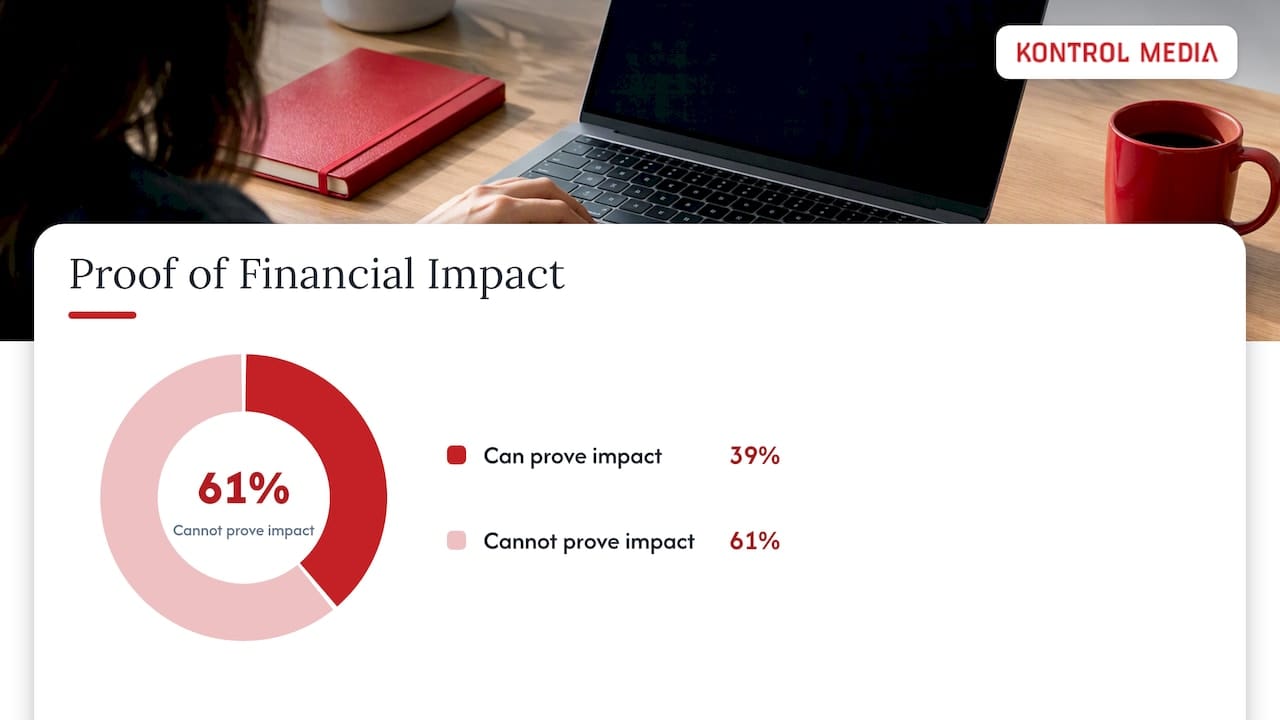
Only 39% of B2B marketing leaders can currently prove the financial impact of their marketing, which is exactly why a one-page scorecard matters. List the primary KPI, secondary metrics, the measurement method used, pilot dates, and one recommended next action. Anything longer gets ignored by the people who approve the next budget cycle.
Disclosure, compliance, and audience trust
Native and sponsored content has to be clearly labeled and never deceptive. The FTC’s native advertising guidance is explicit that vague or buried disclosures don’t meet the bar, whether the placement lives in a content feed, a recommendation widget, or a republished article.
- Place the disclosure where readers see it first, not buried at the bottom of a long post.
- Use plain language like “sponsored” or “paid partnership,” never a soft substitute like “collab” or “thanks.”
- Build disclosure review into creative sign-off, and require a separate compliance check for every native placement and republished piece.
Partners who disclose clearly tend to keep audiences longer, which is its own argument for treating compliance as a growth lever rather than a legal chore.
Scale and governance: turning pilots into repeatable programs
A pilot that worked once is a data point. A pilot that works three times with a documented process is a program. That shift needs governance: a small steering committee, a regular review cadence, and clear decision rights on who can approve budget increases or kill an underperforming placement.
- Build a runbook covering creative approval, trafficking, and revenue reconciliation so the process survives staff turnover.
- Template your SLAs once and reuse them across partners instead of renegotiating from scratch each time.
- Watch for the signal that a partnership has outgrown a one-off deal, consistent volume and repeat demand often mean it’s time to productize it into a network.
Pro Tip: Feed every pilot’s learnings into a creative template library. The third campaign should take a fraction of the setup time the first one did.
Agency perspective: a 90-day approach to partnership development
Consultancies that run partnership programs for a living tend to compress the framework above into a tight quarter. An effective approach to this work generally follows four phases: align on objectives and KPI with the client early on, design and launch the pilot within the first month, hold measurement steady through the middle stretch, and decide whether to scale, adjust, or walk away in the final weeks. The same discipline applies regardless of the channel, whether it involves real estate agent networks or retail media placements inside commerce networks.
A short checklist works well dropped straight into a brief or RFP:
- One primary KPI, agreed in writing before launch.
- A named measurement method and reporting cadence.
- Clear data rights and a termination clause that doesn’t require a lawyer to interpret.
Three priorities for marketing leaders
If you’re running partnerships at the executive level, three things separate the programs that survive budget season from the ones that don’t. First, tie every partnership metric to a business outcome, revenue, leads, or retention, never engagement alone. Second, build measurement infrastructure before you scale, not after. Third, treat each partnership like a product with governance and SLAs, not a handshake deal that renews itself.
— Mark Kapczynski
Kontrol Media: how we help and how to get started
Most brands don’t need another agency pitching a partnership deck. They need someone to run the pilot, measure it honestly, and tell them whether it’s worth scaling. This work involves business strategy, measurement design, and media network operations, aimed at teams who would rather see results in a quarter than sit through another planning cycle.
- Strategy and execution support across the partnership lifecycle, from discovery to contract.
- Retail and commerce media network setup for brands ready to productize what’s working.
- Outsourced sales and business development services are available for teams that need the function without the headcount.
| Service | What it covers |
|---|---|
| Business Strategy | Go-to-market and partnership planning |
| Media partnerships | Real estate agent channel outreach and revenue partnerships |
| Retail Media Network Operations | Running and measuring an existing network |
The next step is a discovery call that turns into a 90-day plan built around one KPI. Visit our services page or reach out through Retail Media Network Operations to start the conversation.
Sources
For deeper detail beyond this playbook:
- FTC | Native Advertising Guide for Businesses
- IAB – Guidelines for Incremental Measurement in Commerce Media
- ANA Releases ‘The Confident B2B Marketer’ Report: Only 39% Can Prove Financial Impact
FAQ
How is payment structured for a paid media partnership?
Payment terms vary by deal type: flat fees for guaranteed placements, revenue share tied to sales, or CPM and CPV rates for reach-driven campaigns. Performance-based structures, where payment follows incremental conversions, are increasingly common because they align both parties around the same measurable outcome.
What are the three C’s often cited in partnership development?
Definitions vary across sources, but a common version centers on communication, commitment, and complementary strengths between the two organizations. In media partnerships specifically, that translates to shared reporting, clear SLAs, and audiences that genuinely overlap rather than merely coexist.
What principles guide strong media partnerships?
Strong partnerships tend to share a few traits regardless of industry: clear objectives, defined roles, mutual value, transparent communication, and a measurement framework both sides trust. Governance and documented decision rights round out the list for partnerships that need to scale.
What are the main structural types of media partnerships?
Media partnerships typically take one of a few forms: content collaborations, paid media placements, affiliate or revenue-share arrangements, and co-branded sponsorships. The right structure depends on whether the goal is reach, direct response, or long-term audience building.
How long should a media partnership pilot run before deciding to scale?
Most pilots need enough time to gather a meaningful sample against the primary KPI, often a full sales cycle or reporting period rather than a single campaign flight. Setting go or no-go thresholds before launch, rather than after seeing early results, keeps the decision objective.