


A consumer brand media network is an owned media property operated by a brand to publish content, build direct audience relationships, and generate revenue outside of paid advertising dependency. The industry term for this practice is brand publishing, and consumer brand media network best practices are what separate brands that build durable audience equity from those that burn budget chasing transactional traffic. Brands like Red Bull, Experian, and BuzzFeed have proven that treating your organization as a media company produces compounding returns that paid campaigns simply cannot replicate. The practices below are drawn from measurement data, partnership research, and operational frameworks that Kontrol Media applies with clients across retail, commerce media, and enterprise marketing.
1. Consumer brand media network best practices start with editorial identity
Editorial identity aligned to audience needs, not product pitches, is the foundation of every successful brand media operation. Without a documented editorial charter, your content team will drift toward promotional messaging, and your audience will notice within weeks. The charter defines who you are publishing for, what topics you own, what you will never cover, and what voice carries every piece. This document is the spine of the brand media network, and every writer, editor, and content partner should be able to recite its core principles without looking it up.
The shift from product-led to audience-led content is not cosmetic. It changes your editorial calendar, your headline writing, your distribution choices, and your partnership criteria. Brands that make this shift attract readers who return voluntarily, subscribe, share, and eventually buy. Those that skip it produce content that reads like a press release dressed in a blog format.
Pro Tip: Audit your last 20 published pieces and count how many open with a product mention versus an audience problem. If more than 30% lead with the product, your editorial charter needs a rewrite before you scale.
2. Building effective media partnerships on aligned audience data
Successful media partnership campaigns target audience overlap of 50% or more and partnership interaction rates above 5%. That threshold exists because below it, you are essentially paying for reach that does not convert into meaningful engagement or revenue. Audience overlap is the first filter, but it is not the only one. Philosophical and editorial integrity alignment matters just as much as demographic data, because a mismatch in values produces content that feels forced and erodes trust on both sides.

Long-term planning and regular collaborative engagement signal accountability and ownership, which are the two qualities that separate partnerships producing sustained results from those that fizzle after a single campaign. The most effective partnerships are built around a shared audience tension, meaning a problem or aspiration that both brands’ audiences care about deeply. Solving that tension together creates genuinely useful experiences rather than co-branded ads that neither audience asked for.
Value exchange models work best when each partner contributes something the other cannot easily replicate. One brand might bring first-party purchase data while the other brings editorial credibility and organic reach. Brands that shift from transactional affiliate arrangements to content-led editorial partnerships see 160% revenue growth and an 89% increase in average order value by attracting premium customers who are already engaged with the category.
The partnerships that actually work are not built on brand names sitting next to each other. They are built on two organizations that share a genuine belief about what their audience deserves to experience.
Pro Tip: Schedule a quarterly data-sharing session with each media partner where both sides bring audience behavior trends, not just campaign metrics. This practice surfaces new content angles and strengthens the relationship before the next campaign brief lands.
3. Technical foundation for scalable media operations
ContentOps requires a dedicated Content Architect to manage headless CMS platforms, digital asset management, and automation workflows that make repeatable, multi-format production possible. Without this role, content production becomes a bottleneck where every asset requires manual reformatting for each channel. Platforms like Contentful and Strapi separate content from presentation, which means a single article can be published simultaneously as a web page, a mobile app card, an email module, and an API feed for partner syndication.
Treating content production like a factory line, where every asset is born in multiple formats simultaneously, is what separates brands that scale their media networks from those that plateau at a dozen posts per month. A video interview becomes a transcript, a short-form social clip, a pull-quote graphic, and a newsletter section without any additional creative briefing. Automation tools like Zapier and n8n connect these production steps so that publishing one piece triggers distribution across every channel automatically.
The content hub architecture compounds this advantage over time. Centralized pillar pages with structured internal linking and schema markup build topical authority that search engines and AI discovery systems reward progressively. Structured, consistent, and agent-readable product data is critical for commerce media networks specifically, because AI systems will bypass networks whose data is stale, inconsistent, or poorly structured.
| Dimension | Traditional CMS | Headless CMS |
|---|---|---|
| Content delivery | Single channel (web) | Omnichannel via API |
| Format flexibility | Manual reformatting required | Born multi-format by default |
| Partner syndication | Custom builds per partner | API feed reused across partners |
| AI readability | Limited structured data | Schema-ready, agent-readable |
| Scaling cost | Increases linearly with output | Decreases per unit as volume grows |
Pro Tip: Before selecting a CMS, map every distribution channel your media network will use in the next 18 months. If that list includes more than three channels, a headless architecture will pay for itself within the first year of operation.
4. Measurement and continuous improvement through incrementality testing
Robust measurement frameworks using RCTs, viewability, and incrementality testing are what establish reliable attribution and build advertiser trust in your media network. IAB and MRC-aligned standards are not optional for brands that want to attract serious advertising partners. Without them, your reported results are unverifiable, and sophisticated advertisers will discount your numbers or walk away entirely.
The key performance indicators that matter most for a consumer brand media network are new-to-brand rate, incremental ROAS, and basket size lift. Each of these measures something that a simple click-through rate cannot: whether your media network is actually changing purchase behavior rather than just capturing demand that already existed. AI-powered scenario modeling helps allocate budget across content formats and distribution channels by simulating outcomes before spend is committed.
Integrating off-site channels, including connected TV and programmatic display, extends the reach of your media network beyond owned properties while keeping measurement consistent. Attribution windows must be defined clearly and shared with every advertising partner before a campaign launches. Misaligned attribution windows are one of the most common sources of post-campaign disputes, and they damage relationships that took months to build.
Pro Tip: Synchronize your measurement standards with every advertising partner in writing before the campaign begins. A one-page measurement agreement covering attribution windows, viewability thresholds, and IVT filtration methodology prevents 80% of the reporting disagreements that kill long-term partnerships.
5. Owned media versus paid-only strategies: what the data shows
Brands reallocating up to 70% of marketing budgets to owned media achieve 156% higher ROI compared to paid-only strategies. That number reflects a structural advantage, not a temporary trend. Paid media generates traffic that stops the moment the budget stops. Owned media generates compounding authority, subscriber lists, and audience loyalty that persist and grow regardless of ad market conditions.
The difference in customer acquisition cost is equally significant. A brand publishing operation that ranks for 50 high-intent search terms and maintains an email list of 100,000 engaged subscribers acquires customers at a fraction of the cost of a brand running the same acquisition volume through paid social. The commerce media versus traditional programmatic comparison makes this structural difference concrete for brands evaluating where to shift budget.
| Characteristic | Paid-only media | Owned brand media network |
|---|---|---|
| Audience ownership | None (rented) | Full (first-party data) |
| Traffic durability | Stops with budget | Compounds over time |
| Customer acquisition cost | Increases with competition | Decreases as authority builds |
| Advertiser revenue potential | None | Significant at scale |
| Brand trust signal | Low (paid placement) | High (editorial credibility) |
Paid campaigns still play a role, particularly for launching new content, reaching new audience segments, and retesting creative. The best practice is to use paid media to seed owned media growth, not to replace it. Brands that treat paid and owned as complementary rather than competing channels consistently outperform those that treat them as an either-or decision.
Key takeaways
A consumer brand media network succeeds when editorial discipline, partnership alignment, technical infrastructure, and measurement rigor operate together as a single system rather than separate initiatives.
| Point | Details |
|---|---|
| Editorial identity first | Document an audience-led charter before scaling content production or partnerships. |
| Partnership thresholds matter | Require 50%+ audience overlap and 5%+ interaction rates before committing to a media partnership. |
| Headless CMS enables scale | Platforms like Contentful and Strapi reduce per-unit production cost as output volume grows. |
| Incrementality over vanity metrics | Measure new-to-brand rate and incremental ROAS to verify actual behavior change. |
| Owned media compounds, paid media rents | Brands reallocating 70% of budget to owned properties achieve 156% higher ROI than paid-only approaches. |
What I’ve learned watching brands become media companies
I’ve spent enough time inside brand media builds to know that the gap between brands that succeed and those that stall is almost never about budget. It’s about discipline. The brands that treat their media network as a serious editorial operation, with standards, accountability, and a genuine commitment to audience value, are the ones that look back two years later and wonder why they waited so long to start.
The most common mistake I see is scaling before the editorial identity is solid. A brand will invest in a content team, a CMS, and a distribution stack, then publish 50 pieces that have no consistent voice, no clear audience focus, and no differentiated perspective. The result is a media property that looks busy but builds nothing. Audience trust is not a byproduct of volume. It is a byproduct of consistency and genuine usefulness.
The second mistake is treating measurement as an afterthought. Brands that define their KPIs after the campaign launches are essentially flying blind, and they lose advertiser confidence fast. The brands I respect most in this space set their measurement framework before the first piece of content is published, and they revisit it every quarter.
The future of brand media is genuinely exciting. AI integration is reducing the cost of multi-format production, direct customer relationships are becoming the most valuable asset on a brand’s balance sheet, and the brands investing in authentic editorial voices now are building moats that will be very difficult to cross in three to five years. The opportunity is real. The work is real too.
— Mark Kapczynski
How Kontrol Media helps you build and grow a brand media network
Kontrol Media works directly with brand managers and marketing teams to design, stand up, and operate consumer brand media networks that generate measurable revenue and audience growth. From editorial strategy and partnership formation to technical content operations and advertiser acquisition, the team brings hands-on execution alongside strategic guidance.
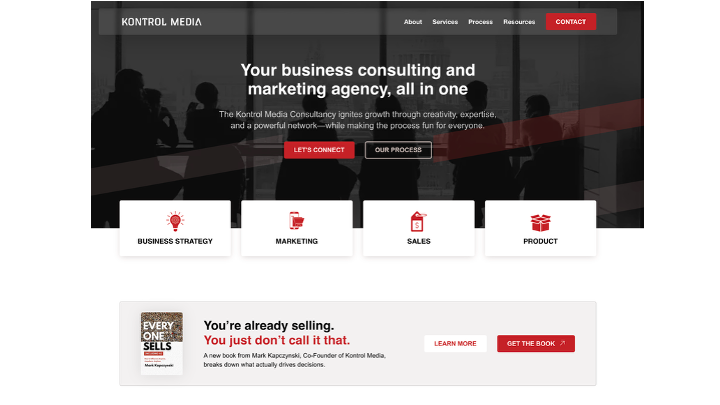
If you are evaluating whether to build a retail or commerce media network, Kontrol Media’s process starts with your existing audience data and ends with a network that attracts advertising partners and compounds in value over time. Clients including Experian, BuzzFeed, and Enthusiast Gaming have used this methodology to move from paid-media dependency to owned-audience strength. You can also explore advertiser acquisition strategies to understand how to monetize your network once it is operational.
FAQ
What is a consumer brand media network?
A consumer brand media network is an owned media property operated by a brand to publish content, build a direct audience, and generate advertising or commerce revenue. It functions like a media company but is built and controlled by the brand itself.
How do you measure ROI for a brand media network?
The most reliable metrics are new-to-brand rate, incremental ROAS, and basket size lift, measured using IAB and MRC-aligned frameworks including randomized controlled trials and viewability standards. Brands using these methods can attribute actual behavior change rather than just traffic volume.
What audience overlap threshold makes a media partnership viable?
Successful media partnership campaigns require at least 50% audience demographic overlap and a partnership interaction rate above 5%. Below these thresholds, the shared audience is too thin to generate meaningful engagement or revenue lift.
Why is a headless CMS better for brand media at scale?
Headless CMS platforms like Contentful and Strapi deliver content via API to any channel simultaneously, which eliminates manual reformatting and reduces per-unit production cost as output volume increases. Traditional CMS platforms require custom builds for each new distribution channel.
How much of a marketing budget should go to owned media?
Research shows that brands reallocating up to 70% of their marketing budget to owned media properties achieve 156% higher ROI compared to paid-only strategies. The exact allocation depends on your current audience size and content maturity, but the directional shift toward owned properties is consistently supported by the data.
Recommended
- Advertiser Acquisition Strategies for Media Networks in 2026 | Kontrol Media Consultancy
- 5 Things Brands Should Prioritize in 2025 | Kontrol Media Consultancy
- Commerce Media Networks: The Next Evolution in eCommerce Advertising | Kontrol Media Consultancy
- Commerce Media vs. Traditional Programmatic Advertising | Kontrol Media Consultancy