


Impressions tell you how many times an ad was shown. They don’t tell you whether anyone bought because of it. If you want marketing to move revenue, shift budget and attention toward partnerships built around a commercial goal, then measure them on sourced pipeline, incremental sales and margin instead of reach. This guide shows how to make that shift, which partnership structures fit which goals, and which numbers belong in front of your CFO.
TL;DR
- Impressions, clicks and views measure activity. Revenue, incrementality and margin measure results, and those are the numbers a board listens to.
- Start a partnership program with one explicit commercial goal, not a list of logos you’d like to be seen with.
- Report partner-sourced and partner-influenced revenue separately, and compare partner deals with direct deals on win rate, deal size and sales cycle.
- Where attribution is murky, use incrementality tests to find out what your spend actually caused.
- Retention belongs in the same scorecard as acquisition, because growth that leaks out of the back door is expensive.
Table of Contents
- Why impressions stopped being enough
- What partnerships change
- Pick the structure that matches the job
- Start with one commercial goal
- The metrics that show revenue, not reach
- When attribution is uncertain, test for incrementality
- Don’t forget the customers you already have
- Retail and commerce media: partnerships you operate yourself
- Reaching home buyers through real estate partnerships
- Our perspective
- Work with a team that builds and operates the partnerships
- A 90-day way to begin
- FAQ
- Sources
Why impressions stopped being enough
We have sat in a lot of quarterly reviews where the deck opened with impressions, the room nodded, and then the CFO asked what it had done for the P&L. The silence that followed is the whole problem. Reach is easy to buy and easy to report, so it became the default scoreboard, even though nobody ever promised that a view was a sale.
The measurement community has been saying the same thing. Google’s own measurement team notes that clicks and impressions are a means to an end, and that executives want provable business results. NIQ goes further in its 2026 analysis, warning that clicks, views, reach, engagement and even ROAS can measure activity without showing what growth would have happened anyway. Optimizing a visible platform metric can raise volume while eroding margin, or simply harvest demand that already existed.
Search Engine Land makes a similar point about upper-funnel campaigns: exposure does not reliably predict influence, so the better question is whether people moved toward a meaningful business outcome.
None of this means you should stop advertising. It means impressions should be a diagnostic, not a goal. The goal is a customer who wouldn’t have arrived without your effort.
What partnerships change
An ad rents attention for the length of a campaign. A partnership puts your offer in front of an audience that someone else has already earned, usually at the moment that audience is closest to a decision. The economics are different because the partner has something you can’t buy per thousand: trust, context and first-party relationships.
That is why a partnership can be tied to revenue in a way a flight of display ads rarely can. There is a named counterparty, a defined audience, an agreed action and a shared record of what happened. When something works, you can see it. When it doesn’t, you can see that too, and end it without a lengthy post-mortem about viewability.
We cover the trade-off in more depth in media campaigns versus strategic partnerships, but the short version is this: campaigns buy exposure, partnerships build a channel.
Pick the structure that matches the job
“Partnership” covers very different arrangements, and most disappointments come from using one structure for another structure’s job. MarketingProfs distinguishes three in its 2026 piece on partner-sourced pipeline: co-marketing exchanges audiences and costs, performance or affiliate arrangements pay for a defined action such as a qualified meeting or a closed deal, and revenue sharing pays a percentage of ongoing customer revenue.
In practice we steer clients like this:
| Goal | Structure that usually fits | What you pay for |
|---|---|---|
| Enter a new audience or market | Co-marketing | Shared costs and audience exchange |
| Fill a pipeline with qualified conversations | Performance or referral | A defined action, such as a meeting or closed deal |
| Build long-term recurring revenue | Revenue share | A percentage of ongoing customer revenue |
| Monetize your own audience and data | Commerce or retail media network | Advertiser spend you sell to brands |
The table is a starting point, not a rule. What matters is that you can say in one sentence which row you are in, and that your contract and your reporting follow the same row.
Start with one commercial goal
The most common mistake we see is starting with a wish list of attractive partners. Introw’s 2026 B2B guide recommends the opposite: begin with one explicit commercial goal, such as entering a market, generating qualified leads, increasing revenue or improving retention. The partner list comes second.
Once the goal is fixed, define the partner you actually want. The same guide suggests describing an ideal partner by industry, company size, geography, audience, deal size, sales motion, complementary capabilities, reputation and ability to execute, and then writing down why the two companies are better together. If you can’t write that paragraph, the partnership is probably a sponsorship in disguise.
From there, the practical sequence is short:
- Choose one goal and one partner model, and resist adding a second until the first works.
- Map accounts to find real overlap between your customers and theirs.
- Write the rules of engagement: who leads a deal, who has pricing authority, how credit is shared.
- Equip both sales teams, since a partner who can’t explain your offer won’t sell it.
- Record partner-sourced and partner-influenced revenue in your CRM from the first day, not retroactively.
The account mapping, written rules and CRM tracking steps come from Introw’s strategic alliances guide. We have seen each of them skipped, and each time the cost showed up three months later as an argument about who deserved credit.
If your partnership effort has no home yet, our media partnership development work is built around proving impact in the first 90 days, so the program earns its second year.
The metrics that show revenue, not reach
A partnership scorecard doesn’t need thirty numbers. It needs the few that connect activity to money, defined before the first deal closes.
Separate sourced from influenced
Partner-sourced revenue comes from deals the partner originated. Partner-influenced revenue comes from deals the partner touched along the way. Both matter, but blending them flatters the program. Rework’s 2026 KPI guide says to keep the two apart and to compare partner and direct channels on win rate, deal size and sales-cycle length using comparable segments, products and periods. That last clause is the one people skip, and it is what keeps the comparison honest.
Name your attribution model
HubSpot’s KPI guide defines revenue attributed to marketing as closed revenue credited under a stated model and advises reporting the model, because first-touch, last-touch and multi-touch give different answers. The same guide lists CAC, ROI, ROAS, marketing-sourced pipeline, retention and lifetime value among the numbers worth tracking. If you present a revenue figure without the model behind it, expect the first question to be about the model.
Watch leading and lagging indicators
PartnerStack describes partner-generated pipeline as a leading indicator and partner-generated revenue as the measure of actual financial impact once a program matures. In a new program, pipeline tells you early whether the structure is working. Revenue tells you whether it was worth it.
Judge revenue, not volume
Pipedrive’s referral-partner guidance makes a point that applies well beyond referrals: judge partners on revenue impact, not on how many leads they send. A partner who sends 200 leads that never close is costing you sales time. One who sends ten that do is your best channel.
We lay out a board-ready version of this in bringing five to seven revenue metrics to the board, and the longer method in measuring the ROI of marketing and advertising campaigns.
When attribution is uncertain, test for incrementality
No attribution model will settle every argument. A customer sees a partner’s email, a podcast mention and a search ad, and then converts. Who gets the credit?
Incrementality testing sidesteps part of that debate by asking a cleaner question: what happened because of the program, compared with what would have happened without it. Google’s measurement guidance describes comparing people who saw an ad with eligible people who did not, then using the results to refine marketing-mix models, since last-click alone can miss the full customer journey. It also frames incrementality as a common language between marketing and finance, because it estimates value the campaign caused instead of value merely associated with it.
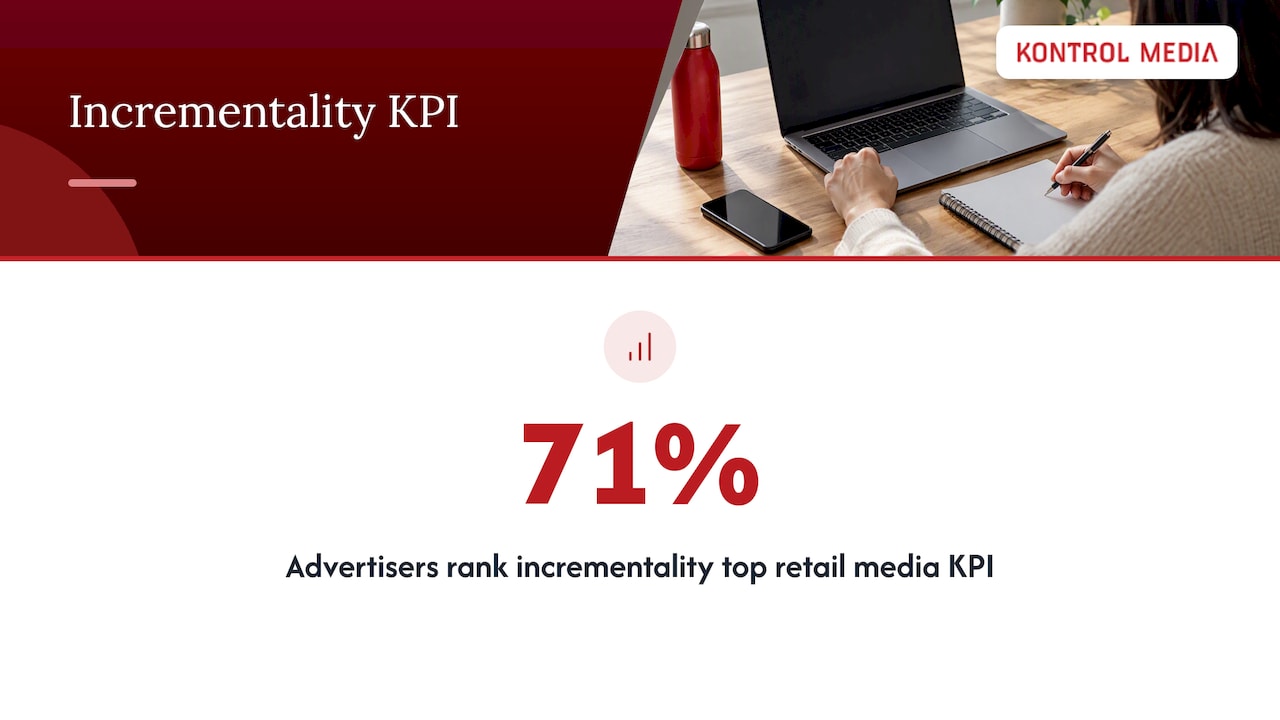
The same idea is now central in retail media. An eMarketer analysis of an ANA survey reports that 71% of advertisers ranked incrementality as the most important retail media KPI, with topline revenue, orders, low returns and new-to-brand customers as useful outcome signals. Our own take on what the term does and doesn’t mean is in incrementality in retail media.
For partnership data specifically, Fours recommends keeping separate structured fields for sourced and influenced revenue on the opportunity record, with a partner ID and timestamp on each touch. It also suggests defining qualifying influence rules in advance, capping and windowing credit, and recording activity before the outcome is known. That discipline is dull, and it is what makes the numbers audit-grade later. We go further on field-level rules in four data rules for audit-grade attribution.
Don’t forget the customers you already have
A scorecard built only on acquisition will mislead you. Retention often decides whether growth compounds or leaks. A Harvard Business Review refresher notes that, depending on the study and industry, acquiring a customer costs five to 25 times more than retaining one, and cites Bain research suggesting that a 5% lift in retention can raise profits by 25% to 95%. Treat those as wide, industry-dependent ranges rather than a promise for your business.
The practical move is to put retention and lifetime value beside CAC on the same page, and to ask partners about both. HubSpot’s partnership ROI framework suggests comparing customers who use an integration with those who don’t, looking at revenue retention, expansion revenue, win rate and deal size. A partnership that brings customers who stay and expand is worth more than the one with a bigger top of the funnel.
Retail and commerce media: partnerships you operate yourself
Some of the strongest partnership revenue comes from the other side of the table: becoming the media property brands want to partner with. The IAB explains that retailers and other businesses can monetize websites, stores, digital properties and first-party data by building commerce media networks that sell advertising to brands across the customer journey.
The market is large and still growing. The IAB and PwC report US commerce media advertising revenue of $63.4 billion for 2025, up 18.0%. The same report notes that commerce media is expanding into off-site, in-store and cross-partner environments, while fragmentation, inconsistent measurement and unresolved incrementality questions remain barriers.
Those barriers are exactly where operational experience matters. If you are weighing it, start with why first-party data is the fuel behind commerce media networks and how to build retail media data partnerships. If you are not a classic retailer, retail media strategy for non-retailers covers where the model still applies.
Reaching home buyers through real estate partnerships
One channel we know well is real estate. Home buyers and owners are in a high-spend window: furniture, insurance, financing, services, moving. Agents sit at the center of that decision and hold the relationship. Brands and their agencies can reach those audiences through agent email programs, agent ad programs and media partnerships, and each can be measured by the response it produces, not the eyeballs it buys.
There is a legal line here that deserves respect. The Consumer Financial Protection Bureau has stated that RESPA prohibits giving something of value under an agreement or understanding that the person will refer settlement services. If your category touches mortgage, title or other settlement services, have counsel review any agent arrangement before it launches. Likewise, if agents or creators endorse you, the FTC’s guidance says that a financial, employment or personal relationship, or any free or discounted perk, must be disclosed when it motivates an endorsement, and disclosure should not be skipped because followers already know the relationship.
Our perspective
We have watched brands spend generously on being seen and then struggle to explain what it bought. The pattern repeats across the CMOs, retailers and private equity portfolio companies we work with: the spend is real, the scoreboard is borrowed from the platform, and the board loses patience.
Our view is that a partnership is the most honest form of marketing, because somebody else has to put their name and their audience behind it. That raises the bar for you, but it also means the results are legible. You can see who sent the buyer, what they paid and whether they stayed.
We also believe strategy without execution is a nice document, and execution without strategy is expensive motion. So we work on both sides: we help build and run the partnership, the commerce media network or the sales motion, and we help set the measurement so the numbers hold up when finance leans on them. And yes, we think the work should be enjoyable. Teams that like the process tend to stay with it long enough to see results, which, in our experience, is the part that actually compounds.
If we could change one habit across the industry, it would be this: ask what would not have happened without the spend. The honest answer is sometimes uncomfortable, and it is always useful.
— Mark Kapczynski
Work with a team that builds and operates the partnerships
If you want a partner for the build and the run, not just a slide deck, we do both. Kontrol Media helps brands reach home buyers and homeowners through real estate channels, stands up and operates retail and commerce media networks, and provides business and marketing strategy with hands-on execution across sales, marketing and business development.
To see the full range, start with our strategy, marketing and sales services. If you are a retailer or consumer business exploring ad revenue, look at how we stand up a retail or commerce media network. Brands focused on the housing moment can see our real estate media partnerships.
A 90-day way to begin
You don’t need a reorganization to start. In the first month, pick one commercial goal and audit where your current spend can be tied to revenue and where it can’t. In the second month, choose one partner model, write the terms and run a small pilot with a few partners, rather than a broad launch. In the third month, report sourced and influenced revenue separately, name your attribution model, and run at least one holdout or incrementality test on the largest line.
Then decide with evidence. Keep what produced revenue, reshape what produced only activity, and stop what produced neither. Cutting an impressions-only line isn’t a loss of marketing. It is the first dollar you can redeploy toward something you can prove.
FAQ
Are impressions ever a useful metric?
Yes, as a diagnostic. Impressions can tell you whether a campaign is delivering at all and whether frequency is getting out of hand. They shouldn’t be the outcome you report, because exposure doesn’t reliably predict influence on sales.
What is the difference between partner-sourced and partner-influenced revenue?
Partner-sourced revenue comes from deals a partner originated. Partner-influenced revenue comes from deals a partner touched during the buying process. Report them separately so the program’s real contribution isn’t inflated.
How long does it take to see revenue from a partnership?
It depends on your sales cycle and the structure you choose. Partner-generated pipeline usually shows up first as a leading indicator, with closed revenue following as the program matures. Track time to first deal from the start so you can judge pace.
What should I test if I can’t trust my attribution?
Run an incrementality test: compare an exposed group with an eligible group that wasn’t exposed, then use the result to calibrate your models. It answers what your spend caused rather than what it merely touched.
Do I need legal review for agent or influencer partnerships?
Often, yes. Anything involving real estate settlement services should be reviewed by counsel for RESPA issues, and any endorsement tied to payment or perks needs clear disclosure under FTC guidance.
Sources
- Experimentation and the value of marketing, Think with Google
- The Optimization Trap, NIQ
- How to measure Google Demand Gen against the right goals, Search Engine Land
- Partner-Sourced Pipeline: Structure, Pay, and Measure It, MarketingProfs
- B2B Partnerships: Types, Examples and How to Build a Program, Introw
- Strategic Alliances: Definition, Examples and How to Build One, Introw
- Partner KPIs: The Metrics That Measure a Partnership, Rework
- 15 marketing KPIs to track and how to choose the right ones, HubSpot
- 6 Marketing Metrics to Track for Your Partnerships Programs, PartnerStack
- How to build a strong referral partner program, Pipedrive
- Measuring what matters in retail media’s boom with incrementality, eMarketer
- Measuring Partner Influence Without Bad Data, Fours
- The Value of Keeping the Right Customers, Harvard Business Review
- HubSpot Partnership ROI Framework
- Commerce Media and its Ecosystem Explainer, IAB
- Internet Advertising Revenue Report, full year 2025, IAB and PwC
- CFPB Takes Action Against Mortgage Kickback Agreements
- Disclosures 101 for Social Media Influencers, FTC