
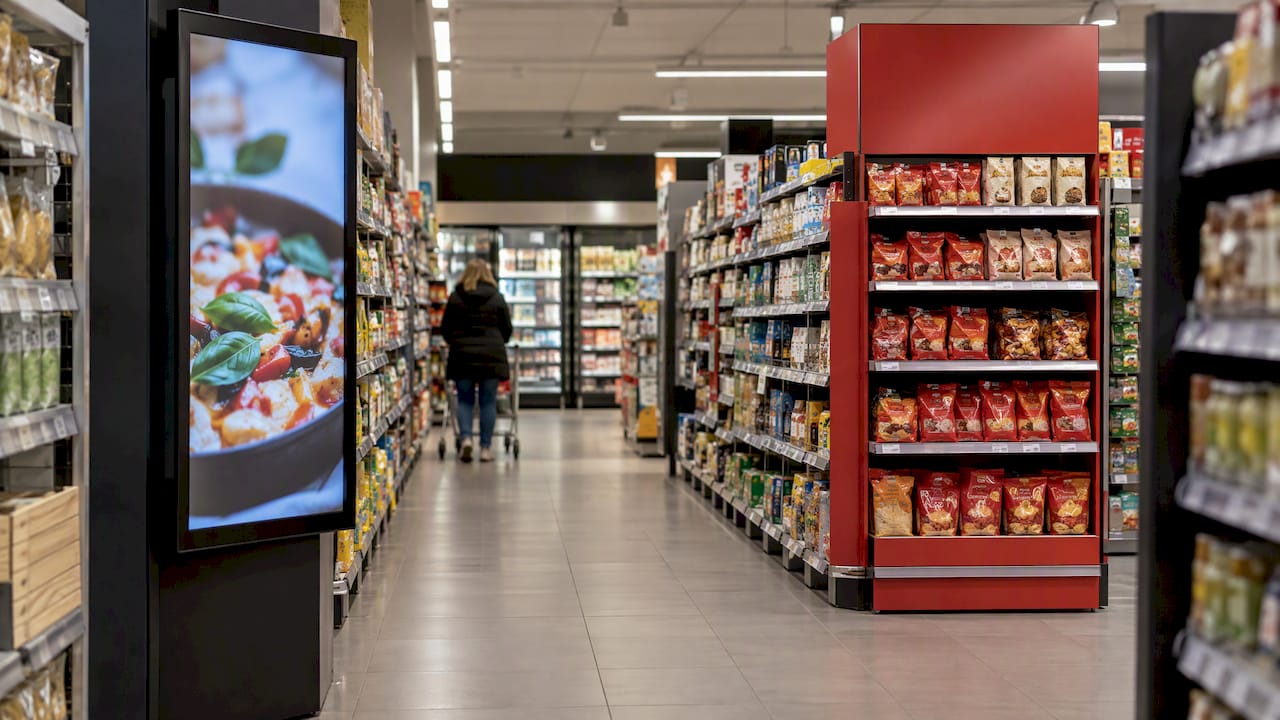

Retail media sales channels are the places where a retailer or commerce media network sells advertising, and the routes through which that inventory reaches buyers. The places fall into three groups: onsite (the retailer’s website and app), offsite (third-party media powered by the retailer’s data) and in-store (screens, signage and displays). The routes are direct sales, self-serve platforms and programmatic buying. Getting the mix right between the two is what turns a retail media idea into a revenue line.
We operate in this space every day, so this guide is written the way we would explain it to a CMO or a retail executive across a table: what each channel is, how it is sold, what it earns, and where teams usually stumble.
TL;DR
- Retail media has three inventory channels: onsite, offsite and in-store. Onsite is the proven base, offsite extends reach, and in-store is the least mature and hardest to measure.
- Each channel can be sold three ways: direct sales, self-serve and programmatic. Most healthy networks run a blend.
- Sequence matters. Prove onsite performance first, then add offsite, then in-store once measurement is credible.
- Advertisers fund what they can measure, so closed-loop sales reporting and incrementality come before inventory expansion.
- Non-retailers can play too, by building a commerce media network around their own audiences and data.
Table of Contents
- What counts as a retail media sales channel
- Onsite: the foundation of the business
- Offsite: reach beyond your own pages
- In-store: the largest opportunity and the hardest to run
- How the channels compare
- How retail media inventory gets sold
- Measurement decides which channels grow
- A sequence that works
- Our perspective
- Build or run your network with Kontrol Media
- FAQ
- Sources
What counts as a retail media sales channel
The vocabulary gets muddy fast, so a clean definition helps. The IAB Australia glossary treats retail media channels as the places where ads run, such as websites, apps, in-store displays and email, while the retail media network is the infrastructure made up of those online and offline channels where brands reach shoppers. The retailer’s business unit, division or appointed agency that monetizes those assets is the retail media group, according to IAB Australia’s retail media glossary.
In plain language: the network is the whole business, the channels are the shelves you stock, and the sales route is how the advertiser walks up and buys from them. Confusing the three is the most common reason a retail media plan stalls. A retailer says it has “a network” when what it really has is a sponsored product unit on its site and a few email slots.
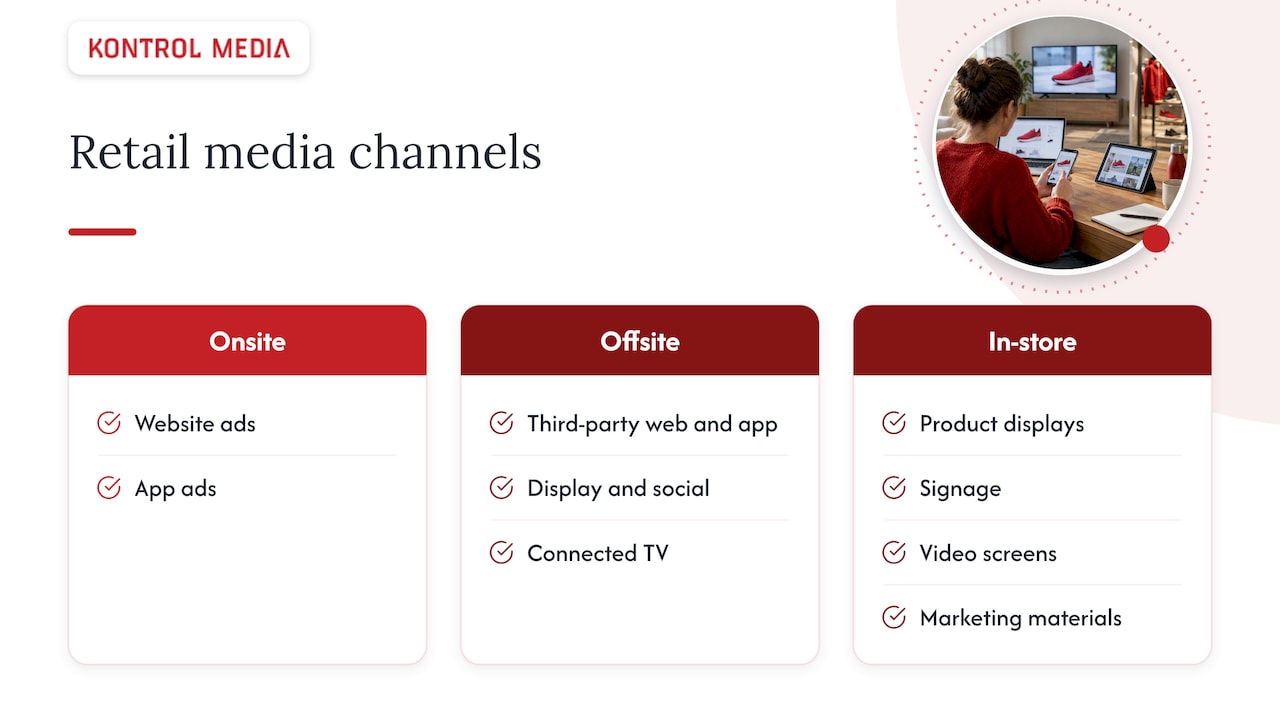
As a report on the sector from Retail TouchPoints frames it, retailers can sell ads onsite on websites and apps, offsite on third-party web, app, display, social and connected TV inventory, and in-store through product displays, signage, video screens and other marketing materials. Those are the three channels we use throughout this guide.
Onsite: the foundation of the business
Onsite is where almost every network starts, for a good reason. The shopper is already on the retailer’s property, already browsing with intent, and the retailer controls the experience end to end.
The IAB Retail Media Buyer’s Guide lists the standard onsite formats as sponsored products, sponsored brands, display and video. Pricing follows the format: per the IAB UK’s pan-European definitions, search and sponsored products generally use cost per click, some display and video use cost per thousand impressions, and fixed tenancy, where an advertiser reserves a placement for a set period, is also available.
Why onsite earns first
Three things make onsite the easiest channel to monetize. The inventory already exists, the purchase data to target and report on it already sits in the retailer’s systems, and attribution is short and clean: a click, an add to cart, a sale. That last point matters more than any other. An advertiser who sees a sale tied to a sponsored listing will ask for more of the same, and the budget conversation gets easier every quarter.
Where onsite runs out of room
Onsite has a ceiling. There are only so many search results pages, category pages and product pages, and every ad placed on them competes with the shopper’s experience. Push the ad load too far and conversion drops, which hurts the retailer and, eventually, the advertiser too. That tension is one of the core operational challenges of the model, and it is why networks look beyond their own pages.
If you want a deeper look at proving onsite returns before you scale outward, our piece on proving onsite ROAS, then scaling offsite walks through the sequence.
Offsite: reach beyond your own pages
Offsite takes the retailer’s first-party audience data and uses it to buy media elsewhere: open web display, social, search, connected TV and other formats. The IAB’s buyer’s guide describes offsite as a complement to onsite, extending reach beyond the limited inventory a retailer controls while still using the retailer’s data for targeting. Its listed offsite formats are display, social commerce and CTV.
The appeal for an advertiser is obvious. A brand can reach the people who bought a competing product last month, on a streaming service or a news site, without needing a separate data deal. The appeal for the retailer is just as clear: revenue that is not capped by its own page count.
The trade-offs
Offsite is a different business from onsite. The retailer is now reselling media bought from someone else, so margins are thinner, the media supply chain is more complex, and the closing of the loop is harder because the shopper may see the ad on one device and buy on another, or in a store. Teams that treat offsite as “onsite with a bigger canvas” tend to be surprised by the operational load. Our guide to retail media data partnerships covers the data-sharing side of this in detail.
Our rule of thumb: add offsite once onsite reporting is trusted by your top advertisers. If they do not believe the onsite numbers, they will not believe the offsite ones.
In-store: the largest opportunity and the hardest to run
Stores are where most retail still happens, and in-store retail media is the effort to sell that attention: digital screens at entrances, endcaps and aisles, shelf-edge displays, sampling programs, and signage. It is also the least standardized channel. Retailers are expanding what they offer here, and eMarketer reports that Walmart Connect is growing its in-store inventory with enhanced sampling and self-serve buying for TV wall ads so that more advertisers can take part.
Self-serve is the signal to watch. In-store has historically been sold through custom, relationship-driven deals, which keeps smaller advertisers out. Packaging store inventory into something a brand can book without a six-week negotiation is what moves the channel from experiment to line item.
Measurement is the bottleneck
In-store measurement is where good intentions go to die. Per-shopper attribution is hard when a person walks past a screen and buys without scanning anything. The more honest approach for most retailers is store-level sales lift measured against matched control stores. It is less glamorous than a click-to-sale report, but it is credible, and credibility is what unlocks budgets.
We have laid out a practical way to approach this in measuring first, then scaling in-store retail media, built around the touchpoints a CMO can actually act on.
How the channels compare
| Channel | Typical formats | Common pricing | Measurement | Main challenge |
|---|---|---|---|---|
| Onsite | Sponsored products, sponsored brands, display, video | CPC for search and sponsored products; CPM for some display and video; fixed tenancy | Closed-loop sales, clear and fast | Inventory limits and shopper experience |
| Offsite | Display, social commerce, CTV | Usually CPM-based media buys using retailer audiences | Matched sales, often across devices | Thinner margins, supply chain complexity |
| In-store | Screens, signage, product displays, sampling | Often fixed placement or package deals | Store-level lift against control stores | Fragmented standards, weak attribution |
The pricing column draws on the IAB UK definitions for onsite formats. Offsite and in-store pricing varies by network and deal, so treat those cells as the typical pattern, not a rate card.
How retail media inventory gets sold
The channel decides what you are selling. The sales route decides who buys it and how quickly. Three routes dominate.
Direct sales
A human sales team builds relationships with brands and their agencies, pitches packages, negotiates and manages campaigns. This is where fixed tenancy placements, custom in-store programs and sponsorships usually live. Direct sales is slower and more expensive to run, but it is where the larger, more strategic budgets get decided, and where an advertiser can be talked into testing something new. It is also where most networks under-invest: they build the technology and forget to hire or outsource the sellers. We cover that side in our guide to advertising sales strategies for media networks.
Self-serve
Advertisers log in, choose a placement or keyword, set a budget and launch. Sponsored product ads are the classic example, and self-serve is what makes the long tail of advertisers economical to serve. The risk is that self-serve without account management can leave smaller brands underperforming and quietly churning.
Programmatic
Programmatic buying connects a network’s inventory, especially offsite and some onsite display, to the demand platforms agencies already use. It lowers the friction for agencies that want to buy retail audiences alongside everything else in their plan. The cost is less control over who buys and at what price, and a greater need for clear rules on data use. Many networks run programmatic as a way to fill remaining inventory while keeping direct sales focused on premium placements.
None of these routes is the right answer alone. A sensible pattern is self-serve for the long tail, direct for strategic accounts and premium placements, and programmatic for scale and agency convenience. What goes wrong is a network adopting one route because it fits the tech stack, not the advertiser base.
Measurement decides which channels grow
Advertisers return to the channels where they can see what happened. An IDC paper on advertiser-centric retail media networks notes that legacy first-touch or last-touch attribution often gives incomplete insight compared with incremental measures, and that advertisers want clear performance visibility.
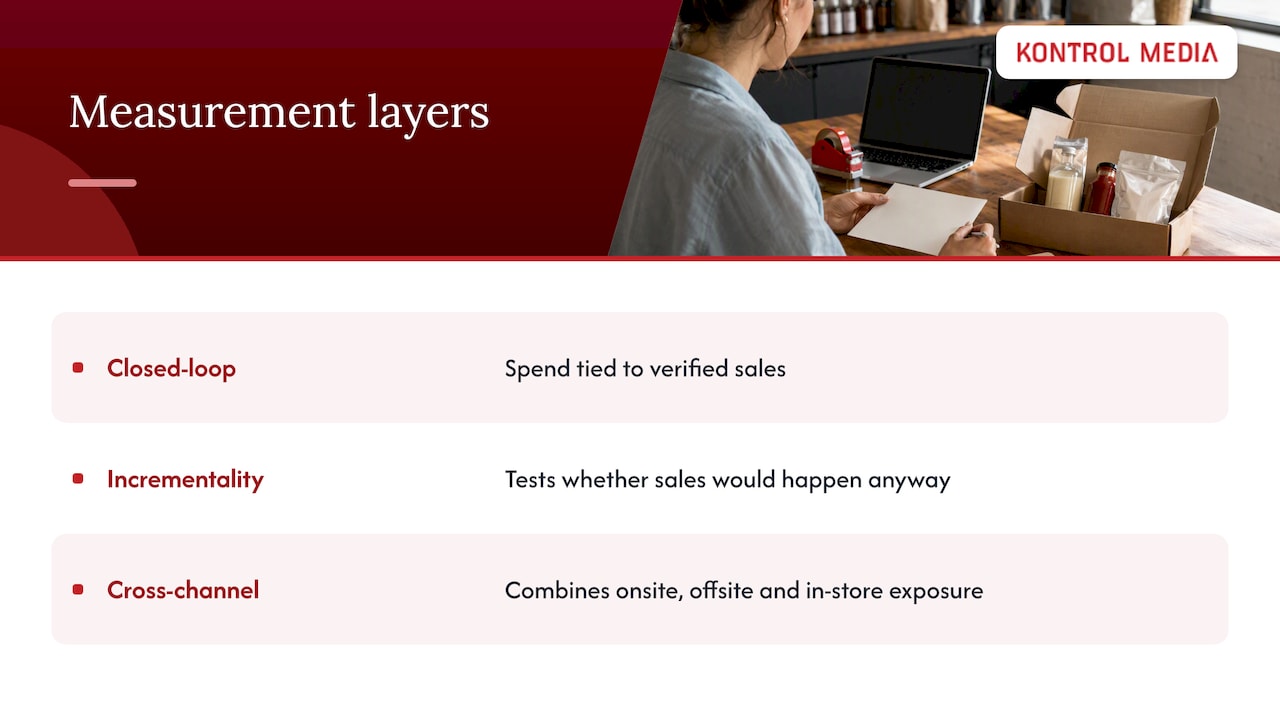
In practice, that means three layers. Closed-loop reporting ties spend to verified sales. Incrementality testing asks whether those sales would have happened anyway. Cross-channel views show how onsite, offsite and in-store exposure combine. Without the first layer you cannot sell. Without the second, a sharp procurement team will eventually ask the question you cannot answer. Our key metrics guide for retail media gives the definitions and benchmarks we use with clients.
A sequence that works
Here is the path we recommend to retailers and commerce media operators who are building from a modest base.
- Audit what you own. List every ad-capable asset: site placements, app, email, loyalty, in-store screens, packaging, even delivery touchpoints.
- Launch onsite with clean measurement. Start with sponsored products and display. Make sure reporting shows sales, not just clicks.
- Hire or outsource the sellers early. Technology without sales coverage produces dashboards, not revenue.
- Add offsite for your best advertisers. Use first-party audiences to extend campaigns that already work onsite.
- Pilot in-store with control stores. Pick a handful of stores and categories, and publish lift results before you scale.
If you are deciding between building these capabilities and buying them, our build versus buy verdict for network setup and the 90-day monetization plan for retailers lay out the trade-offs.
Our perspective
We have sat on both sides of this table, and the pattern is consistent: networks rarely fail for lack of inventory. They fail because nobody owns the operation. Someone has to price the placements, brief the sellers, answer the agency’s reporting question on a Friday afternoon, and say no to an ad load that would hurt the shopper. That work is operationalization, and it is the spine of a network, not an afterthought.
We also think the conversation has been too retailer-centric. Any business with a meaningful audience and first-party data, whether a consumer brand, a marketplace or a media company, can build a commerce media network around what it knows about its customers. Our guide to retail media strategy for non-retailers takes that on directly.
Finally, we are optimistic about in-store, but only for teams willing to be candid about measurement. The networks that publish honest lift numbers, including the modest ones, will earn the budgets. The ones that overpromise will spend the next two years explaining themselves.
— Mark Kapczynski
Build or run your network with Kontrol Media
If you are a retailer or consumer business ready to turn channels into revenue, we stand up and operate networks from strategy through sales execution. That includes channel design, sales coverage, advertiser onboarding and reporting, so your team is not learning on live budgets.
See how we stand up a retail or commerce media network, or how our retail media network operations team runs the day-to-day once you are live.
FAQ
What is the difference between a retail media channel and a retail media network?
A channel is a place where ads run, such as a website, app, email or in-store screen. A network is the full infrastructure of online and offline channels, plus the data, sales and reporting that let brands buy them. The retailer’s business unit or agency that sells it all is often called the retail media group.
Which retail media channel should a retailer launch first?
Onsite, in almost every case. The inventory and shopper data already exist, and sponsored product ads give advertisers fast, closed-loop proof of sales. Offsite and in-store work better once that reporting is trusted.
Is programmatic or direct sales better for retail media?
Neither wins outright. Direct sales suit premium placements, sponsorships and custom in-store programs, while programmatic and self-serve bring scale and lower friction for agencies and smaller brands. Most successful networks combine all three, matched to advertiser size.
Can a brand that is not a retailer run a retail media-style network?
Yes. A commerce media network is built on a company’s own audience and first-party data, not on a store. Consumer brands, marketplaces and media businesses with enough scale and data can sell advertising to other brands on that basis.
How do you measure in-store retail media?
Most retailers rely on store-level sales lift compared with matched control stores, because per-shopper attribution is difficult in physical locations. Pair that with closed-loop onsite data and incrementality testing for a fuller picture.
Sources
- IAB Australia: Retail media glossary
- Retail TouchPoints: Retail media report, July 2024
- IAB: Retail Media Buyer’s Guide
- IAB UK: Pan-European definitions for the retail media sector
- eMarketer: Walmart Connect enhances network and leverages store footprint
- IDC: The Race to Build an Advertiser-Centric Retail Media Network