


A sales playbook template is an editable framework that documents plays, process, messaging, and key performance indicators so managers can standardize what already works. Download one, adapt the fields to your product and buyer, then run the nine-step build we outline below to turn scattered tribal knowledge into a repeatable system. What follows covers the components, the build sequence, template examples, and how to measure whether the playbook is actually changing seller behavior.
TL;DR:
- Build from real closed deal evidence, identify 10 to 20 repeatable plays, and document each play’s trigger, actions, script, collateral, and success metric.
- Pilot with five or six reps for two or three weeks, then revise scripts and stages before publishing searchable guidance in a short, modular format.
- Use a one page template to test a single motion, role specific sections for distinct teams, and a full playbook only after plays are validated.
- Train reps through roleplay, certify them on plays for their roles, tie coaching to adoption data, and assign one owner to update the guide quarterly.
- Review leading and lagging measures monthly for the first quarter, then quarterly; include ramp time, deal cycle length, and win rate by play.
Table of Contents
- What a sales playbook is and why it matters
- Core components every sales playbook needs
- The nine-step process to build a working playbook
- Templates and examples: adapting a downloadable template to your team
- Rolling out, training, and measuring what the playbook changes
- Kontrol Media’s enterprise playbook approach
- Where most sales playbooks go wrong
- Build it yourself or bring in Kontrol Media
- FAQ
- Sources
What a sales playbook is and why it matters
A sales playbook is the operating manual for how your team wins deals: the plays, the messaging, the process stages, and the metrics that tell you a play is working. A “play” is one piece of that manual, a specific, repeatable action tied to a trigger, like how a rep handles a competitor mention or reopens a stalled deal. The playbook is the spine; the plays are the individual moves that hang off it.
The payoff shows up fastest in onboarding. New reps who learn from a documented playbook ramp faster than those left to shadow calls and piece things together from memory, because the winning motions are already written down instead of living in one senior rep’s head. Consistency is the second benefit: when every rep pitches, qualifies, and handles objections from the same foundation, the buyer gets a coherent experience regardless of who picks up the call. Gartner’s revenue enablement research finds that organizations prioritizing revenue enablement are substantially more likely to exceed their revenue growth targets, and that consistent supplier information increases the odds of a high-quality deal by 2.89 times.
A few signals tell you it is time to prioritize building one:
- Deal cycles vary wildly between reps selling the same product to similar buyers.
- New hires take months to hit quota because there is no documented path to follow.
- Your best plays exist only as institutional memory, at risk every time someone leaves.
- Sales and marketing disagree on messaging because there is no shared source of truth.
If any of those sound familiar, the playbook is not a nice-to-have. It is the fastest lever you have for shortening ramp time and tightening cycle length at once.
Core components every sales playbook needs
Before you build from scratch, audit what you already have. Use this checklist to find the gaps.
- Company positioning and mission statement, the short version of who you serve and why you exist, so every rep anchors their pitch to the same story.
- Buyer personas with mapped pain points, built from closed-won and closed-lost deals rather than guesswork about who you think buys.
- Sales process and stage definitions, including exact entry and exit criteria for each stage and who owns the handoff between marketing, sales development, and account executives.
- Repeatable sales plays with scripts and templates, each tied to a specific trigger, like a demo request, a pricing objection, or a competitor mention.
- Collateral mapping, a living index of which one-pager, case study, or ROI calculator supports which stage and persona, with links to where reps actually find them.
- KPIs and scoring criteria, the numbers that define a healthy pipeline and a play worth repeating.
- Operational reference material, commission structure, discount approval thresholds, and any legal or compliance language reps need to quote accurately.
Of these, the sales process map deserves the most attention because it is where most playbooks fall apart. G2’s playbook resource lists these same core elements and offers downloadable templates built around them, which makes it a useful starting point if you want to see the components laid out before you adapt them to your own stages.
A few things worth flagging while you audit:
- Collateral mapping is the component teams skip most often, and it is the one reps complain about most when it is missing.
- Scoring criteria should be specific enough that two managers would grade the same call the same way.
- Legal and compliance snippets belong in the playbook itself, not in a separate document reps have to hunt down mid-call.
Once you have audited what exists against this list, you will know whether you are filling gaps or starting fresh.
The nine-step process to build a working playbook
Building a playbook that reps actually use is less about writing and more about sequencing. Skip the pre-work and you end up documenting theory instead of what wins deals.
- Gather evidence from top performers. Pull call recordings, CRM notes, and closed-deal summaries from your highest performing reps. This is the raw material; nothing in the playbook should be invented.
- Define success and assign an owner. Decide what the playbook needs to change, ramp time, win rate, average deal size, and name one person accountable for keeping it current.
- Map your deal stages. Lay out the buyer journey from first touch to close, with clear criteria for moving a deal from one stage to the next.
- Identify 10 to 20 repeatable plays from real deals. Practitioner guidance on playbook construction recommends building from behaviors observed in actual closed deals rather than a theorized ideal process, which keeps the playbook grounded instead of aspirational.
- Codify each play. For every play, write the objective, the trigger that activates it, the specific actions a rep takes, the script or talk track, the supporting collateral, and the metric that proves it worked.
- Pilot with a small cohort. Hand the draft to five or six reps, including a mix of tenure levels, and have them run it for two to three weeks before wider rollout.
- Iterate based on pilot feedback. Cut plays nobody uses, sharpen scripts that feel clunky in real calls, and fix any stage definitions that confused reps.
- Publish in a searchable format. A static PDF buried in a shared drive dies within a month. A guide to building sales playbooks recommends centralizing plays, scripts, and KPIs in a searchable, digital format rather than a static document, because reps need to find the right play in seconds, not scroll through 40 pages during a live call.
- Train, certify, and tie adoption to coaching. Run reps through each play in roleplay, certify them on the ones relevant to their role, and connect play adoption to your 30/60/90 ramp targets so new hires have a clear path to full productivity.
Pro Tip: Keep the full playbook under 20 pages, or break it into modular, role-specific sections. Shorter, operational playbooks get used in live deals; encyclopedic ones get bookmarked and forgotten.
The sequence matters because each step produces the input the next step needs. You cannot codify a play before you have mapped stages, and you cannot pilot before you have codified at least a working draft. Managers who skip from step one straight to step eight end up publishing a document that reads well but does not match how deals actually close.
Templates and examples: adapting a downloadable template to your team
Not every team needs a full playbook on day one. Three template types cover most situations, and picking the right one saves you from over-building before you have proof a play works.
- One-page play template, best for testing a single new motion, like a re-engagement sequence for stalled deals, before committing it to the full playbook.
- Role-specific play template, suited to teams where SDRs, account executives, and customer success each need a different slice of the playbook rather than the whole document.
- Full team playbook, appropriate once you have validated several plays individually and need one shared reference for onboarding and consistency.
Adapting any of these starts with four fields: the persona it targets, the trigger condition that activates it, the script or talk track, and the KPI that tells you it worked. Swap in your own buyer language and your own stage names rather than keeping the template’s placeholder text, since generic wording is the fastest way to make a play feel disconnected from how your team actually talks to prospects.
For structure, a demo play typically opens with a qualifying question, moves into a problem-agitate sequence tied to the persona’s known pain point, and closes with a specific next step and a deadline. A discovery play leans harder on open questions and active listening prompts, with the script built around the four or five pain points your personas most commonly surface. A closing play focuses on handling the last objection, reconfirming value against price, and naming the exact next action, whether that is a signature or a final internal approval.
Market playbook providers echo this same advice: keep plays role-specific and keep every template editable and modular, so a manager can assemble a working playbook in days rather than months instead of waiting on a single master document.
| Template type | Best use case | Typical length |
|---|---|---|
| One-page play | Testing a single new motion | 1 page |
| Role-specific play | Teams with distinct SDR, AE, and CS motions | 3 to 5 pages per role |
| Full team playbook | Shared reference after plays are validated | 10 to 20 pages |
Before you call a template finished, run it through a quick conversion checklist: every play links directly to its collateral instead of describing it, every section has a named owner, and the document carries a version number and a last-updated date. Teams building playbooks for product-led sales motions face a related challenge, matching plays to a self-serve buyer journey instead of a fully rep-led one, and LiveSession’s playbook guidance is a useful reference if your motion leans product-led rather than outbound.
Rolling out, training, and measuring what the playbook changes
A playbook that lives in a shared drive and never gets trained on is a document, not a tool. Rollout needs the same rigor as the build.
Before publishing broadly, confirm four things: the pilot cohort has signed off, stakeholders across sales and marketing have reviewed the messaging for accuracy, the playbook lives somewhere reps actually search, and access permissions are set so managers can update it without routing every change through IT.
- Pair each play with a short roleplay exercise so reps practice the script before using it on a live call.
- Certify reps on role-specific plays rather than the entire playbook at once, so certification feels achievable instead of overwhelming.
- Tie coaching sessions directly to play adoption data, reviewing which plays a rep used and which they skipped.
- Revisit the playbook on a fixed cadence, quarterly at minimum, so it reflects current messaging and recent competitive shifts.
Effective skills development tied to plays uses five elements together: best practices, tools, examples, exercises, and certifications, according to Gartner’s sales enablement guidance, which also recommends tying coaching cycles to measurable play adoption rather than general skill reviews. That pairing is what turns a document into a habit.
Gartner predicts that AI-driven sales enablement will deliver 40% faster sales stage velocity than traditional enablement methods by 2029. For playbook owners, that points toward in-workflow guidance, surfacing the right play inside the CRM at the moment a rep needs it, rather than expecting reps to remember to check a separate document mid-call.
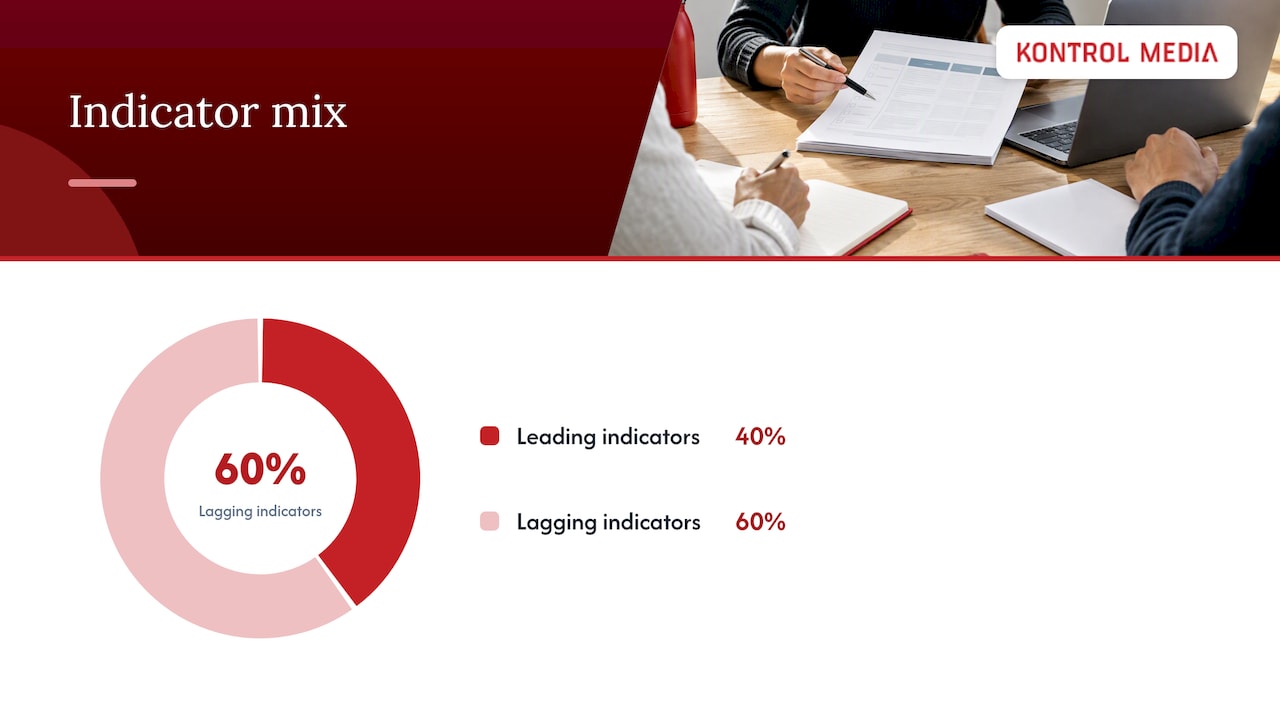
Measurement should track leading and lagging indicators together. Leading indicators include play adoption rate and time-to-certification for new hires. Lagging indicators include ramp time to full quota, average deal cycle length, and win rate by play. Review these monthly for the first quarter after rollout, then shift to quarterly once adoption stabilizes. A playbook with no measurement attached is just a well-organized opinion.
Kontrol Media’s enterprise playbook approach
When we build playbooks, we start the same way this article recommends: pulling real closed-deal evidence before writing a single script. At larger scale, coordination is required, aligning sales, marketing, and sometimes a retail or commerce media team around one shared document, then managing the rollout across multiple regions or business units at once.
A condensed version of an enterprise outline looks like this:
- Positioning and persona definitions validated against actual closed-won deals, not assumptions.
- Stage-by-stage plays mapped to specific CRM triggers so reps see the right play at the right moment.
- A collateral index tied to each stage, maintained by a single named owner.
- A 30/60/90 certification path for new hires, tied to play adoption data rather than tenure alone.
We cover this build in more depth in our enterprise sales playbook guide, including how we sequence rollout across teams that do not report into the same manager.
The DIY versus hire decision usually comes down to scope and speed. A single team with one product line can often build and pilot a playbook internally using the nine-step process above. A multi-region enterprise, a PE portfolio company standardizing across several acquired businesses, or a brand building out a new media or partnership channel alongside the sales motion tends to need outside coordination simply because the stakeholder count multiplies the time it takes to reach agreement.
Where most sales playbooks go wrong
The playbooks that fail are almost always the ones written once and never touched again. A 60-page document that took three months to produce is usually stale within a quarter, because pricing shifts, a competitor repositions, or a persona’s pain point changes faster than anyone revisits the file. We have found that playbooks built from a handful of real closed deals, then updated every quarter, beat exhaustive manuals built from best guesses almost every time.
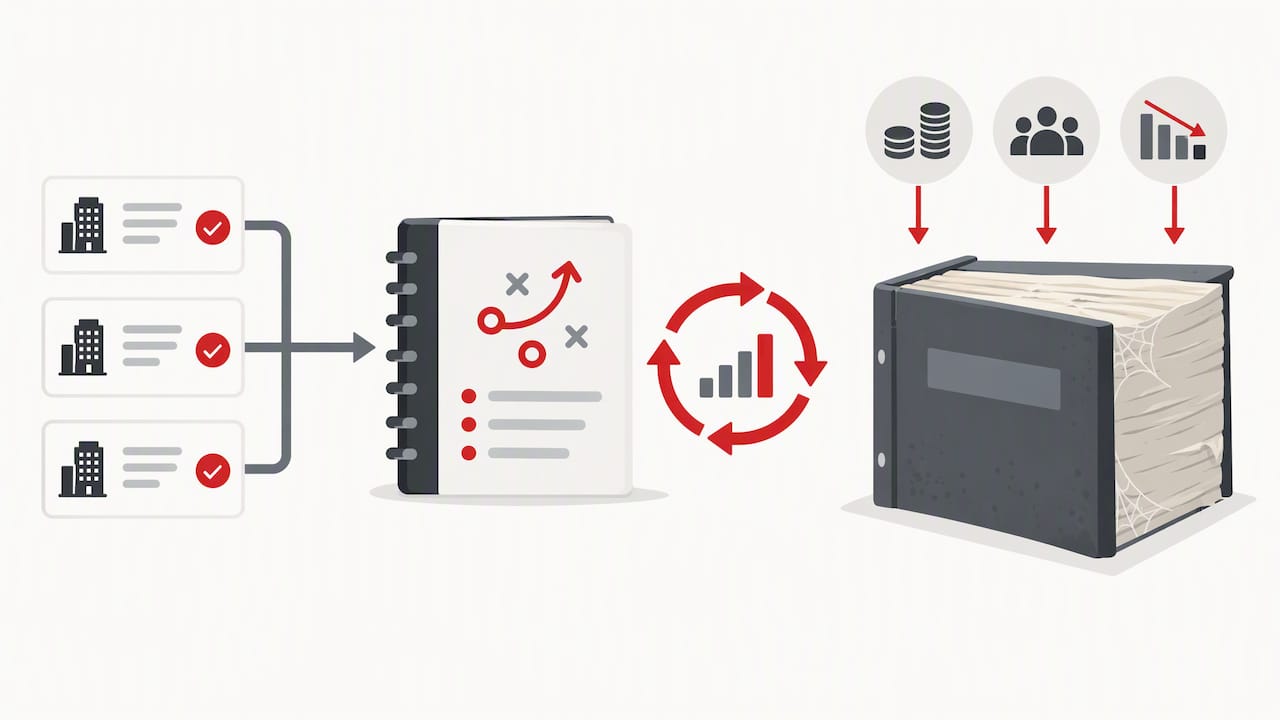
The other recurring mistake is treating the playbook as a writing project instead of a behavior-change project. Documenting a play means nothing if nobody trains on it or gets coached against it.
Three things to fix today: cut your playbook to the 10 to 20 plays your best reps actually use, assign one named owner for quarterly updates, and tie at least one KPI to every single play before you call it finished.
— Mark Kapczynski
Build it yourself or bring in Kontrol Media
Building a solid playbook internally is entirely possible with the steps above, a template, and a few weeks of focused work. We assist when stakes are higher: a new product line launching across regions, a portfolio company standardizing sales motion across several acquisitions at once, or a brand that needs its sales playbook coordinated with a new retail media or partnership channel in the same quarter.
What we deliver differs from a template download in three ways:
- The playbook is built from actual closed-deal data and cross-functional coordination is run between sales, marketing, and any partner or media teams involved.
- Rollout, training, and certification cadence are handled so the playbook changes behavior instead of sitting in a shared drive.
- The engagement is tied to KPIs defined up front, so it is known within a quarter whether it worked.
If your team needs the coordination layer more than the document itself, our services overview is the right place to start, or you can reach out directly to scope a project against your current sales motion and timeline.
FAQ
What should be in a sales playbook?
A sales playbook should include company positioning, buyer personas, defined sales stages, repeatable plays with scripts, a collateral map, and the KPIs that measure whether each play works. G2’s playbook guide lists these same core components and pairs them with downloadable templates you can adapt.
What are the 5 P’s of sales?
Definitions of the “5 P’s” vary by source and industry, so there is no single agreed version. A common framing covers product, price, promotion, place, and people, though some sales trainers substitute process or positioning for one of these.
What is the 30-60-90 rule in sales?
The 30-60-90 rule is a ramp framework that breaks a new rep’s first 90 days into three phases: learning the product and process in the first 30 days, practicing plays and running supervised calls in the next 30, and hitting independent quota targets by day 90. Tying this framework to your playbook’s certification path gives new hires a concrete milestone at each stage.
What four elements should your sales playbook include?
At minimum, a playbook needs a documented sales process with stage definitions, a set of repeatable plays tied to specific triggers, supporting collateral mapped to each stage, and KPIs that show whether a play is working. Shopify’s sales playbook guide recommends centralizing these in a searchable digital format rather than a static PDF so reps can find the right play during a live call.
How often should a sales playbook be updated?
Most teams review and update their playbook quarterly at minimum, with faster updates whenever pricing, messaging, or competitive positioning shifts. Assigning one named owner for updates keeps the document from going stale between formal review cycles.
Sources
- Revenue enablement strategic roadmap
- Sales playbook guide — Shopify
- Sales Playbook: How to Create One (+Free Template) — G2