


Revenue channels are the distinct pathways through which a business earns income, spanning direct sales, partner networks, subscriptions, licensing, and advertising. Most leaders understand this in theory. Far fewer build a deliberate architecture around it. The difference between a business that weathers market shifts and one that doesn’t often comes down to how intentionally those income sources were designed, measured, and diversified. This guide breaks down the primary types of revenue channels, how to evaluate their performance, and how to layer new income sources without destabilizing what already works.
What are the main types of revenue channels?
Revenue channels are the structural mechanisms a business uses to capture value from customers and partners. They are not the same as pricing. Revenue streams define the mechanism by which a company captures value, such as subscription versus transaction, while pricing simply defines how much the customer pays. Conflating the two leads to weak business planning.
Ten primary revenue streams form the foundation most enterprises rely on: subscription, transaction-based, service fees, licensing, usage-based pricing, ancillary revenue, freemium models, retainers, advertising, and lending agreements. Each one carries different cost structures, customer relationships, and growth ceilings.

The split between direct and indirect channels matters just as much as the stream type. Direct channels, such as a company’s own sales team or e-commerce site, give you full control but carry higher operating costs. Indirect channels, including resellers, distributors, managed service providers, and referral agents, expand reach efficiently but require investment in partner programs and ongoing management. Direct channels often cost more, while indirect channels scale reach but demand program discipline.
| Revenue channel type | Mechanism | Typical application |
|---|---|---|
| Subscription | Recurring fee for ongoing access | SaaS platforms, media, services |
| Transaction-based | Fee per completed sale or event | E-commerce, marketplaces |
| Licensing | Fee for rights to use IP or technology | Software, media, franchises |
| Usage-based | Charges tied to consumption volume | Cloud infrastructure, utilities |
| Advertising | Revenue from audience access | Publishers, apps, retail media |
| Partner/indirect | Revenue generated through third parties | Resellers, distributors, MSPs |
Pro Tip: Map each of your current income sources to one of these six channel types before any strategy conversation. You will quickly see which mechanisms you are over-indexed on and where the gaps are.
How do you evaluate and optimize revenue channel performance?
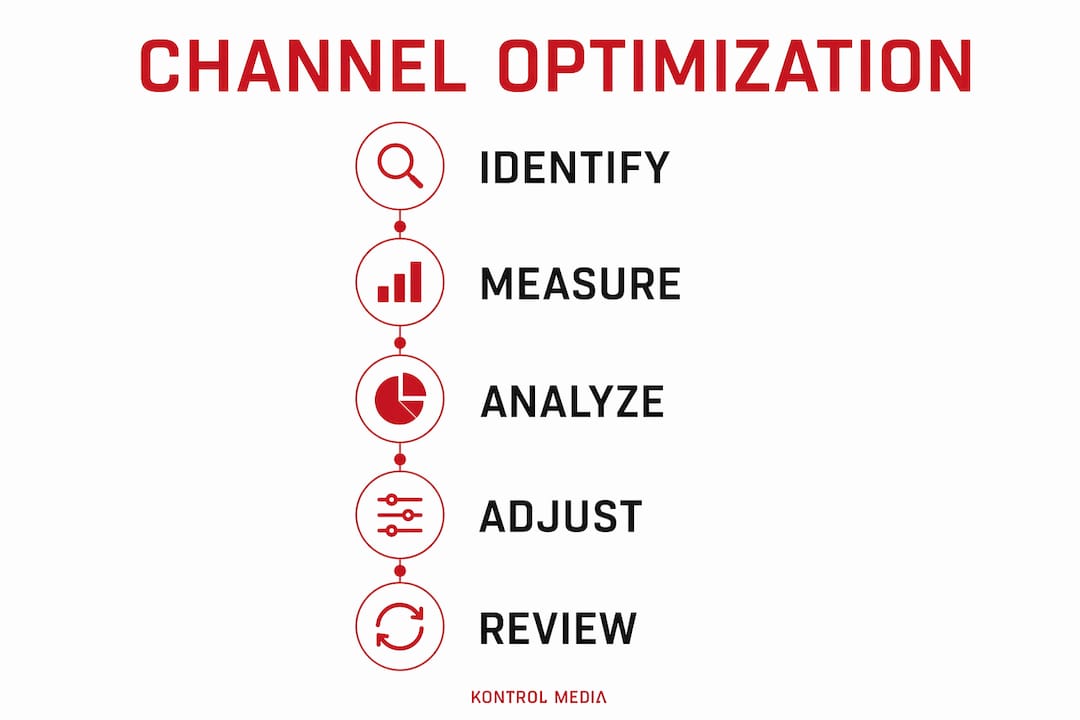
Channel performance is not a single number. It is a set of layered signals that, read together, tell you whether your income architecture is healthy or quietly deteriorating.
The most important distinction in indirect channels is sell-in versus sell-through. Sell-in measures what you ship to a partner. Sell-through measures what that partner actually sells to end customers. A growing sell-in with flat sell-through creates channel inventory buildup, which is a direct financial risk for both the vendor and the partner. Watching only sell-in is like counting boxes shipped and calling it revenue.
Channel revenue is the aggregate financial outcome from indirect partners, including resellers, distributors, and managed service providers. It is distinct from direct sales revenue and requires its own measurement framework. Growing channel revenue signals an effective partner strategy. Stagnation despite continued investment is a diagnostic sign that the program needs adjustment, not more spending.
| KPI | What it measures | Warning signal |
|---|---|---|
| Sell-in vs. sell-through ratio | Partner inventory health | Sell-in grows while sell-through stays flat |
| Channel revenue by partner tier | Top-tier vs. long-tail contribution | Over-reliance on a single partner tier |
| Revenue by geography | Regional performance variation | Concentrated revenue in one market |
| Partner-sourced deal rate | Partner-initiated pipeline share | Declining partner-sourced deals |
| Revenue per partner type | Reseller vs. MSP vs. distributor output | One partner type carrying all revenue |
Vendors track revenue by partner tier, partner type, geography, product line, and deal source to get a multi-dimensional view of performance. That level of segmentation is not bureaucracy. It is the only way to know which parts of your partner ecosystem are actually generating returns.
Pro Tip: Run a quarterly channel health review that compares sell-in to sell-through by partner tier. If the gap is widening, pause recruitment and fix the program before adding more partners.
Aligning sales and marketing functions with channel data is the step most organizations skip. Revenue data without sales context produces reports. Revenue data with sales context produces decisions.
What are effective strategies for diversifying revenue channels?
Diversification is not about adding income sources as fast as possible. The right sequence is to stabilize your primary income source first, then layer additional streams deliberately. Business leaders should stabilize core income before building secondary streams, because a shaky foundation makes every new channel harder to sustain.
The most durable diversification strategies follow a clear logic:
- Anchor your primary channel. Know your core revenue mechanism, whether that is direct sales, subscriptions, or a key partner relationship, and make sure it is performing reliably before expanding.
- Add a complementary active stream. A service business adding a retainer model, or a product company adding a licensing agreement, creates a second income source without requiring a completely new customer base.
- Introduce a portfolio stream. Advertising revenue, affiliate arrangements, or marketplace participation can generate income from existing assets like audience, data, or distribution without proportional cost increases.
- Evaluate passive income honestly. Passive income channels, such as licensing intellectual property or earning referral fees, require significant upfront investment or infrastructure. Approach them as long-term builds, not quick wins.
- Test monetization models against customer segments. Freemium works when you have volume and a clear upgrade path. Retainers work when clients value ongoing access. The model has to match how your customers prefer to pay, not just how you prefer to bill.
Monetization strategies like freemium, advertising, and retainer fees each serve different growth stages. Freemium accelerates user acquisition but requires a conversion rate that justifies the free tier’s cost. Advertising revenue scales with audience size, which is why retail media networks have become a serious income source for companies with large customer bases. Retainer models create predictable cash flow and deepen client relationships over time.
Customer segmentation shapes which channels make sense. A mid-market B2B company and an enterprise software vendor may sell similar products but need entirely different channel architectures. Aligning pricing models with channel choices, and testing those assumptions with real customer segments, is what separates a revenue strategy from a revenue wish list.
Pro Tip: Before adding any new income source, calculate the cost to operate it for 12 months. If you cannot sustain it through that period without revenue from it, it is not ready to launch.
Consulting frameworks like those used in lean process design apply directly here. Eliminating low-yield channels before adding new ones keeps the portfolio clean and the team focused.
How do partnerships and indirect channels shape revenue strategy?
Partnerships are not a supplement to revenue strategy. For many businesses, they are the spine of it. Technology companies in 2026 generate 60% to 80% of bookings through indirect sales via channel partners. That figure means most tech revenue does not come from a direct sales conversation. It comes from a partner ecosystem that requires its own investment, management, and measurement.
The partner types that make up an indirect channel each function differently:
- Resellers purchase your product and sell it to end customers, taking a margin. They own the customer relationship at the point of sale.
- Distributors aggregate products from multiple vendors and supply resellers, adding a logistics and credit layer between vendor and customer.
- Managed service providers (MSPs) bundle your product into a service offering, often creating recurring revenue for both parties.
- Referral agents generate leads or introductions in exchange for a fee, without taking ownership of the sale.
- Marketplaces provide a platform where your product is listed alongside others, generating transaction-based revenue at scale.
Channel revenue is the financial result of all these relationships combined. It is not the same as channel sales activity, which measures volume and pipeline. Channel revenue encapsulates the return on investment in partner programs, including recruitment, training, incentives, and co-selling costs. A board-level conversation about channel performance should always start with revenue, not activity.
The risk in indirect channels is real. Inventory gaps, partner disengagement, and misaligned incentives can quietly erode revenue without triggering obvious alarms. Building a partner program with clear performance tiers, regular sell-through reviews, and defined co-marketing commitments reduces that risk substantially. The goal is a partner ecosystem where both sides have a financial reason to stay engaged.
Key Takeaways
Businesses that build deliberate, multi-channel revenue architectures outperform those that rely on a single income source, because diversified income sources create resilience when any one channel underperforms.
| Point | Details |
|---|---|
| Define channels before pricing | Revenue streams define how value is captured; pricing defines the amount. Confusing the two weakens planning. |
| Monitor sell-in vs. sell-through | A widening gap between the two signals inventory risk and partner program failure. |
| Stabilize before diversifying | Secure your primary income source before layering secondary streams to avoid compounding instability. |
| Treat channel revenue as a diagnostic | Stagnant channel revenue despite partner investment means the program needs restructuring, not more spending. |
| Align sales, marketing, and channel data | Revenue data produces decisions only when connected to sales context and marketing execution. |
What I’ve learned about revenue channels that most guides won’t tell you
The conversation about revenue channels almost always starts in the wrong place. Leaders want to know which new stream to add. The real question is whether the streams they already have are actually working.
I’ve seen companies with five revenue streams where three of them were losing money on a fully loaded cost basis. They looked diversified on paper. They were concentrated in practice, because one channel was subsidizing the others. That is not resilience. That is a slow leak.
The other pattern I see constantly is the confusion between a pricing change and a channel change. Switching from annual contracts to monthly billing is a pricing decision. Adding a reseller program is a channel decision. They require completely different resources, timelines, and success metrics. Treating them as equivalent is how companies end up with a half-built partner program and a pricing model that no longer fits their customer base.
What actually works is treating your revenue architecture the way a CFO treats a balance sheet. Every stream has a cost, a yield, and a risk profile. You want the portfolio to be balanced, not just large. That means periodically retiring channels that no longer earn their keep, even when they feel safe because they have been around for years.
The growth marketing frameworks that CMOs use to drive revenue all share one trait: they connect channel performance data to marketing spend decisions in real time. That feedback loop is what separates companies that grow their channel revenue from companies that just report it.
— Mark Kapczynski
How Kontrol Media helps you build a stronger revenue model
Building a revenue model that holds up across market cycles requires more than a list of income sources. It requires a clear view of which channels are performing, which are costing more than they return, and where the next growth opportunity actually sits.
Kontrol Media works with business leaders to design and execute comprehensive business strategies that include deliberate revenue channel planning, partner program development, and retail media network buildouts. Whether you are entering a new market, restructuring an underperforming partner program, or building a commerce media network from the ground up, the work starts with understanding your current revenue architecture honestly. If you want a clearer picture of where your income sources stand and where they could go, that conversation starts at Kontrol Media.
FAQ
What is the difference between revenue channels and revenue streams?
Revenue channels are the pathways through which income reaches a business, such as direct sales or partner networks. Revenue streams are the structural mechanisms within those channels, such as subscriptions or transaction fees, that define how value is captured.
How many revenue streams should a business have?
There is no universal number, but ten primary stream types cover most business models. The right number depends on your capacity to manage each stream profitably, not on maximizing variety.
What does channel revenue measure?
Channel revenue measures the total financial output generated through indirect partner relationships, including resellers, distributors, and managed service providers. It is the return on investment metric for partner programs, not a measure of sales activity volume.
How do you know when a revenue channel is underperforming?
Stagnant or declining channel revenue despite continued investment in partner recruitment, training, and incentives is the clearest signal. A widening gap between sell-in and sell-through is a secondary warning that inventory risk is building.
When should a business start diversifying its income sources?
Diversification should begin after the primary income source is stable and generating consistent returns. Adding new streams before the core channel is secure creates operational strain and makes it harder to diagnose what is actually working.
Recommended
- Unlocking New Revenue Streams: The Power of Commerce Media for Your Business | Kontrol Media Consultancy
- Comprehensive Business & Marketing Services | Kontrol Media
- Maximizing Business Growth: Strategies for Success | Kontrol Media Consultancy
- Everyone Sells: How Every Role Drives Trust and Revenue | Kontrol Media Consultancy