

The strongest retail media sponsorship strategy pairs real audience reach with an incrementality-first measurement plan, so every placement answers to a number before it earns a renewal. We’ve built these programs from the ground up as Kontrol Media, and the lesson holds across categories: sponsorships that start with a measurement framework outperform ones bolted on after launch. Start now by auditing your current partnerships against your stated objectives and requesting measurement terms in writing before your next renewal.
TL;DR:
- Onsite placements suit conversion and need creative within days; offsite builds reach, while store activations require eight to twelve weeks and lift studies.
- Before signing, verify audience overlap, inventory, and data access, then review a sample deduplicated report and confirm reporting cadence, portability, and exclusivity terms.
- Use randomized holdouts when supported; otherwise compare matched markets or use marketing mix models, documenting assumptions and sensitivity ranges instead of a single estimate.
- Bring sales into planning, tie media results to revenue forecasts or named accounts, and review shared KPIs with partners quarterly before deciding whether to renew.
Table of Contents
- Why Sponsorships and Partnerships Matter Now
- Sponsorship Formats That Actually Move Shoppers
- Choosing the Right Partner: An Evaluation Framework
- Proving Business Impact Through Incrementality
- The Campaign Playbook: From Brief to Scale
- Kontrol Media in Practice: Building Sponsorship Programs That Execute
- Aligning Sponsorships With Sales and Business Development Goals
- Agent Influencer and Email Programs for Homebuyer Targeting
- Expert Perspective: Next-Wave Priorities for Sponsorship Strategies
- Kontrol Media: Strategy and Execution for Sponsorship Programs
- FAQ
- Sources
Why Sponsorships and Partnerships Matter Now
Retail media has stopped being a side budget line and become a boardroom topic, and the dollars back that up. Industry forecasts point to substantial incremental ad spending flowing into US retail media in 2025 alone, with Amazon and Walmart capturing the bulk of that incremental growth. That concentration matters for anyone planning a sponsorship strategy: the largest networks are commanding outsized attention, which means smaller and mid-tier retail media networks need focused positioning to compete for the same marketing dollars.
Retail media ad spending is projected to keep rising through the next few years, with growth skewed toward the biggest platforms. That forecast tells marketers that waiting on the sidelines gets more expensive every quarter.
The deeper shift is cultural, not just financial. Retail media is maturing from tactical, transactional buys into genuine partnerships, where brands and retailers co-invest in pilots, share KPIs, and build quarterly governance rhythms rather than negotiating placements one campaign at a time.
That shift carries three practical implications for how you plan:
- Budgets need to shift from campaign-by-campaign line items toward annual partnership commitments with built-in test cycles.
- Marketing and sales teams need shared KPIs so a sponsorship win on one side doesn’t look like a loss on the other.
- Media mix planning has to treat retail media as a strategic channel, not an afterthought bolted onto search and social.
Sponsorship Formats That Actually Move Shoppers
Not every sponsorship format fits every goal, and treating them interchangeably is where most budgets get wasted. Onsite sponsored placements, think featured product slots, sponsored search results, and banner takeovers on a retailer’s own site, work best for bottom-funnel conversion and velocity lifts, since they catch shoppers already in a buying mindset.
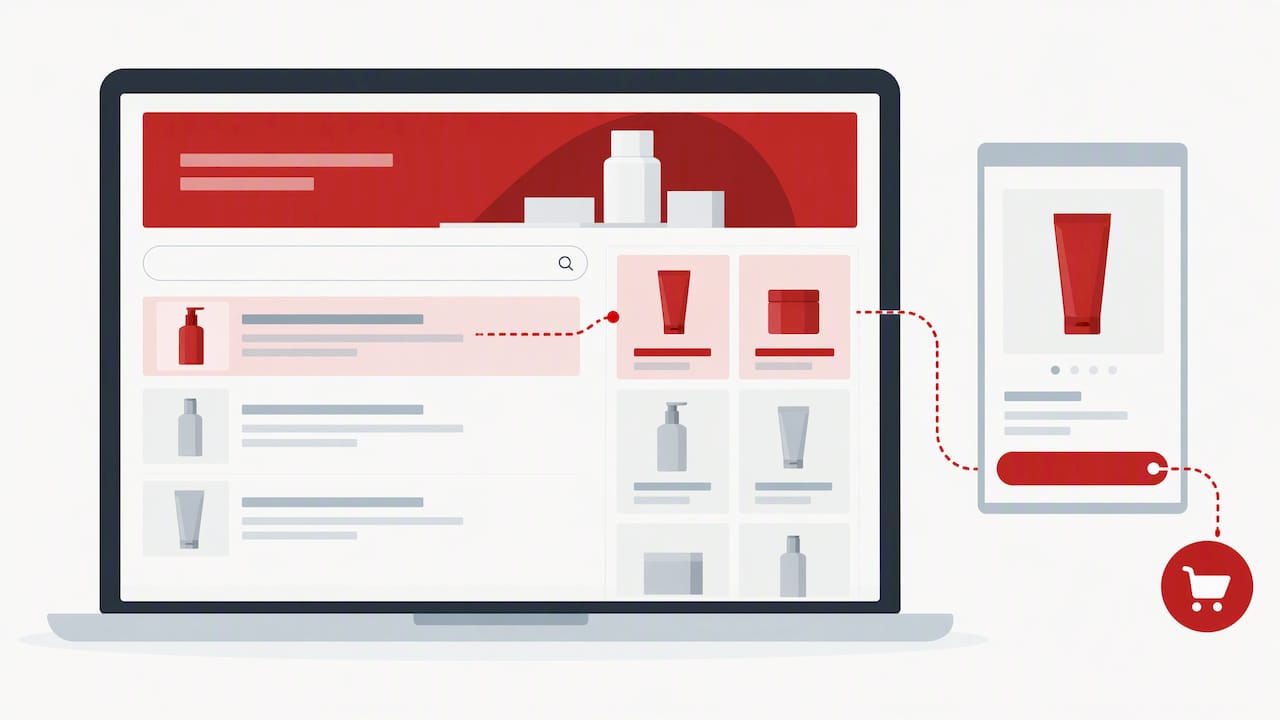
Offsite extensions push a retailer’s first-party audience data into channels like connected TV, social, and programmatic display, which widens reach while keeping the targeting precision retail media is known for. In-store and in-person media, including end caps, digital shelf screens, and sampling events, still matter for categories where tactile discovery drives purchase, and they often generate the kind of brand lift that onsite placements alone can’t claim.
Each format carries its own operational rhythm:
- Onsite placements typically need creative turned around in days, with velocity and attributed sales as the primary signals.
- Offsite extensions require longer creative lead times and usually report on reach, frequency, and downstream site visits.
- In-store activations demand the longest planning runway, often eight to twelve weeks, and measurement leans on lift studies rather than real-time dashboards.
Two integrated examples show how these formats compound. A beverage brand might pair an onsite sponsored search placement with an offsite connected TV flight that retargets the same shopper segment, pushing them from awareness to cart. A home goods brand might combine an in-store sampling event with a loyalty-app push notification, converting foot traffic into app-based repeat purchases. In both cases, the sponsorship isn’t one placement, it’s a sequence designed to move a single audience segment down the funnel.
Choosing the Right Partner: An Evaluation Framework
Picking a retail media partner starts with a question most teams skip: does this network actually reach the audience tied to your objective? Work through the fit in order, because skipping a step here tends to surface as a measurement gap later.
- Confirm the goal, whether that’s velocity, brand awareness, or new-to-brand acquisition, before you look at any network’s deck.
- Match the audience the network claims against your own first-party data to check for real overlap, not assumed overlap.
- Assess inventory fit: does the format list include the placements your creative and timeline can actually support?
- Press on measurement and data access: will you get clean-room collaboration, raw event-level data, or only aggregated dashboards?
- Review pricing and operational terms, including minimum spend, exclusivity clauses, and reporting cadence.
Ask prospective partners directly about data portability (can you export results into your own analytics stack), reporting frequency, creative support turnaround, and whether any exclusivity terms lock you out of adjacent categories. ANA research on retail media networks finds that operational readiness, not creative or inventory, is often the gating factor that determines whether a sponsorship scales past a pilot.
Set your priorities, but write them down before you score anyone.
Pro Tip: Ask for a sample measurement report before signing anything. A partner who can’t show you clean, de-duplicated reporting during the sales process won’t produce it during the campaign.
Proving Business Impact Through Incrementality
A sponsorship that can’t separate correlation from causation isn’t a measurement program, it’s a story. The IAB’s guidelines for incremental measurement in commerce media push marketers away from simple in-platform attribution and toward causal methods, including randomized controlled trials, model-based counterfactuals, and econometric approaches.
IAB guidance recommends experiments, model-based counterfactuals, and hybrid proxy methods as the credible path to proving retail media incrementality, a standard that most platform-reported attribution still falls short of.
In practice, a few methods carry most of the weight:
- Randomized controlled trials remain the gold standard where a retailer’s platform supports holdout groups.
- Match-market testing offers a pragmatic fallback when true RCTs aren’t available, comparing similar markets with and without the sponsorship live.
- Marketing mix modeling folds retail media spend into a broader view of what’s driving sales across channels.
- Data clean room collaborations let brands and retailers compare first-party signals without either side exposing raw customer data.
When a true RCT isn’t possible inside a given network’s constraints, document your assumptions and report a sensitivity range rather than a single point estimate, a practice the IAB’s advanced measurement guidance treats as standard discipline.
Choosing KPIs comes down to matching the metric to the objective: velocity and ROAS make sense for bottom-funnel sponsorships, while awareness and consideration lifts matter more for upper-funnel partnerships. ANA’s research on retail media networks found that marketers largely view these networks as essential, yet many still worry about data timeliness and standardization, which is exactly why ANA and the Media Rating Council are developing measurement must-haves for the category. Set your reporting cadence before launch, not after, so a slow data pipeline doesn’t become a post-campaign surprise.
The Campaign Playbook: From Brief to Scale
A sponsorship program runs reliably when each phase has a named owner and a hard deadline, not when everyone assumes someone else is tracking it.
- Define objectives and audience (week one, owned by brand marketing): lock the KPI and the first-party segment before any creative work starts.
- Write the creative brief (week two, owned by the creative lead): specify format-specific specs for onsite, offsite, and in-store placements separately.
- Finalize partner operations (weeks two to three, owned by partner ops): confirm data access, reporting cadence, and exclusivity terms in writing.
- Design the measurement test (week three, owned by analytics): pick RCT, match-market, or MMM based on what the partner’s platform actually supports.
- Launch and monitor (weeks four through eight, shared ownership): track early signals without overreacting to the first few days of noise.
- Optimize mid-flight (week six, owned by the brand and partner ops jointly): shift budget toward the formats showing real lift.
- Analyze and scale (post-campaign, owned by analytics and brand leadership): decide whether to renew, expand, or walk away based on the incrementality read, not the raw impressions number.
The most common pitfall is skipping step four and relying on platform-reported attribution by default, which tends to overstate impact. A second common gap is procurement signing exclusivity terms before marketing confirms the audience overlap actually exists. Building in a short discovery call between legal and the brand team before contracts close catches both problems early.
Pro Tip: Build your measurement test into the media plan before the buy closes, not after launch. Retrofitting a holdout group onto a live campaign rarely works cleanly.
Kontrol Media in Practice: Building Sponsorship Programs That Execute
We built our consulting practice around the gap between strategy decks and working campaigns. For sponsorship programs specifically, our relevant services include:
- Standing up retail or commerce media networks from scratch for retailers ready to monetize their audience.
- Running day-to-day retail media network operations so internal teams aren’t stretched thin managing advertiser relationships.
- Developing media partnerships that connect brand sponsorship dollars with the right inventory and audience.
- Supporting measurement frameworks that tie sponsorship spend back to sales and brand outcomes.
Our general pattern follows discovery, build, measure, and scale: we start by mapping the client’s audience and existing partnerships, then stand up or refine the sponsorship infrastructure, layer in an incrementality test, and use those results to decide what to expand. For a deeper look at the build-versus-buy decision, see our guide to retail media network setup.
Aligning Sponsorships With Sales and Business Development Goals
A sponsorship strategy that lives only inside the marketing team tends to stall at renewal time, because nobody outside marketing can point to what it did for the pipeline. The fix is structural: bring sales and business development into the goal-setting conversation before the media plan is finalized, not after results come in.
That means translating sponsorship KPIs into language sales already tracks. A velocity lift on a sponsored placement should map to a specific revenue number sales can cite in their own forecasts. A brand awareness lift from an offsite extension should connect to a named account list or territory where sales development reps are already working leads. When those connections exist on paper before launch, the sponsorship becomes a shared asset instead of a marketing line item sales has to take on faith.
Quarterly governance reviews help keep that alignment honest. Bringing sales, business development, and media partners into the same room to review results against the original goal, not just the vanity metrics, forces a conversation about whether the sponsorship is actually feeding the pipeline it was built to support. Trade press coverage of evolving retail media partnerships points to exactly this pattern: the partnerships that last are the ones with joint KPIs and a regular governance rhythm, not the ones renegotiated from scratch every quarter.
Agent Influencer and Email Programs for Homebuyer Targeting
Retail media sponsorship logic extends naturally into real estate, where the real estate agent functions as both a trusted local voice and a distribution channel to active homebuyers. Brands and their agencies trying to reach homeowners and homebuyers can build sponsorship-style partnerships through the agent channel itself, rather than relying solely on traditional display or search inventory.
An agent influencer network treats agents the way a retail media sponsorship treats a retailer’s audience: as a trusted intermediary with reach into a specific, high-intent segment. Pairing that with an agent email program lets brands put relevant offers in front of homebuyers at the moment they’re actively searching, closing, or furnishing a new home, a window where purchase intent runs higher than almost any other channel can replicate.
We build these programs as part of our media partnerships and homebuyer email work, combining agent-level outreach with the document signing and in-market targeting infrastructure that makes the sponsorship measurable rather than anecdotal. The same incrementality discipline that applies to onsite retail placements applies here too: test whether the agent-driven touch actually moved a purchase decision, rather than assuming reach equals impact.
Expert Perspective: Next-Wave Priorities for Sponsorship Strategies
Retail media is entering what analysts are calling Retail Media 3.0, where the defining trait isn’t more inventory, it’s interoperability. Nielsen’s analysis of the sector’s future describes brands moving from tactical, one-off buys toward long-term partnerships built on blended scorecards that combine velocity metrics with brand equity signals.
I think the networks that win the next phase won’t be the ones with the most placements, they’ll be the ones that make data collaboration painless across partners. A brand running sponsorships across five networks with five incompatible reporting formats is drowning, not scaling. Senior leaders should treat measurement interoperability as a governance decision, not a technical afterthought, and allocate budget toward partners willing to standardize reporting now rather than the ones promising reach alone.
— Mark Kapczynski
Kontrol Media: Strategy and Execution for Sponsorship Programs
We built our practice to close the gap between a sponsorship strategy deck and a sponsorship program that actually runs. That means we don’t just advise on what to buy, we help stand up the retail or commerce media network itself, operate it day to day, and build the partnerships that fill it with sponsors.
If you’re weighing whether to build this capability in-house or bring in hands-on execution, our services overview is the place to start, and our team can walk through what a 90-day plan looks like for your category.
FAQ
How do I approach brands for a sponsorship partnership?
Lead with audience data, not inventory specs: show the brand exactly which segment of your shoppers overlaps with their customer base and propose a measurable pilot before asking for a long-term commitment. Including a clear incrementality test in the initial pitch, rather than offering it only after pushback, tends to speed up approval from brand-side marketing teams.
What are the 7 Ps of retail marketing?
The 7 Ps framework covers product, price, place, promotion, people, process, and physical evidence, a classic marketing mix model applied to retail. In a sponsorship context, promotion and place map most directly to media placements, while people and process cover the partnership operations that keep a sponsorship running smoothly.
What are the 5 main purposes of media products?
Media products generally serve to inform, educate, entertain, persuade, and build community or brand connection with an audience. Retail media sponsorships usually lean hardest on persuasion and information, using targeted placements to move a shopper from awareness toward a purchase decision.
What are 5 common promotional strategies in retail?
Common retail promotional strategies include sponsored product placements, loyalty program offers, in-store sampling, co-op advertising with brand partners, and limited-time digital discounts. The strongest programs combine at least two of these, such as a sponsored placement paired with a loyalty offer, to reinforce the same message across touchpoints.
Why does incrementality measurement matter for retail media sponsorships?
Incrementality measurement separates sales that would have happened anyway from sales the sponsorship actually caused, which is the only way to justify renewing or scaling a partnership. IAB guidance recommends randomized controlled trials, counterfactual models, and econometric approaches over simple platform-reported attribution for this reason.
Sources
- IAB — Guidelines for incremental measurement in commerce media
- eMarketer — Retail media ad spending forecast and trends H2 2025
- ANA — Retail Media Networks: Optimism Tempered with Caution
- Nielsen — Future of retail media