


Retail media data onboarding translates offline shopper records, POS receipts, loyalty history, and CRM files into privacy-safe digital identifiers that advertisers can activate and measure in a closed loop. The single next step for most teams is simple: inventory every data source you hold, then pick an identity approach, deterministic hashing or consented identity, before building anything else.
TL;DR:
- Separate first party activation from third party sharing, because outside advertiser use carries different consent obligations and requires clear partner contracts.
- Start with one audience of consenting loyalty shoppers and deterministic POS or loyalty identifiers, then measure match rate and conversion lift before expanding.
- Capture affirmative consent at collection, attach consent flags to each record, and apply suppression lists before building or delivering any audience.
- Track match rates by source and identifier, remove duplicates, and reconcile every delivery; sudden drops often point to upstream schema changes.
- Use a clean room to match encrypted records without exchanging raw customer files, and enforce access controls, deletion rules, and audit logging across partners.
Table of Contents
- What data onboarding means for retail media teams
- Technical onboarding workflow from inventory to activation
- Privacy, consent, and regulatory guardrails to embed in onboarding
- Activation destinations and delivery formats for onboarded audiences
- Measurement, data quality, and auditability checks you can trust
- How we help teams launch a pilot and scale onboarding into a revenue capability
- Data security protocols beyond privacy compliance
- Practical examples of onboarding implementations that worked
- What we think retailers get wrong about onboarding
- Ready to pilot retail media data onboarding with us
- FAQ
- Sources
What data onboarding means for retail media teams
We think of onboarding in two directions, and the distinction matters more than most teams realize. First-party onboarding activates a retailer’s own customer records against its own campaigns: a grocery chain matching loyalty members to its own onsite ads. Third-party onboarding begins the moment that same data gets made available to outside advertisers for their own targeting, a meaningfully different relationship with different consent obligations, as Experian’s explainer on commerce media lays out.
This distinction has become urgent because signal loss keeps eroding the third-party cookies and mobile identifiers advertisers once relied on. Deterministic purchase data, tied to an actual transaction, holds up where probabilistic signals fail, which is exactly why retail media networks lean on it for closed-loop measurement. Onboarding also unlocks activation beyond the retailer’s own site, a shift NRF’s reporting on off-site advertising frames as one of the fastest-growing parts of the category.
- First-party onboarding powers a retailer’s own ad inventory and personalization.
- Third-party onboarding extends that same data to outside advertisers and demand partners.
- Off-site activation depends on onboarding infrastructure built well before the first campaign launches.
Technical onboarding workflow from inventory to activation
The actual mechanics of onboarding follow a consistent sequence, whether you run it in-house or lean on a partner to operate it.
- Inventory and mapping: List every file, its owner, its schema, retention rules, and any consent flags attached to it.
- Ingest and normalization: Standardize date and time formats, map SKUs consistently, and align field names across sources, typically through an ETL pipeline or a streaming feed for fresher data.
- Identity resolution: Apply deterministic hashing against email, phone, or loyalty ID first, and only layer in compliant probabilistic augmentation where your consent terms and partner agreements permit it. Test match rates at every stage rather than assuming they hold steady.
- Privacy and segmentation: Apply consent filters and suppression lists before any segment gets built, then construct audience segments using encrypted identifiers rather than raw personal data.
- Delivery and activation: Push finished audiences via API, SFTP, or into a data clean room for secure matching, then onward to demand-side platforms, social, search, or connected TV.
- Operational reliability: Build monitoring and retry logic for feed failures, set a clear SLA for feed health, and log every step for later audits.
Pro Tip: Run a small reconciliation report after every delivery cycle; a silent drop in match rate usually signals a schema change upstream, not an audience that simply shrank.
Our advertiser onboarding guide walks through the onboarding sequence for teams managing both sides of the relationship.
Privacy, consent, and regulatory guardrails to embed in onboarding
Every onboarding pipeline we have reviewed eventually runs into the same question: did the shopper actually agree to this use of their data? The FTC’s guidance on information collected in confidential contexts is direct on this point: businesses need affirmative express consent before using that data for advertising or monetization, and a buried clause in a privacy policy does not satisfy the “clear and conspicuous” bar regulators expect.
Translating that into practice means building controls into the pipeline itself, not just the legal terms around it.
- Capture explicit consent at the point of collection, not retroactively through a policy update.
- Attach consent flags directly to records so downstream systems can filter automatically.
- Maintain suppression and opt-out workflows that propagate across every connected system.
- Write partner contracts that clearly distinguish a processor relationship from a third-party data sale.
IAB and MRC’s retail media measurement guidelines call for privacy and security controls, consistent data capture, and verification practices as baseline requirements for any retail media program, a standard worth building toward from day one.
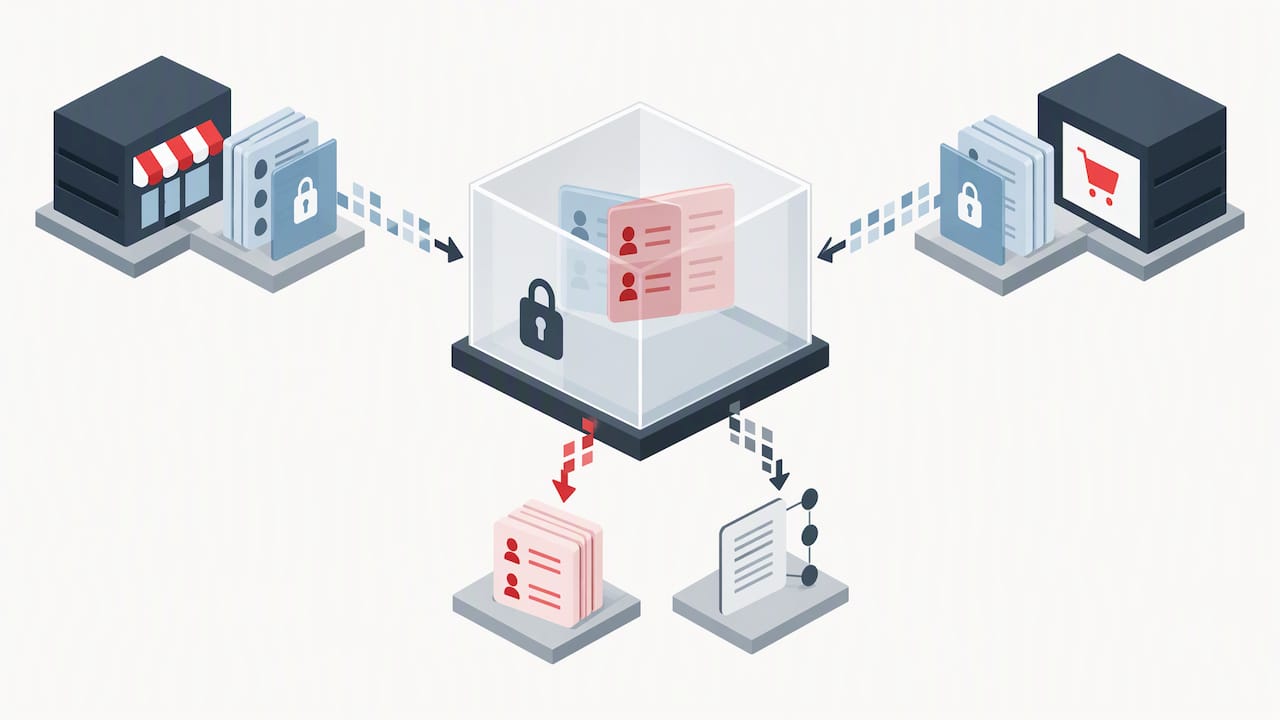
Data clean rooms have become the preferred pattern for matching audiences without exposing raw personal data. A DCR lets a retailer and an advertiser compare encrypted records, produce a match, and keep an audit trail, without either party handing over a customer file, which the IAB Tech Lab’s clean room guidance frames as a baseline for interoperable, privacy-first collaboration.
Activation destinations and delivery formats for onboarded audiences
Onboarded audiences only earn their keep once they reach an endpoint where a campaign can actually run. On-site, that means retail ad manager placements, personalized onsite slots, and targeted email or CRM campaigns built from the same identity graph.
Off-site activation is where the category is growing fastest. NRF’s analysis of off-site retail advertising points to demand-side platforms, social channels, search partners, and connected TV as the main growth areas, a trend echoed in broader market forecasts for retail media networks.
- Hashed-list pushes work well for simple audience transfers to ad platforms with native matching.
- SFTP and API integrations suit recurring, automated deliveries at scale.
- Server-to-server connections reduce latency for near-real-time activation.
- Data clean room outputs keep matching private while still enabling activation across partners.
Consistent segmentation definitions across every endpoint matter more than teams expect: an audience that means one thing on-site and something slightly different off-site creates reporting confusion that undermines trust with advertisers. Our activation playbook covers audience activation.
Measurement, data quality, and auditability checks you can trust
An onboarded audience is only as good as the checks behind it. Match rate, field completeness, duplicate removal, and outlier detection form the baseline quality gate before any segment ships to a partner.
- Track match rate by source and by identifier type, not just as a single blended number.
- Remove duplicate records before they inflate reach or distort frequency reporting.
- Flag outliers, like a transaction value far outside normal range, before they skew segment logic.
Measurement itself needs the same rigor: closed-loop attribution, incrementality testing, and attribution windows that stay consistent across every partner you work with, as explained in detail in audience targeting explained. IAB and MRC’s retail media measurement guidelines call for quality assurance, third-party verification, and clear data retention policies as part of a defensible measurement practice, and those standards hold up well as a shared benchmark across a fragmented vendor landscape. Our field-level data rules guide covers data requirements for retail media.
How we help teams launch a pilot and scale onboarding into a revenue capability
We have found that the fastest way to prove onboarding value is to start small and measurable. Pick a single audience, loyalty shoppers tend to work well, ingest a limited sample, and benchmark match rate and conversion lift before committing to a full build.
An activation plan keeps that momentum: scope the sources and identity approach, ingest and match, then activate, measure, and iterate. Strategy alone does not move the needle here. Pairing it with hands-on data operations, measurement templates, and onboarding checklists for advertiser-facing teams is what turns a pilot into a capability a retail media network can sell against. If you are weighing whether to build that capability in-house, our build versus buy breakdown is worth a look before you commit resources.

Data security protocols beyond privacy compliance
Consent and privacy rules set the floor, not the ceiling, for how onboarded data gets protected. Security protocols need to cover the full lifecycle of a record, from the moment it lands in an ingest pipeline to the moment it expires under a retention policy.
Encryption at rest and in transit is the baseline expectation for any file carrying hashed identifiers, and access controls should limit who inside an organization can see raw versus hashed fields. Role-based permissions matter here: a media operations analyst rarely needs access to the same fields a compliance officer reviews. Tokenization, where a sensitive identifier gets replaced with a reference token before it ever reaches an activation platform, adds another layer of protection that keeps raw data from traveling further than it needs to.
Vendor management deserves equal attention. Every partner touching onboarded data, a clean room provider, a DSP, a measurement vendor, should operate under a contract that specifies data handling obligations, breach notification timelines, and deletion requirements once an engagement ends. Regular penetration testing and vulnerability scans on the systems that house matched identity graphs catch weaknesses before they become incidents, and logging every access event creates the audit trail regulators and partners increasingly expect to see on request.
Retention policies close the loop: data that outlives its useful purpose is pure liability, not an asset, so building automatic expiration into the pipeline protects everyone involved, including the shopper whose data started the process.
Practical examples of onboarding implementations that worked
Identity resolution vendors have documented substantial gains when retailers connect POS data to offline identity graphs properly. One case study involving a major retailer working with the identity resolution provider Bridg reported a steep increase in targetable individuals and matched transactions once POS records were properly resolved against offline identities, a result that reflects what careful matching can unlock even from data a retailer already owns.
The pattern that shows up across successful implementations is consistent: start with the highest-quality deterministic source available, usually loyalty or POS data tied to a real transaction, and resist the temptation to layer in probabilistic signals before the deterministic foundation is solid. Retailers that try to onboard every available source simultaneously tend to spend months untangling schema conflicts instead of shipping a working pilot. The ones that start with one well-defined audience, loyalty shoppers who opted into email, for instance, and prove match quality before expanding, reach a usable activation pipeline much faster.
Scaling off-site after that initial proof point tends to follow a similar discipline: one new endpoint at a time, with match rate and attribution checked before adding the next. Our off-site scaling checklist walks through that sequencing for teams ready to move past a single-channel pilot.
What we think retailers get wrong about onboarding
Most of the advice circulating about retail media data onboarding treats it as a one-time technical project: build the pipeline, flip the switch, move on. That framing undersells what actually makes onboarding valuable, which is the ongoing discipline of consent management, match-rate monitoring, and identity hygiene long after the initial build ships.
We also think the industry overindexes on identifier volume and underindexes on identifier quality. A pipeline that identifies transactions with sloppy consent flags is a liability, not an asset, while a pipeline that identifies them cleanly, with airtight consent and a documented audit trail, is the one that survives a partner’s due diligence review. Retailers chasing scale before they have proven match integrity on a small, well-governed audience are setting themselves up to rebuild later, under more scrutiny, with an advertiser relationship already on the line.
The fragmentation across retail media networks, with brands reportedly managing six or more networks and facing real network fatigue, only raises the stakes: the retailers that make onboarding boring, consistent, and auditable are the ones advertisers keep coming back to.
— Mark Kapczynski
Ready to pilot retail media data onboarding with us
We stand up and operate retail or commerce media networks end to end, including the onboarding and activation layer that makes an audience usable in the first place. That work spans data onboarding and activation, measurement design, and advertiser enablement, backed by ongoing network operations once a pilot proves out.

A first engagement can include scoping your available sources and developing an activation plan. If you are ready to test match quality and ROAS on a real audience, reach out about standing up your network and we will scope a pilot built around your data.
FAQ
What does data onboarding mean in retail media?
Data onboarding is the process of converting offline shopper records, like POS purchases, loyalty history, and CRM files, into privacy-safe digital identifiers that can be matched and activated in digital advertising channels. It is the step that makes a retailer’s first-party data usable for targeting and closed-loop measurement.
What are the top retail media networks?
Retail media is dominated by a small number of very large networks, with industry analysis pointing to Amazon and Walmart capturing a dominant share of incremental spend in the category. Beyond those two, a long tail of retailer and grocery networks of varying scale make up the rest of the landscape, which is part of why advertisers increasingly weigh consolidation when choosing partners.
What are examples of retail media in practice?
Retail media spans onsite placements like sponsored product listings and personalized homepage slots, plus off-site activation through demand-side platforms, social, search, and connected TV powered by a retailer’s own shopper data. Email and CRM campaigns built from loyalty data are another common example.
What are the 5 P’s of retail?
The 5 P’s of retail, product, price, place, promotion, and people, are a classic marketing framework describing the core levers retailers manage to serve customers and drive sales. They sit alongside, rather than replace, the data and media infrastructure that modern retail media programs depend on.
How do I choose a partner for retail media data onboarding?
Look for a partner that can demonstrate strong match rates on deterministic data, clear consent handling aligned with FTC guidance, and support for data clean room delivery alongside direct API and SFTP integrations. Ask for a documented pilot plan with a defined match-rate benchmark before committing to a full rollout.
Sources
Before any matching logic runs, we need a clear map of what raw material exists and where it lives. Most retailers already sit on more usable signal than they realize, scattered across systems that rarely talk to each other.
- Experian
- Off-site retail advertising takes off | NRF
- Notice of Penalty Offenses Concerning Misuse of Information Collected in Confidential Contexts Cover Letter
- FAQ on retail media networks: How marketers should allocate budgets in 2026
Persistent identifiers do the actual bridging work: hashed emails, loyalty IDs, hashed phone numbers, device IDs, and transaction IDs each anchor a piece of the identity graph. When a shopper is logged in, prioritize that deterministic match over any probabilistic guess, since it carries far less risk of misattribution. Simple prompts, loyalty enrollment at checkout, email capture at POS, and encouraging account logins in-app, steadily raise the share of transactions you can actually identify.
Pro Tip: Audit your identifier coverage by channel before you build a pipeline; a gap in phone or email capture at POS often costs more match rate than any downstream modeling fix.