


The conference world in 2026 looks nothing like it did three years ago. Every possible conference 2026 brings with it a new set of logistical expectations, format experiments, and audience demands that are reshaping how planners, sponsors, and attendees approach these events. Whether you are mapping out a 2026 conference schedule for your team, evaluating sponsorship opportunities, or simply trying to stay ahead of what conferences in 2026 will define your industry, the decisions you make now will determine the value you extract later. This article breaks down the notable conferences, the trends driving them, and the operational realities you need to account for.
Table of Contents
- Key Takeaways
- Notable conferences and events in 2026
- Emerging trends shaping 2026 conferences
- Practical logistics for planning a 2026 conference
- Maximizing value from attending or sponsoring
- My perspective on what planners get wrong
- How Kontrol Media helps you turn conferences into growth
- FAQ
Key Takeaways
| Point | Details |
|---|---|
| Notable 2026 events span industries | From POSSIBLE in Miami to TechCrunch Disrupt in San Francisco, the 2026 conference schedule covers marketing, AI, policy, and tech. |
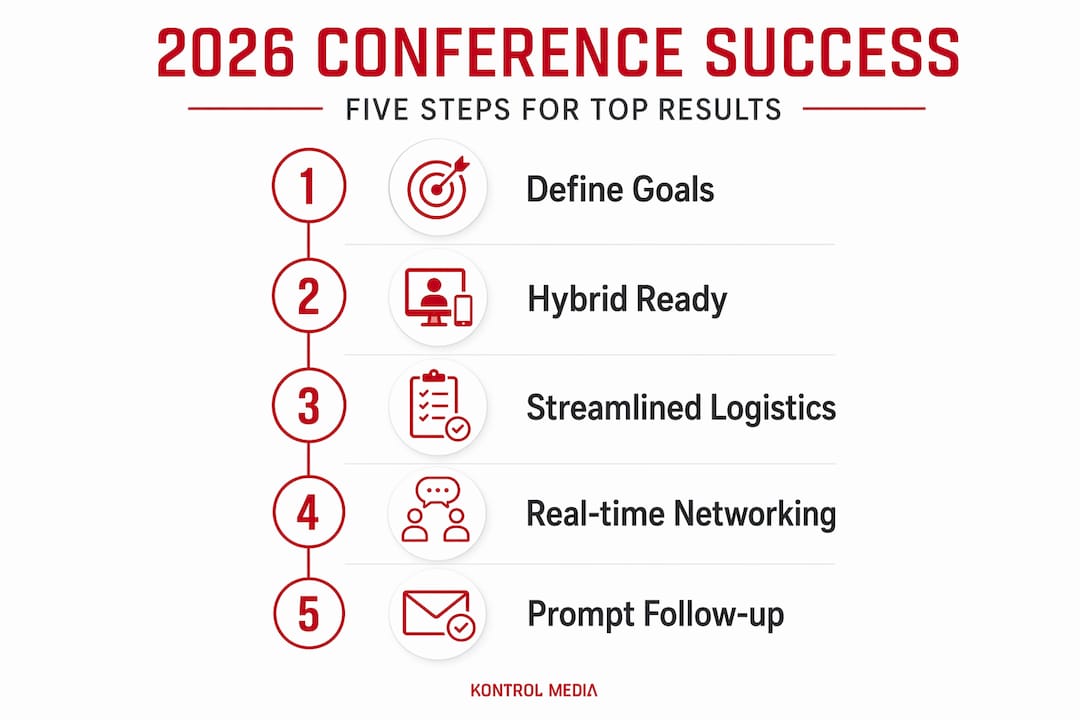
| Hybrid formats are now standard | Most upcoming conferences 2026 offer both in-person and virtual participation, expanding reach and accessibility. |
| Logistics require early alignment | Hotel blocks, badge pickup, and session rights must be coordinated well before the event opens to avoid costly bottlenecks. |
| Apps are the operational spine | Mobile apps now manage check-in, agenda, and networking at major 2026 events, reducing friction for attendees and staff. |
| Official listings reduce planning risk | Using authoritative society and organizer listings cuts the risk of acting on outdated or incorrect event information. |
Notable conferences and events in 2026
The 2026 conference calendar is dense, and the events worth your attention span far more industries than most planners track. Here is a curated look at the high-impact events shaping the year.
POSSIBLE 2026, Miami Beach. This is one of the most talked-about marketing and media events of the year. The dual-campus setup between Fontainebleau and Eden Roc is genuinely unique, and it creates both opportunity and complexity. VIP early access opens Sunday from 3 to 8 PM, with discounted room rates starting at $429++ depending on property. The audience skews toward senior marketers, brand leaders, and media executives. If you are in the marketing space, this is a must-evaluate event. I wrote about the on-the-ground experience at POSSIBLE 2026 in Miami and the insights that no slide deck could have captured.
SaaStr AI Annual 2026. This one is built for the SaaS and AI professional community. The event has leaned hard into app-based operations, using in-app QR code check-ins and satellite badge pickup locations to manage the volume of attendees efficiently. It is a strong choice for founders, operators, and investors tracking AI’s role in software growth.
UNIDIR Global Conference on AI, Security and Ethics, Geneva. Scheduled for June 18 to 19, 2026, this event brings together policymakers, technical experts, and civil society organizations. Registration is mandatory for both in-person and online participation. If your work touches AI governance or international policy, this conference sits at the intersection of two worlds that rarely talk to each other well.
Data for Peace Conference 2026. Hosted by NYU’s Center on International Cooperation, this event runs two live-streamed in-person days plus a fully virtual day. Participation is free, though travel costs are on the attendee. The public recordings make it valuable even for those who cannot attend live.
TechCrunch Disrupt 2026, San Francisco. Running October 13 through 15, 10,000-plus industry professionals will gather across six stages and 250-plus sessions focused on startup innovation and the operational challenges facing today’s founders. The scale alone makes it one of the most visible potential events 2026 has on the calendar.
| Conference | Location | Dates | Primary Audience |
|---|---|---|---|
| POSSIBLE 2026 | Miami Beach, FL | Spring 2026 | Marketers, media executives |
| SaaStr AI Annual | San Francisco Bay Area | Summer 2026 | SaaS founders, AI operators |
| UNIDIR AI Ethics | Geneva, Switzerland | June 18-19, 2026 | Policymakers, AI researchers |
| Data for Peace | New York / Virtual | 2026 TBD | Peace, data, and policy professionals |
| TechCrunch Disrupt | San Francisco, CA | October 13-15, 2026 | Startup founders, investors |
Emerging trends shaping 2026 conferences
The 2026 event trends are not subtle. They reflect a fundamental shift in how organizers think about access, operations, and attendee experience.
Hybrid is no longer optional. The UNIDIR conference and the Data for Peace Conference both require registration for in-person and online participation modes, treating virtual attendance as a first-class experience rather than an afterthought. This is the new standard for policy and tech conferences that want to maximize reach and inclusivity. Planners who still treat hybrid as a secondary track are going to find their attendance numbers suffering.
Mobile apps are now the operational core. At SaaStr AI Annual, the event app centralizes check-in, agenda management, and networking in one place. Attendees who do not download the app before arrival face friction at every touchpoint. This is not a nice-to-have anymore. It is the spine of the attendee experience.
Accessibility through recorded content. The Data for Peace Conference’s approach of live-streaming sessions where formats allow and making recordings publicly available afterward reflects a broader 2026 event trend toward post-event content as a standalone asset. Organizers who do this well extend their conference’s value well beyond the three days of the event itself.
The challenges are real, though. Managing a hybrid audience requires more production infrastructure, more staff coordination, and more pre-event communication than a purely in-person event. The organizers getting it right are the ones who treat the virtual experience as a separate product, not a camera pointed at a stage.
Pro Tip: Build your hybrid production plan at least 90 days before the event. Waiting until 30 days out to figure out streaming infrastructure, session recording rights, and virtual attendee engagement tools is how you end up with a subpar experience for half your audience.
Practical logistics for planning a 2026 conference
This is where most planners underestimate the complexity. The operational details of a possible conference 2026 can make or break the attendee experience, and several of the major events this year offer instructive examples.
Hotel block alignment. At POSSIBLE 2026, room block reservations require registration within seven days of booking, with a three-night minimum at Fontainebleau and a four-night minimum at Eden Roc. If your ticket confirmation timeline does not align with the hotel booking window, you risk losing the room block entirely. This is a common trap for planners who handle hotel logistics and ticket sales through separate teams without a shared timeline.
Here is a practical sequence for managing this:
- Confirm your event registration and ticket confirmation process before opening hotel block reservations.
- Set a seven-day alignment window between ticket confirmation and hotel booking to match the policies of major venues.
- Communicate minimum stay requirements clearly in pre-event attendee emails, not buried in FAQs.
- Build a shared logistics calendar that your hotel team, registration team, and communications team all reference.
- Flag any attendees who book hotel rooms before completing registration and follow up immediately.
Badge pickup and check-in. SaaStr’s approach of decentralizing badge pickup through satellite locations and a dedicated help desk at the Lovable Networking Lounge is a model worth studying. Main registration desks become bottlenecks when every attendee funnels through the same point. Distributing pickup options reduces staff overload and improves the first impression your event makes.
Pro Tip: Designate a secondary help location specifically for app or QR code issues. When attendees cannot access their check-in code, they default to the main desk, which compounds the line. A separate troubleshooting station keeps the main flow moving.
Session format classification and streaming rights. The NYU CIC notes that session format restrictions directly affect the ability to live-stream or record some sessions. If you plan to use post-event recordings as a content asset or distribute them publicly, you need to classify every session by format before the program is finalized. Getting this wrong means losing content rights after the fact, which is both a legal and a marketing problem.
Using authoritative conference listings like the IEEE Control Systems Society’s catalog, which includes ACC 2026 in New Orleans in May, CCTA in August, and CDC in December, gives planners a reliable anchor for date and location verification. This matters because unofficial aggregators often carry outdated or incorrect information that can derail early planning.
Maximizing value from attending or sponsoring
Showing up is the easy part. Extracting real value from a 2026 conference requires a deliberate approach before, during, and after the event.
Before the event, map your business goals to specific sessions and speakers. Do not build your agenda around what sounds interesting. Build it around what moves a specific initiative forward. If you are evaluating a new market, for example, the sessions on market expansion strategies and competitive positioning are your priority, not the keynotes everyone else is attending.
During the event, the highest-value interactions often happen in structured formats. Roundtables, Tabletalks, and hosted meetings create conditions for real conversation that hallway networking rarely achieves. These formats force depth. If a conference you are attending offers hosted meeting programs, prioritize getting into them over attending additional panels.
Your event app is not just for logistics. At events like SaaStr and POSSIBLE, the app’s networking features let you identify and message other attendees before the event starts. The planners and business leaders who use this feature consistently report better meeting density than those who rely on chance encounters.
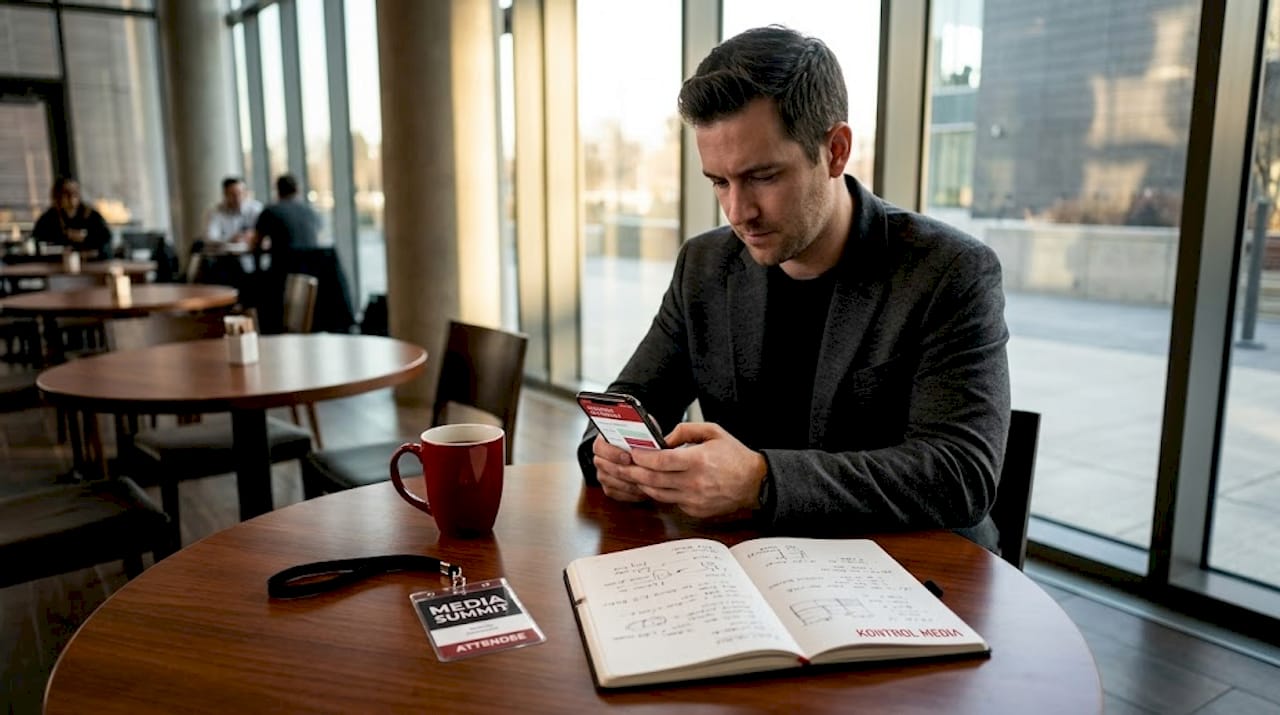
After the event, the follow-up window is shorter than most people think. Reach out within 48 hours while the context is fresh. Use the public recordings and session materials that conferences like Data for Peace make available to reinforce the insights you gathered in person. Then, and this is the step most people skip, document what you learned and share it with your team. The value of attending multiplies when it is not siloed in one person’s notebook.
My perspective on what planners get wrong
I have been to enough of these events to know that the gap between a good conference experience and a frustrating one is almost always operational, not content-related. The sessions are usually solid. The problems are in the logistics.
The multi-campus format at POSSIBLE 2026 is genuinely exciting, sun in Miami, two iconic properties, the kind of setting that puts people in the right mindset for real conversations. But the complexity of coordinating between Fontainebleau and Eden Roc is something planners consistently underestimate. When your attendees are split across two properties with different minimum stay requirements and different session tracks, the communication load doubles. I have seen well-intentioned events lose goodwill simply because attendees did not know which campus to go to for which session.
The app piece is something I feel strongly about. Centralized app usage is not just a convenience feature. It is how you actually know what is working at your event in real time. When attendees use the app for check-in, networking, and agenda management, you get data. When they do not, you are guessing. The events that have invested in driving app adoption before the doors open consistently report smoother operations and higher attendee satisfaction.
My honest advice: stop treating official conference listings as a secondary research source. The IEEE conference listing model, where dates, locations, and co-sponsorship details are maintained in one authoritative place, is the standard every industry should adopt. When planners rely on aggregators or informal sources, they build plans on shaky ground.
— Mark Kapczynski
How Kontrol Media helps you turn conferences into growth
Attending the right conferences is one thing. Knowing what to do with the relationships, insights, and opportunities you bring back is another. At Kontrol Media, we work with business leaders and marketing teams to translate conference participation into real business momentum. Whether you are building a comprehensive business strategy around your 2026 event calendar or need help executing on the connections you made at POSSIBLE or TechCrunch Disrupt, our team brings the strategic depth and hands-on execution to make it count. We have done this for clients like Experian, REMAX, and West Monroe. We know what it takes to turn a great conference into a growth catalyst. Explore how Kontrol Media can support your 2026 strategy at kontrolmedia.com.
FAQ
What is POSSIBLE 2026 and where is it held?
POSSIBLE 2026 is a major marketing and media conference held at a dual-campus setup between Fontainebleau and Eden Roc in Miami Beach, with VIP early access beginning Sunday from 3 to 8 PM.
How do hybrid conferences work in 2026?
Most notable conferences in 2026, including the UNIDIR AI Ethics Conference and Data for Peace, require separate registration for in-person and virtual attendance, with live-streaming and post-event recordings available where session formats allow.
What should planners know about hotel blocks at major 2026 events?
At events like POSSIBLE 2026, room block reservations must be completed within seven days of ticket confirmation, with minimum stay requirements of three to four nights depending on the property.
How can attendees speed up badge pickup at large conferences?
Events like SaaStr AI Annual use in-app QR codes and satellite badge pickup locations to reduce main desk congestion, with dedicated help stations for attendees experiencing app or code issues.
Where can planners find reliable 2026 conference dates and locations?
Authoritative listings like the IEEE Control Systems Society conference catalog provide verified dates and locations for multiple 2026 events, reducing the risk of planning around outdated information from unofficial sources.
Recommended
- Key Takeaways from Possible 2026 in Miami That No Slide Deck Could Have Told Me | Kontrol Media Consultancy
- The Role of Trust in Influence: CMO Notes from CES 2026 | Kontrol Media Consultancy
- 5 Things Brands Should Prioritize in 2025 | Kontrol Media Consultancy
- Navigating Uncertainty: Creating a Resilient Business Strategy | Kontrol Media Consultancy