


Everyone sells is the core principle behind a growing movement in business: every employee, regardless of title or department, participates in selling through trust, relationships, and influence. This is not a metaphor. It is a practical reality that Mark Kapczynski, CEO of Kontrol Media, explores in his book Everyone Sells, which reframes sales as a universal human skill built on value, clarity, and connection rather than manipulation. The stigma around “being in sales” keeps most employees from recognizing the influence they already have. HR builds culture that attracts talent. Finance aligns budgets to growth goals. IT shapes the tools that make customer experiences work. All of it is selling. The question is whether you know it and whether you are doing it well.
How every department already sells every day
Non-sales roles drive sales outcomes constantly. The difference is that most employees do not frame their work that way, so they miss opportunities to be more deliberate and more effective.
Marketing shapes perception before a prospect ever speaks to a salesperson. Every campaign, every piece of content, and every brand impression either builds or erodes trust. When marketing gets it right, the sales team walks into warmer conversations.

HR sells the company to candidates and to current employees. A strong employer brand reduces turnover and attracts people who genuinely believe in the mission. Employees who believe in the mission become advocates, and advocates are the most credible sellers a company has.
Finance influences sales outcomes through budget decisions. When finance understands the return on a sales initiative, it funds it. When it does not, it cuts it. Finance teams that communicate clearly with sales leadership create alignment that moves deals forward faster.
IT enables or blocks the entire customer experience. A CRM that works well, a website that loads fast, and a checkout process that does not frustrate people are all IT contributions to revenue. Poor technology creates friction, and friction kills deals.
Customer service is the most direct non-sales seller in any company. A customer service rep who resolves a problem with empathy and speed does not just retain a customer. That rep creates the conditions for a referral, an upsell, and a long-term relationship. Empathy is the best-selling skill any employee can develop, and customer service teams use it daily.
Pro Tip: Start noticing the moments in your workday when you are trying to get someone to agree with you, act on something, or change their behavior. Those are your sales moments. Name them, and you will start getting better at them.
Why does the “sales” stigma exist, and how do you move past it?
The stigma around sales comes from a specific image: the pushy rep who cares more about commission than the customer. That image is real in some contexts, but it describes bad selling, not selling itself. Sales is not manipulation. It is the human skill of creating clarity, value, and connection.
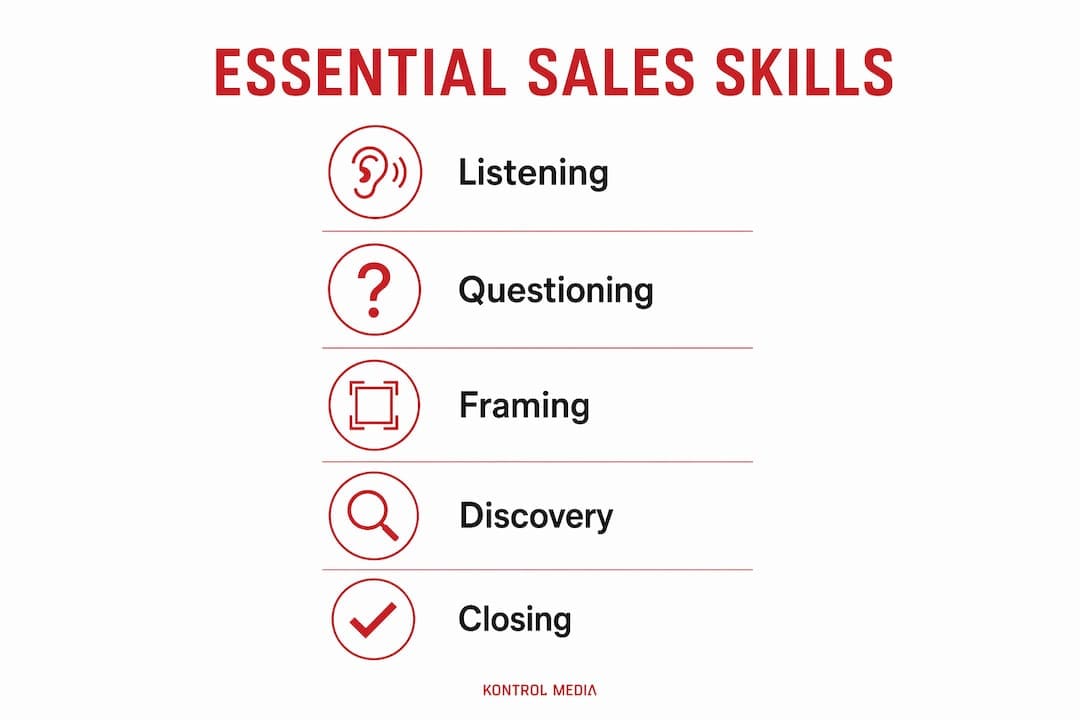
Most employees resist the “salesperson” label because they associate it with pressure tactics. The irony is that the behaviors they already practice, listening carefully, building trust, presenting ideas persuasively, are exactly what effective selling looks like. The label is the problem, not the activity.
Sabri Suby, founder of King Kong and one of the most cited voices in modern sales, puts it plainly:
“Communication is the number one superpower. Deals are won in discovery, not at the close.”
That reframe matters. If selling is really about listening and asking the right questions, then every employee who runs a meeting, presents a proposal, or navigates a difficult conversation is already selling. The mindset shift is not about becoming someone different. It is about recognizing what you already do and doing it with more intention.
Pro Tip: Replace the word “selling” with “helping someone make a good decision.” That single language swap changes how you show up in conversations and how others receive you.
What sales skills does everyone actually need?
Effective selling follows a 5-stage process: qualification, discovery, positioning, validation, and commitment. Skipping discovery is the most common mistake, and it leads directly to objections around price and logistics that could have been addressed earlier. This framework applies to every employee who needs to get buy-in, move a project forward, or influence a decision.
Here is how each stage translates to non-sales roles:
Qualification means understanding whether the person you are talking to has the authority, need, and motivation to act. Before you pitch a new initiative to leadership, ask yourself: does this person have the power to approve it, and do they care about the problem it solves?
Discovery is the most underused skill in business. It means asking questions before presenting answers. An HR leader who asks department heads what their biggest hiring pain points are before proposing a new recruiting process will get far more support than one who arrives with a solution already built.
Positioning is how you frame your idea relative to the problem. Framing pitches as solutions rather than requests reduces the mental effort required of decision-makers and increases agreement. “This will fix the onboarding drop-off we discussed” lands better than “I want to redesign the onboarding process.”
Validation means addressing concerns before they become objections. Acknowledge the risks, the costs, and the trade-offs. Employees who do this build credibility because they show they have thought it through.
Commitment is asking for a clear next step. Not “let me know what you think” but “can we schedule 30 minutes next week to move this forward?” Vague endings kill momentum.
A practical method for improving all five stages is what Sabri Suby calls the game tape method: record your meetings and presentations, then watch them back. Removing filler words and mastering the pause increases perceived authority faster than any training course.
Pro Tip: Record your next internal presentation with your phone or a tool like Zoom. Watch it once with the sound off to check your body language, then once with the sound on to count your filler words. Most people are surprised by what they find.
How do you build an “everyone sells” culture at your company?
Building a culture where every employee understands their role in driving revenue requires leadership commitment and structural support. A CEO who says “everyone sells” without explaining what that means or providing tools to act on it creates confusion, not alignment.
The companies that get this right do several things consistently:
- Set clear expectations from the top. Leadership defines what selling looks like for each department. Marketing knows its contribution is measured in pipeline influence. Customer service knows its contribution is measured in retention and referral rates.
- Train across functions. Sales training is not just for the sales team. Skills like discovery conversations, consultative selling techniques, and stakeholder communication belong in every department’s development program.
- Create cross-functional visibility. When marketing, sales, and customer service share data and meet regularly, they stop working in silos. A customer service insight about a recurring complaint becomes a marketing message and a sales objection handler.
- Recognize contributions beyond the sales team. If the only people celebrated for revenue wins are quota-carrying reps, the rest of the organization disengages. Recognizing the IT team that fixed the checkout flow or the HR team that reduced turnover in a key account team sends a clear signal.
- Use technology that supports company-wide selling. CRM platforms like Salesforce and HubSpot are no longer just for sales reps. When marketing and customer service teams log interactions in the same system, the whole organization gets smarter about what customers need.
| Approach | What it looks like in practice |
|---|---|
| Leadership alignment | CEO defines selling behaviors for each department publicly |
| Cross-functional training | Discovery and communication skills taught to HR, IT, and finance |
| Shared metrics | Marketing and sales track pipeline influence together |
| Broad recognition | Revenue wins credited to all contributing teams |
| Unified technology | CRM access extended to customer service and marketing teams |
The companies that build this culture well, including clients Kontrol Media has worked with across sectors like Experian, REMAX, and West Monroe, treat revenue as a company-wide responsibility. That shift changes how every team member shows up.
Key Takeaways
Every employee already sells through trust, relationships, and influence. The goal is to make that contribution deliberate, skilled, and recognized.
| Point | Details |
|---|---|
| Everyone sells by default | All departments influence revenue through trust, decisions, and relationships daily. |
| Discovery beats the close | Asking the right questions before presenting solutions wins more buy-in than any pitch. |
| Stigma blocks performance | Reframing sales as helping people decide removes the resistance that limits employee impact. |
| Culture requires structure | Leadership must define, train, and recognize selling behaviors across all functions. |
| Communication is the skill | Recording and reviewing your own meetings is the fastest way to improve influence. |
What I have learned from watching companies get this wrong
I have watched a lot of companies roll out the “everyone sells” message and get almost nothing from it. The phrase lands in an all-hands meeting, gets a few nods, and then disappears. Nobody knows what to do with it on a Tuesday afternoon when they are writing a budget memo or running a team standup.
The problem is not the idea. The idea is right. The problem is that most organizations treat selling as a department rather than a discipline. When you do that, you cut off 80% of your potential influence before the day even starts.
What I have seen work is much simpler than most leaders expect. When you give a finance analyst the language to frame a budget request as a solution to a known problem, they get approved more often. When you teach a customer service rep to ask one more question before closing a ticket, they uncover needs that turn into revenue. These are not sales tricks. They are communication skills with a clear purpose.
The stigma is real, and I do not dismiss it. Nobody wants to feel like they are being turned into a closer. But that is not what this is. Selling, at its best, is just being useful to someone who has a problem. Every employee does that. The shift is in recognizing it, naming it, and getting better at it on purpose.
If you are reading this and thinking “this is not my job,” I would push back gently. Your job, whatever it is, involves getting people to act. That is the job. The sooner you own it, the more effective you become.
— Mark Kapczynski
How Kontrol Media helps teams put “everyone sells” into practice
Kontrol Media works with companies at every stage, from private equity portfolio companies to large enterprises, to align marketing, sales, and business development into one coherent growth engine. The work is hands-on: building the strategy, training the teams, and executing across functions so the “everyone sells” mindset moves from a phrase to a measurable outcome. If your organization is ready to connect what every department does to real revenue results, explore what Kontrol Media offers across sales, marketing, and business development. For companies looking to understand how marketing investment translates to pipeline and revenue, the marketing ROI framework Kontrol Media uses with clients is a strong starting point.
FAQ
What does “everyone sells” actually mean?
“Everyone sells” means every employee, regardless of role, influences buying decisions through trust, relationships, and communication. It is not about cold calls. It is about recognizing the influence you already have.
Is selling a skill anyone can learn?
Selling is a learnable skill built on listening, asking good questions, and framing ideas as solutions. Discovery and communication are the two most transferable skills any employee can develop.
How does HR contribute to sales?
HR sells the company to candidates and shapes the culture that turns employees into brand advocates. Strong employer branding and low turnover directly support revenue growth.
What is the fastest way to improve your influence at work?
Record a meeting or presentation, watch it back, and identify filler words and missed pauses. The game tape method builds communication authority faster than most formal training programs.
How do you build a company culture where everyone sells?
Leadership must define what selling looks like for each department, provide cross-functional training, and recognize revenue contributions from all teams. Without structure, the message stays a slogan.
Recommended
- Building a High-Performing Sales Team: Strategies and Best Practices | Kontrol Media Consultancy
- The Role of Trust in Influence: CMO Notes from CES 2026 | Kontrol Media Consultancy
- Align Marketing and Sales to Hit Revenue Goals | Kontrol Media Consultancy
- Unlocking New Revenue Streams: The Power of Commerce Media for Your Business | Kontrol Media Consultancy