


Advertising on HuffPost.com is defined as placing paid media across HuffPost’s editorial verticals and partner distribution network, with built-in brand safety controls that protect your reputation while reaching one of the most engaged news audiences in digital media. HuffPost operates under BuzzFeed, Inc. and delivers ad inventory across owned properties plus external platforms including YouTube and Apple News. For marketing professionals and brand managers, that reach is compelling. The challenge – and the opportunity – is understanding exactly how the ecosystem works before you commit budget.
How HuffPost Ensures Brand Safety Through Its Advertising Ecosystem
Brand safety on HuffPost.com is not accidental. It is the product of editorial structure, contractual controls, and consent management working together across a complex ad delivery chain.
HuffPost organizes its content into distinct editorial verticals including Life, Home & Living, Money, and Tech. These verticals create naturally brand-safe environments because the content is produced to editorial standards rather than being user-generated. A finance brand appearing alongside HuffPost’s personal finance coverage, or a home goods brand placed within the home vertical, benefits from contextual alignment that reduces the risk of adjacency to harmful content.

The platform also uses third-party advertising partners and cookies for ad delivery and measurement. This is where brand safety requires active management, not passive trust. Those Advertising Partners operate their own tech stacks, and the targeting and measurement decisions made at the partner level can affect where your ads actually appear. Brand managers should treat this layer as a system requiring contractual controls, not a black box.
HuffPost’s privacy policy gives users the right to opt out of the sale or sharing of personal data for targeted advertising, covering cookies and browsing behavior. For advertisers, this means your audience pool can shift based on consent choices, and your measurement data may reflect gaps where opted-out users are excluded. Understanding this dynamic is part of responsible campaign planning.
Pro Tip: When briefing HuffPost or its Advertising Partners, ask for the exact names of the targeting and measurement software in use at the partner level. This is the fastest way to assess whether their consent management propagation aligns with your brand’s data governance standards.
Category exclusions are another lever worth negotiating. Most direct buys allow you to specify content categories your ads will not appear alongside. Programmatic buys require you to build those exclusions into your DSP settings or request them contractually from the supply-side partner. Neither approach is “set-and-forget.” Both require ongoing review.
What Advertising Options And Formats Are Available On HuffPost.com
HuffPost advertising options span programmatic display, direct buys, video placements, and editorial sponsorships. Each format serves a different objective, and the right mix depends on your campaign goals.
Programmatic vs. direct: understanding the core distinction
Programmatic advertising on HuffPost runs through automated auction systems, giving you scale and efficiency but less control over exact placement. Programmatic advertising grew 7.4% year-over-year to $69.6 million across BuzzFeed’s portfolio, which signals that the platform is actively investing in its programmatic infrastructure. That growth reflects real demand from brands that want scalable reach across HuffPost’s audience without the overhead of a managed deal.
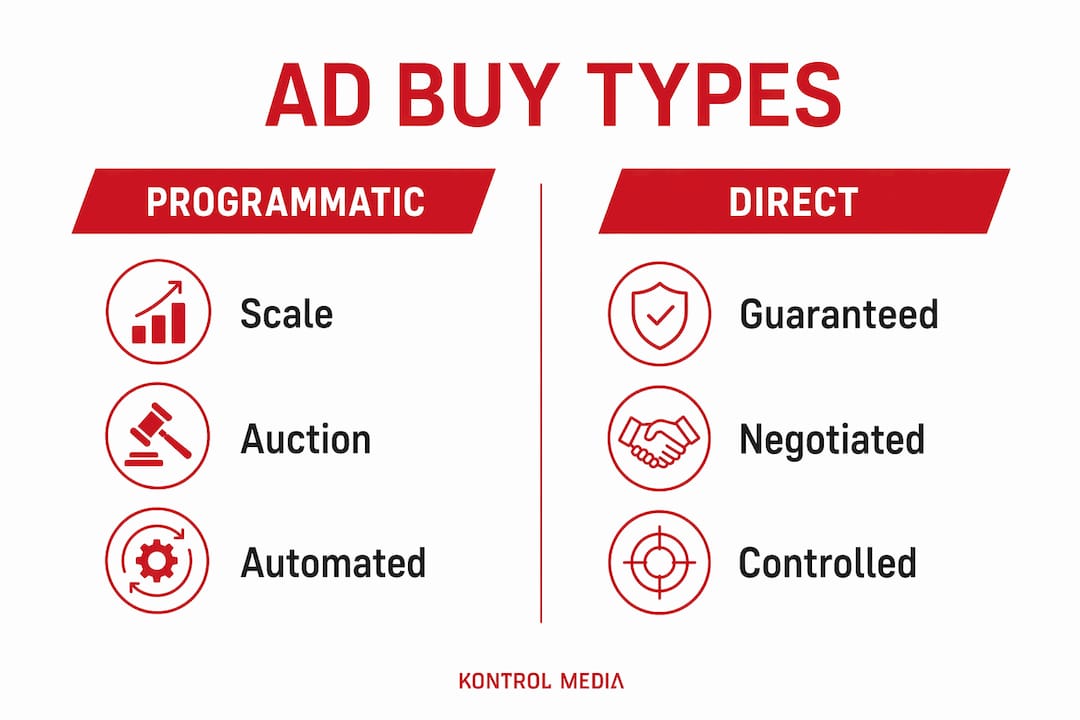
Direct buys, by contrast, give you negotiated placement, guaranteed inventory, and the ability to align your creative with specific editorial verticals or content moments. For brand managers who prioritize contextual control, direct is the cleaner path. The tradeoff is cost and lead time.
| Format | Best for | Control level | Distribution |
|---|---|---|---|
| Programmatic display | Scale and efficiency | Lower | HuffPost.com and partner network |
| Direct display | Brand safety and context | Higher | Specific HuffPost verticals |
| Video (pre-roll/mid-roll) | Awareness and engagement | Medium | HuffPost.com, YouTube |
| Editorial sponsorship | Deep brand alignment | Highest | Tied to specific editorial programs |
Video advertising is a strong performer on HuffPost because the platform distributes video content across owned and third-party platforms including YouTube. Pre-roll and mid-roll units reach audiences both on-site and off-site, which expands your reach but also means your video creative needs to perform across multiple viewing contexts.
Sponsorship opportunities tied to HuffPost’s editorial calendar represent the most differentiated format available. HuffPost builds editorial programs around major cultural and civic moments, including American 250, the FIFA World Cup, and other high-profile events throughout the year. These sponsorships place your brand at the center of content that readers are actively seeking, not scrolling past. The alignment between editorial intent and brand message is tighter here than in any other format.
HuffPost also uses social media paid tools to extend editorial and paid content reach beyond HuffPost.com.* This means your campaign can follow HuffPost’s audience onto social platforms, amplifying reach without requiring a separate social media buy.
How To Measure Advertising Performance Across HuffPost’s Platforms
Measuring the performance of a HuffPost campaign requires more than pulling a single dashboard report. Because ad inventory is distributed across HuffPost’s owned sites and external platforms like YouTube and Apple News, your KPIs need to account for every surface where your ads appear.
Here is a practical framework for consolidating campaign measurement:
- Map your distribution surfaces before launch. Confirm with your HuffPost contact or Advertising Partner exactly which platforms will carry your inventory. On-site HuffPost placements, YouTube pre-roll, and Apple News units each have different engagement benchmarks, and conflating them produces misleading averages.
- Set surface-specific KPIs. A click-through rate benchmark for display on HuffPost.com is not the same as a completion rate benchmark for YouTube pre-roll. Build your reporting structure to reflect those differences from day one.
- Request partner-level reporting. Engagement measurements must include all surfaces for accurate campaign evaluation. Ask your Advertising Partner to provide impression and engagement data broken out by platform, not aggregated across all surfaces.
- Reconcile on-site and social amplification layers separately. When HuffPost amplifies content via paid social tools, those interactions are tracked separately from on-site behavior. Build a reconciliation step into your weekly reporting cadence to get a complete picture.
- Audit consent-related data gaps. Users who opt out of data sharing will not appear in your behavioral targeting or retargeting pools. Factor this into your reach projections and compare delivered impressions against contracted volume to identify any shortfall.
For deeper guidance on consolidating campaign ROI across multi-surface buys, Kontrol Media has published a practical framework that applies directly to publisher-led campaigns like those on HuffPost.
Practical Tips For Brand Managers To Maximize Ad Engagement on HuffPost
Getting the most from digital advertising on HuffPost requires preparation before the campaign launches, not adjustments after the fact. The platform’s multi-partner ecosystem rewards brand managers who do their due diligence upfront.
Start with the editorial calendar. HuffPost’s sponsorship programs tied to American 250, the FIFA World Cup, and other cultural moments are planned months in advance. Brands that align their creative and messaging with these programs benefit from editorial momentum that no standalone display buy can replicate. The audience is already engaged with the topic. Your brand shows up as part of that conversation, not as an interruption.
Align your creative across HuffPost and its social amplification channels. When HuffPost promotes content via paid social tools, your brand message needs to hold up in both editorial and social contexts. A creative brief that accounts for both environments from the start saves significant revision time and protects brand consistency. Kontrol Media’s work on social media advertising integration covers this alignment in detail.
Pro Tip: Before signing any direct buy or programmatic agreement with HuffPost’s Advertising Partners, request the specific targeting and measurement software details in writing. Contractual and operational controls over third-party ad tech are your primary defense against brand safety incidents that originate outside HuffPost’s own editorial environment.
Common pitfalls include treating programmatic and direct buys as interchangeable, underestimating the consent-related audience reduction in targeted campaigns, and failing to negotiate category exclusions before launch. Each of these is avoidable with the right preparation. The brands that consistently perform well on HuffPost are the ones that treat it as a managed media relationship, not a self-serve transaction.
Major advertisers across automotive, finance, insurance, and technology sectors have historically invested in HuffPost placements, which reflects the platform’s strength in reaching educated, high-intent audiences. Understanding why brands belong in news environments like HuffPost is the strategic foundation for making those placements work.
Key Takeaways
Advertising on HuffPost.com delivers brand-safe reach across premium editorial verticals, but maximizing performance requires contractual controls over Advertising Partners, consolidated measurement across all distribution surfaces, and strategic alignment with HuffPost’s editorial calendar.
| Point | Details |
|---|---|
| Brand safety requires active management | Negotiate category exclusions and verify Advertising Partner tech stacks before launch. |
| Programmatic and direct serve different goals | Use direct buys for contextual control; use programmatic for scale across HuffPost’s network. |
| Editorial sponsorships outperform standard placements | Tie campaigns to events like American 250 or the FIFA World Cup for deeper audience alignment. |
| Multi-surface measurement is non-negotiable | Consolidate KPIs across HuffPost.com, YouTube, and Apple News to evaluate true campaign performance. |
| Consent management affects reach projections | Account for opt-out-related audience reduction when forecasting delivered impressions. |
What I’ve Learned From Working Inside HuffPost’s Advertising World
I have spent time on both sides of the table with HuffPost, and the thing that surprises most brand managers when they first engage the platform is the gap between what they expect and what the ecosystem actually delivers. They come in thinking about a single website. They leave realizing they bought into a distribution network.
That is not a criticism. It is actually one of HuffPost’s strengths. The reach across owned properties, YouTube, and Apple News is real, and the editorial verticals give you contextual alignment that most programmatic buys cannot match. But the complexity is real too. When your ad is being delivered by a third-party Advertising Partner, across three different platforms, with consent management variables affecting your audience pool, you need to be operationally ready for that.
The brands I have seen succeed on HuffPost are the ones that treat it like a partnership, not a placement. They show up early for the editorial calendar conversations. They negotiate the contractual controls. They build their measurement framework before the campaign goes live, not after. And they align their creative for the full distribution surface, not just the HuffPost homepage.
The sponsorship opportunities tied to HuffPost’s editorial programs are genuinely underutilized by mid-market brands. American 250 and the FIFA World Cup are not just traffic spikes. They are moments when HuffPost’s audience is leaning in, and a well-placed sponsorship at that moment carries weight that a standard display unit simply cannot. I have watched brands build meaningful audience relationships through those programs that outlasted the campaign itself.
The honest truth is that HuffPost rewards preparation. The brands that do the work upfront, on brand safety controls, on measurement architecture, on creative alignment, consistently outperform the ones that treat it as a commodity buy.
— Mark Kapczynski
How Kontrol Media Helps You Get HuffPost Advertising Right
Kontrol Media has worked directly with BuzzFeed and HuffPost, which means we understand the platform’s advertising ecosystem from the inside. We help brand managers and marketing teams navigate programmatic and direct buys, build brand safety controls into their contracts with Advertising Partners, and construct measurement frameworks that account for HuffPost’s multi-surface distribution. We also advise on editorial sponsorship timing and creative alignment across HuffPost and its social amplification channels. If you are ready to build a comprehensive advertising strategy that maximizes both brand safety and campaign ROI on HuffPost, we would like to talk.
FAQ
What is advertising on HuffPost.com?
Advertising on HuffPost.com refers to paid media placements across HuffPost’s editorial verticals and partner distribution network, including programmatic display, direct buys, video units, and editorial sponsorships. Campaigns can also distribute across YouTube and Apple News through BuzzFeed’s owned and operated network.
How do HuffPost ad rates compare for programmatic vs. direct buys?
Direct buys on HuffPost carry higher CPMs than programmatic placements because they offer guaranteed inventory and contextual alignment with specific editorial verticals. Programmatic rates are more variable and depend on audience targeting parameters and real-time auction dynamics.
How do I maintain brand safety when advertising on HuffPost?
Brand safety requires negotiating category exclusions, requesting the specific targeting and measurement software details from Advertising Partners in writing, and monitoring consent-related audience changes throughout the campaign. HuffPost’s privacy policy controls give users opt-out rights that can affect your delivered audience.
What sponsorship opportunities does HuffPost offer?
HuffPost offers editorial sponsorships tied to its annual content calendar, including programs around American 250, the FIFA World Cup, and other major cultural and civic events. These sponsorships align brand messaging with high-engagement editorial moments rather than standard display placements.
How should I measure a HuffPost advertising campaign?
Measure performance by tracking impressions and engagement separately across each distribution surface, including HuffPost.com, YouTube, and Apple News. Consolidated KPI reporting across all surfaces is the only way to accurately evaluate total campaign performance.
Recommended
- Advertiser Acquisition Strategies for Media Networks in 2026 | Kontrol Media Consultancy
- Why Brands Belong in News | Kontrol Media Consultancy
- Integrating Social Media into Your Advertising Strategy for Maximum Impact | Kontrol Media Consultancy
- Commerce Media vs. Traditional Programmatic Advertising | Kontrol Media Consultancy