


Your advertising media kit is your most powerful direct sales tool, and most of them are failing quietly. Not because the publication lacks reach or the audience is wrong, but because the kit reads like a spec sheet instead of a sales pitch. A strong media kit educates brands and agencies on who your audience is, how large your footprint is, what results you have driven for past partners, and why your platform offers something a programmatic buy simply cannot replicate. If a brand just wants impressions, they can buy those through a DSP at 2 AM without talking to anyone. Your kit exists to win the deals that require a conversation, and it needs to do the persuading before that conversation even starts.
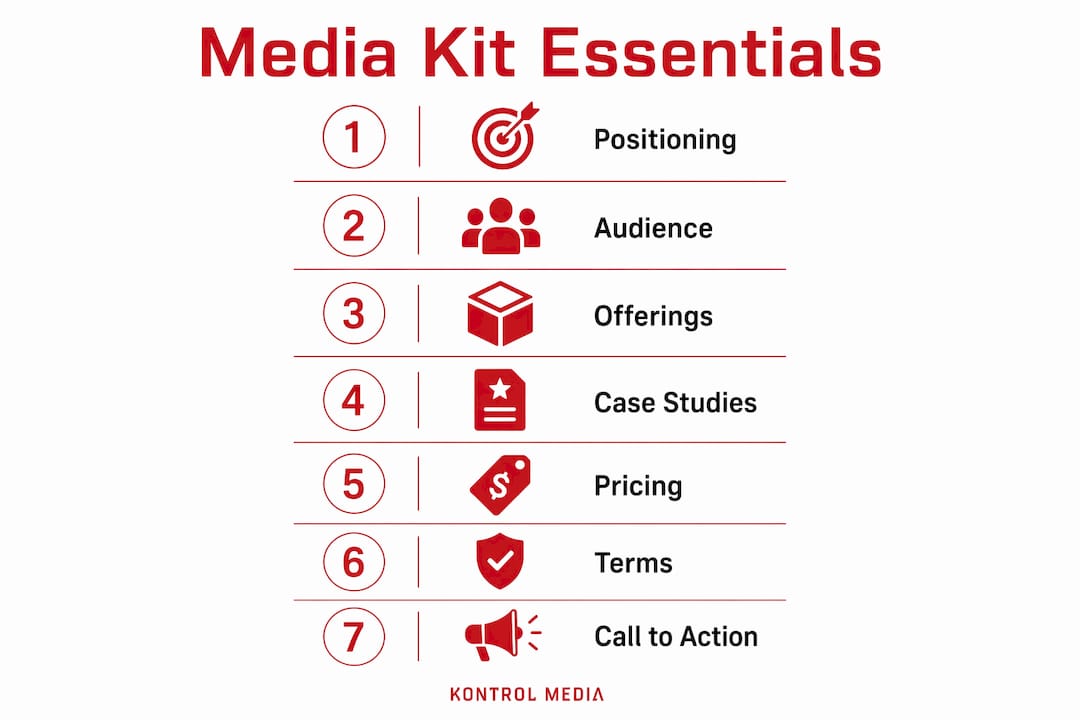
The core elements of an effective advertising media kit include:
- Positioning statement: Who you serve and what outcome you deliver for advertising partners
- Audience profile: Demographics, psychographics, and audience intent, not just age and gender
- Scale and reach: Traffic, subscribers, social following, and engagement data with dates
- Ad offerings: Formats, placements, and packages described in buyer language
- Case studies: Quantified results from past campaigns, structured as client, challenge, solution, and result
- Pricing and rate card: Tiered packages with transparent investment levels
- Operating terms: Scope, revision policy, timelines, and payment structure
- Contact and next steps: One clear action the reader should take immediately
What makes a great advertising media kit in 2026?
The best media kits in 2026 share one quality: they are built around the buyer’s decision path, not the seller’s ego. They move a prospect from “does this audience fit my brand?” to “how do I get started?” without requiring a single follow-up email for basic information. Decision-makers prioritize audience profiles over brand history when evaluating a potential media partner. Demographics matter, but psychographics and audience intent are what actually close deals.
The shift from static PDF to interactive, web-first format is also real and measurable. Interactive media kits boost engagement by 40% compared to static alternatives, and video testimonials convert 2.5x better than text-only proof. That does not mean PDFs are dead. It means your primary kit should live on the web, with a downloadable PDF as a clean backup for email attachments and offline meetings.
Design signals price. A cluttered, outdated kit tells a brand you are not ready for a serious partnership before they have read a single word. White space, clear hierarchy, and current data all communicate that you operate at a professional level.

8 advertising media kit examples worth studying in 2026
1. Fast Company media kit
Fast Company’s kit leads with audience authority. The positioning is immediate: this is where business decision-makers come to think about the future of work, technology, and leadership. The audience profile goes well beyond age brackets, covering professional seniority, household income, and the specific industries their readers influence. What makes it worth studying is the clarity of the ad offering section. Each placement is described in terms of what it does for the brand, not just where it appears on the page. Brands know exactly what they are buying and why it matters.
2. Inc. media kit
Inc. targets entrepreneurs and growth-stage business owners, and their kit reflects that with precision. The audience data is specific enough to be useful: business ownership rates, revenue bands, and decision-making authority. The kit also does something many miss. It segments ad formats by campaign objective, so a brand focused on awareness sees different recommendations than one focused on lead generation. That kind of buyer-centric organization reduces friction and speeds up the sales conversation considerably.

3. Entrepreneur media kit
Entrepreneur’s kit earns attention through its case study section. Rather than vague testimonials, it presents campaign results with named brand partners, specific objectives, and measurable outcomes. That structure, client, challenge, solution, and result, is the format effective case studies follow to demonstrate quantified impact. The kit also makes strong use of its multi-platform reach, showing how a brand can extend a campaign from the print edition to the digital audience to the live event channel.
4. Daily Hive media kit
Daily Hive is a useful example for regional and city-focused publishers. Their kit is built around geographic specificity, which is exactly what a local or regional advertiser needs to see. The audience data is tied to specific markets, Vancouver, Calgary, Toronto, and the content categories that drive engagement in each city. For a brand trying to reach a specific metro area, that granularity is more persuasive than national reach numbers. The kit also shows sponsored content examples with engagement data, which gives brands a realistic picture of what a partnership looks like in practice.
5. Digiday media kit
Digiday’s kit speaks directly to the marketing and media industry, which means the audience profile section carries unusual weight. Their readers are the same people evaluating the kit. The positioning leans into that self-awareness: Digiday reaches the professionals who make advertising decisions, so advertising with Digiday is, in part, an act of industry credibility. The kit presents newsletter sponsorship, event sponsorship, and branded content as distinct products with distinct audiences and pricing, which makes it easy for a brand to find the right entry point.
6. Smaller publisher and niche blog media kits
Smaller publishers often outperform large ones in one specific area: audience specificity. A food blog with 80,000 monthly readers who are all actively planning meals and purchasing ingredients can be more valuable to a CPG brand than a general lifestyle site with ten times the traffic. The most effective niche media kits lean into that truth. They lead with engagement rate rather than raw reach, include affiliate or discount code conversion data where available, and use audience testimonials to show the depth of community trust. The mistake smaller publishers make is apologizing for their size. The kit should never do that.
7. Creator and influencer media kits
Creator kits operate by different rules than publisher kits. The audience relationship is personal, and the kit needs to reflect that. The best creator kits open with a clear positioning statement about who the creator serves and what kind of content they produce, followed by platform-specific performance data broken out by channel. Instagram engagement rate, TikTok completion rate, and YouTube watch time each tell a different story, and brands want to see all of them. Case studies in creator kits should include the actual deliverables, the campaign creative direction, and the measurable result, whether that is sales, clicks, or earned media.
8. Garden & Gun digital media kit
The Garden & Gun 2026 digital media kit is a strong example of a publication that knows its audience deeply and builds its entire kit around that specificity. The kit presents standard and premium ad units with exact pixel dimensions for desktop, tablet, and mobile, alongside newsletter sponsorship specs and social media options. What sets it apart is the editorial context it provides for each placement. Brands understand not just the format but the editorial environment their ad will appear in, which is a meaningful trust signal for premium advertisers. The technical detail is thorough without being overwhelming.
Essential components every advertising media kit needs
Positioning statement
Your positioning statement is the first thing a brand reads, and it sets the frame for everything that follows. A simple structure works well: your platform helps a specific audience achieve a specific outcome through a specific approach. Effective positioning statements activate emotional connection and give the reader immediate clarity on fit. If a brand cannot tell within ten seconds whether your audience matches their customer, the kit has already failed.
Audience profile
This section is where most media kits underinvest. Demographics, age, gender, income, location, are the floor, not the ceiling. Psychographics, what your audience values, what problems they are trying to solve, what they buy and why, are what actually drive partnership decisions. Add audience intent data where you have it. A reader who actively searches for product recommendations is worth more to an advertiser than a passive scroller, and your kit should say so.
Ad offerings described in buyer language
List your formats, but describe them in terms of what they accomplish for the brand. “300×250 display unit” tells a media buyer where the ad goes. “Mid-article display placement reaching readers at peak engagement depth” tells a brand manager why it works. Both pieces of information belong in the kit, but the buyer language comes first.
Case studies with quantified results
Case studies are the section that actually closes deals. Effective case studies follow a client, challenge, solution, result format with specific metrics. For example, one campaign achieved a 23% engagement increase while another saw a 41% reduction in churn—both much more persuasive than simply noting “strong performance”. Include three to five case studies that represent different advertiser categories, so a brand in any vertical can find a relevant proof point.
Tiered pricing with the decoy effect
Transparent pricing accelerates decisions. Tiered packages with clear investment levels, a starter tier, a growth tier, and a custom enterprise option, let brands self-qualify before they ever speak to a salesperson. The middle tier does double duty: it makes the premium package look like a natural upgrade rather than an extravagance. Hiding your rates forces brands to ask, which adds friction and delays the sale.
Operating terms
Scope boundaries, revision policies, payment timelines, and content approval processes belong in the kit. Mirroring these terms exactly in your proposals and contracts prevents renegotiation later and signals that you run a professional operation. Brands that have been burned by vague agreements in the past will notice the clarity and appreciate it.
A single, clear call to action
One CTA. Not three. Not a phone number, an email, a form, and a calendar link all competing for attention. Pick the action that best fits your sales process and make it impossible to miss.
Pro Tip: Structure your kit as a logical buyer decision path: positioning first, then proof, then process and terms, then the CTA. A prospect who moves through that sequence in order should never need to email you asking for information you could have included.
Tips for creating a professional advertising media kit
Lead with transparency on pricing
The instinct to hide rates until a sales call is understandable but counterproductive. Brands that cannot self-qualify on budget waste your sales team’s time and theirs. Tiered packages solve this cleanly. A starter package at a defined investment level, a growth package at a higher level, and a custom enterprise option give brands a clear sense of where they fit without locking you into a rigid price before you understand their full needs.
Build case studies that do the selling for you
The client, challenge, solution, result format works because it mirrors how a brand manager thinks about risk. They are not asking whether your platform is impressive. They are asking whether it will work for their specific objective. A case study that names the brand category, describes the campaign goal, explains what you did, and then shows the measurable outcome answers that question directly. Include visuals where you have them. Screenshots of campaign performance, charts showing engagement over the campaign period, and before-and-after comparisons all add credibility that prose alone cannot match.
Use a dual-format approach
Your primary kit should be web-based, accessible at a permanent URL, and updated in real time as your metrics change. The PDF version serves as a backup for email pitches and offline meetings, but it should mirror the web version exactly in terms of offer language, pricing, and contact information. Two versions that say different things create confusion and erode trust faster than almost anything else.
Pro Tip: Align your media kit, your proposals, and your contracts so that the scope, pricing language, and operating terms match exactly across all three documents. Discrepancies between what the kit promises and what the contract says are one of the most common sources of advertiser disputes.
Design for mobile first
A brand manager reviewing your kit on a phone during a commute is not a hypothetical. It is the norm. Text that requires pinching to read, images that break the layout on a small screen, and CTAs that are hard to tap are all conversion killers. Test your kit on at least three screen sizes before you share it with anyone.
Incorporate multimedia where it adds proof
Interactive media kits combining case studies, performance data, and audience demographics drive 2-3x higher brand rates because they make ROI visible rather than implied. Embedded video testimonials, clickable charts, and animated data visualizations all serve that purpose. Use them where they add proof, not as decoration.
The components of a strong advertising toolkit in 2026:
- Transparent tiered pricing with a clear middle option
- Three to five case studies in client, challenge, solution, result format
- Web-first primary kit with a PDF backup that matches exactly
- Mobile-optimized layout tested across screen sizes
- Multimedia elements tied to proof, not aesthetics
- Operating terms stated clearly and mirrored in proposals
How to use media kit templates without wasting them
Templates are a starting point, not a finish line. The most common mistake is treating a downloaded media kit template as a fill-in-the-blank exercise. You swap in your logo, drop in your traffic numbers, and call it done. The result looks like every other kit in the category, which means it gives a brand no reason to choose you over anyone else.
The right way to use a template is to let it handle structure and design while you do the hard work of making the content specific to your audience and your advertiser. A template gives you the sections. You provide the substance.
Do’s and don’ts when working with media kit templates:
- Do customize the positioning statement to reflect your specific audience and their intent, not a generic description of your category
- Do replace placeholder case studies with real campaign results as soon as you have them, even if the numbers are modest
- Do update the kit quarterly, or immediately after a major growth milestone, a new advertiser win, or a significant format change
- Do maintain version control so that old copies of the kit do not circulate with outdated rates or retired ad formats
- Don’t use a template designed for a different industry without reworking the audience profile section entirely
- Don’t leave placeholder metrics in the kit because you think your real numbers are not impressive enough
- Don’t create multiple versions of the kit with different pricing without a clear system for which version is current
Templates available through tools like Canva, Adobe Express, and Figma give you a clean visual foundation. The audience insights work that makes a kit persuasive, though, has to come from you. Once the kit is live, connect it to your analytics so you can track which sections hold attention and which ones lose it. Page-level engagement data, time on section, and CTA click-through rates all tell you where the kit is working and where it needs revision.
For publishers and media networks building or refining their advertising sales approach, the kit is the front door to every direct deal. It deserves the same investment of time and craft as any other sales asset.
How Kontrol Media modernizes media kits into direct sales tools
The most candid thing I can say about most media kits we see is this: they are designed to impress, not to sell. They are full of beautiful photography, brand colors, and impressive-sounding audience descriptions that tell a brand almost nothing about whether a partnership will work for them. That is the gap Kontrol Media closes.
Our approach starts with a simple question: what does a brand or agency need to know to say yes? Not what does the publisher want to show off, but what does the buyer need to see to move forward. The answer is almost always the same. They need to understand the audience deeply, see proof that campaigns have worked for brands like theirs, know exactly what they are buying and what it costs, and have a clear path to getting started. A media kit that answers all four of those questions without requiring a follow-up email is a direct sales tool. Everything else is a brochure.
The RE/MAX transformation
When Kontrol Media worked with RE/MAX, the challenge was a familiar one. RE/MAX had extraordinary reach into the real estate channel, with a network of agents that gave brands direct access to active home buyers and homeowners at exactly the moment they are making major financial decisions. The existing kit did not communicate that value clearly. It listed the network size and some general audience data, but it did not connect those facts to the specific outcomes a brand could expect from a partnership.
The modernized kit led with the audience insight that mattered most: RE/MAX agents are trusted advisors to buyers and sellers during the highest-stakes transaction of their lives. A brand that reaches a buyer through that channel is not just buying an impression. They are entering a relationship at a moment of maximum receptivity. The kit then built the case with structured case studies showing how brands in relevant categories had used the RE/MAX channel to reach home buyers with measurable results. Pricing was presented in tiered packages with clear scope at each level. The CTA was singular and specific.
The result was a kit that brands and ad agencies could use to make a partnership decision without needing a lengthy discovery process. That is what a modern media kit is supposed to do.
What the modernization process looks like
Kontrol Media’s review process covers six areas:
- Audience clarity: Does the kit communicate who the audience is, what they value, and why they are receptive to brand messages in this context?
- Proof of impact: Are there case studies with real metrics, or just vague claims about engagement and reach?
- Offer structure: Are the ad formats and packages described in buyer language, with clear scope and pricing?
- Operating terms: Are scope boundaries, revision policies, and payment terms stated clearly enough to prevent disputes?
- Format and accessibility: Is the kit web-first, mobile-optimized, and easy to share?
- Call to action: Is there one clear next step, or is the prospect left guessing how to move forward?
A digital media kit that converts establishes credibility within the first three seconds, answers objections before they are raised, demonstrates ROI through case studies, and ends with a singular CTA that makes the next step obvious. That is the standard we hold every kit to.
Pro Tip: Your CTA should name the specific action and the specific benefit. “Book a 20-minute partnership call” outperforms “Contact us” every time because it sets an expectation and reduces the perceived commitment. The easier you make it to say yes, the more often brands will.
Kontrol Media works directly with publishers, media networks, and brands to transform outdated media kits into direct sales assets that close deals. If your current kit is not generating the advertiser conversations you need, the problem is almost certainly the kit, not the audience. See how we approach business strategy and reach out to start the conversation about what your kit could be doing for you.
Key Takeaways
A modern advertising media kit functions as a direct sales tool that educates brands on your audience, proves ROI through case studies, and removes every obstacle between a prospect and a signed deal.
| Point | Details |
|---|---|
| Lead with audience depth | Demographics alone do not close deals; psychographics and audience intent are what drive partnership decisions. |
| Case studies follow a clear format | Client, challenge, solution, and result with specific metrics—such as a 23% engagement increase or a 41% reduction in churn—outperform vague claims every time. |
| Interactive kits outperform static PDFs | Interactive formats boost engagement by 40% and video testimonials convert 2.5x better than text. |
| Tiered pricing accelerates decisions | Transparent packages with a starter, growth, and custom tier let brands self-qualify and reduce sales friction. |
| Operating terms belong in the kit | Stating scope, revision policy, and payment terms upfront prevents disputes and mirrors what proposals and contracts should say. |
Recommended
- Retail Media Ad Sales: Strategic Guide for Marketing Pros in 2026 | Kontrol Media Consultancy
- Advertiser Acquisition Strategies for Media Networks in 2026 | Kontrol Media Consultancy
- Consumer Brand Media Network Best Practices in 2026 | Kontrol Media Consultancy
- Media Buying in 2026: Strategies to Maximize Ad Spend | Kontrol Media Consultancy