
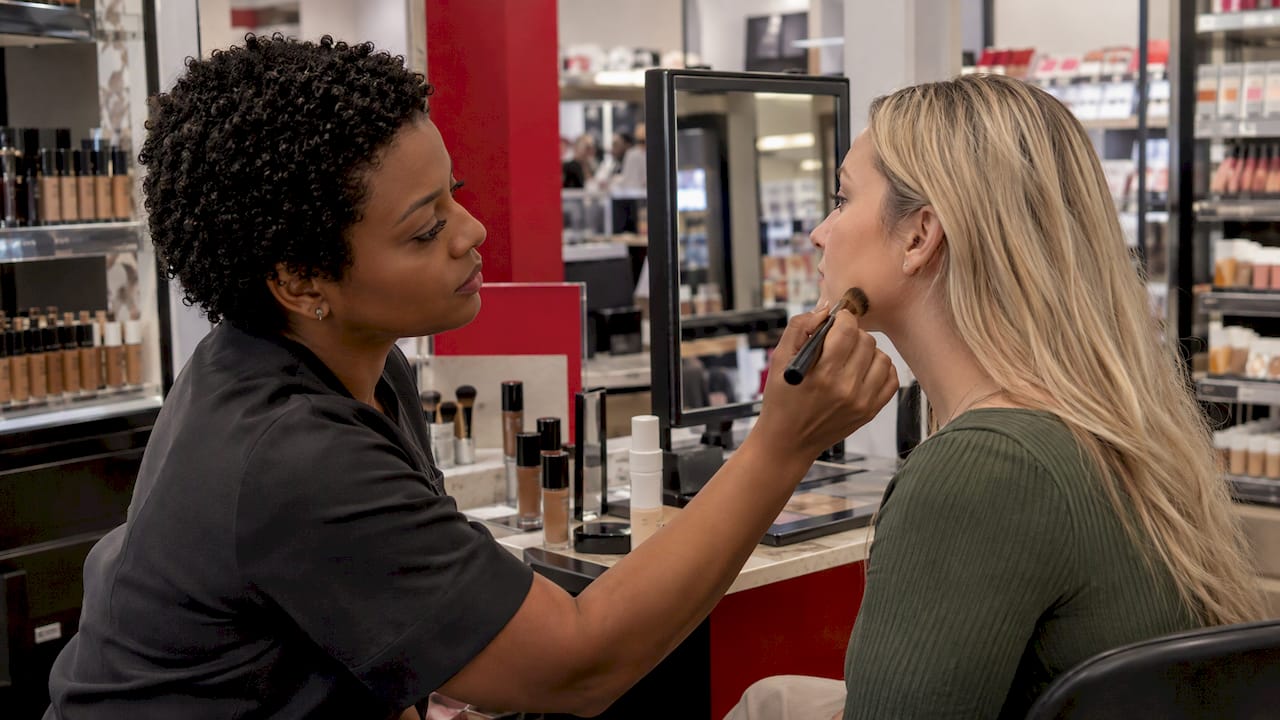

An in-store activation drives sales for a skincare or makeup brand when it lets a shopper try the product, get a personal answer and leave with a clear next step, all inside or right next to the retailer where the purchase happens. The activations that pay back are built around one shopper action (sample, consult, shade match, return and buy) and measured on what shoppers do afterward, not on how many showed up.
Below, we walk through the formats that work for beauty, the results brands have reported, how to plan one with a U.S. retailer, and how to prove it moved sales.
TL;DR
- A beauty activation is a temporary physical experience that lets people test, understand or discover a product, and the goal can be trial, conversion, registrations, feedback, content or sales. Pick one goal before you pick a format.
- Sampling, consultations, shade matching and demonstrations are the core formats. Design the space around the action you want, such as fast flow for sampling and privacy for consultations.
- Reported results are real but specific: one brand’s Walmart sampling program was followed by 22% higher spend per customer, and a pop-up near a retailer lifted that retailer’s sales of the brand by 28% on day one.
- Measure downstream behavior (retailer sales, repeat purchase, CRM sign-ups), not attendance.
- Retailer partnership and retail data are what turn a nice event into a repeatable sales channel.
Table of Contents
- What an in-store activation actually is
- Formats that work for skincare and makeup
- What the reported results look like
- Plan the activation around one shopper action
- Connect the store to digital and social
- How to measure whether it moved sales
- A simple 90-day plan
- Where Kontrol Media fits
- FAQ
- Sources
What an in-store activation actually is
The term gets stretched to cover everything from a tester station to a half-million-dollar pop-up. The useful definition is narrower: a temporary, staffed, physical experience where a shopper interacts with your product in a way a shelf cannot offer. Skincare and makeup suit this better than most categories because the purchase risk is personal. Will this foundation match my undertone? Will this serum irritate my skin? A shelf can’t answer those questions, and a person with a sample can.
That is why activations tend to work on conversion rather than awareness alone. When we sit with CMOs and heads of growth at consumer brands, the pattern we see is a familiar one. Brands spend heavily to create demand, then lose the shopper at the shelf because nothing resolves the doubt. The activation exists to close that gap.
Formats that work for skincare and makeup
Event Marketer’s skincare guide lists night-market pop-ups, expert consultations, product sampling, themed photo booths, vending machines, mobile tours, scientific demonstrations and product-testing stations. Most beauty programs come down to four working formats.
Sampling
Sampling is the simplest and the easiest to scale. The design priority is speed: fast flow and consistent execution across locations and staff matter more than a clever backdrop. If you run sampling in twenty stores, the twenty-first shopper should get the same pitch as the first.
Consultations and shade matching
Consultations trade volume for depth. They need privacy and seating, a trained person and enough time for the shopper to test products properly. They fit complexion makeup, where shade is the barrier, and skincare for concerns like sensitivity, where reassurance is the barrier.
Demonstrations and testing stations
Live application, scientific demonstrations and testing stations work when the product has a visible result or a story that needs explaining. Give the shopper something to do with their hands, then give them a reason to go to the shelf.
Pop-ups and traveling activations
Pop-ups work as launch or discovery moments. A modular pop-up inside an established retail environment can also work as a market test, showing you how audiences, behavior and operations hold up before you commit to a bigger rollout.
Traveling formats take the trial to the shopper. Henkel’s Schwarzkopf Color on Tour used a mobile salon across 18 U.S. stops over nine months in 2024, including a launch outside a Walmart store in Fayetteville, Arkansas. Programs like this depend on retailer buy-in first, and beauty brands often build that pipeline with AI-powered wholesale buyer outreach that matches products to the right retailers by category and market.
What the reported results look like
Numbers from activations are easy to overstate, so here are the ones tied to a named source and a stated comparison.
Sampling at Walmart. In a 2025 case study from Walmart Data Ventures, No7 Beauty compared the five weeks ending October 3, 2025 with the previous five weeks. After its in-store sampling program, spend per customer was 22% higher and units per customer 10% higher. The same study says 21% of customers were more likely to buy face care at Walmart when sampling or testers were available.
A pop-up that sold nothing. Glossy reported that Patrick Ta Beauty’s two-day House of Glow pop-up in West Hollywood drew about 2,000 attendees with a dwell time of 30 minutes to an hour. It offered foundation shade matching, photobooths, free products and samples, cost about $500,000, and sold no products on site. Even so, Sephora sales of the brand rose 28% on the first day. The lesson is that the event created the demand and the retailer captured it.
A skincare ritual. Glossy also reported that Tatcha’s three-day Los Angeles Forest Awakening pop-up generated Sephora sales at The Grove equal to a month of in-store sales, and that organic influencer posts produced more than 9 million social impressions.
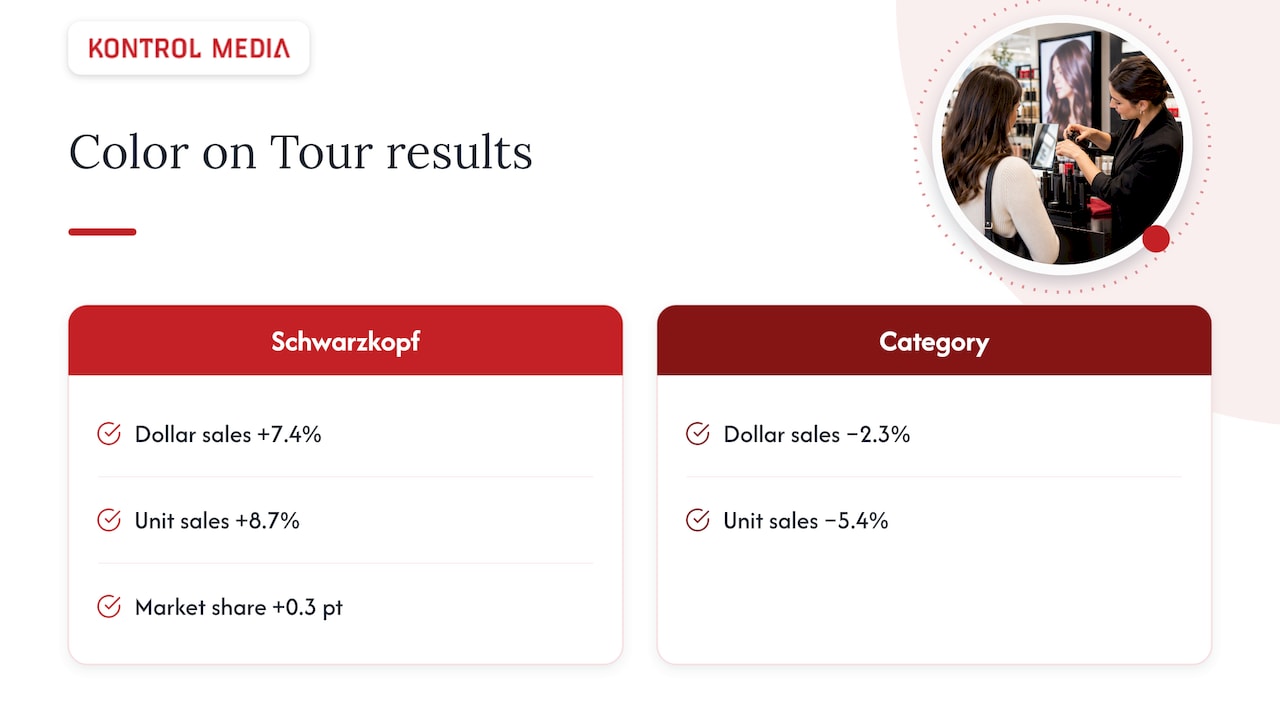
A category-beating campaign. Path to Purchase Institute reported that during Color on Tour, Schwarzkopf Keratin Color grew dollar sales 7.4% and unit sales 8.7%, and gained 0.3 points of market share, while the category fell 2.3% in sales and 5.4% in units.
Two things to notice. First, the best results come from activations that sit close to a retailer that can sell the product the same day. Second, these are single-brand results with their own context, so use them as proof of mechanism rather than a forecast for your own program.
Plan the activation around one shopper action
The framework we use is simple: decide what you want the shopper to do, then build the experience backward from it.
Start with the objective
Go-PopUp’s framework is a helpful guide: launches prioritize discovery and trial, sampling prioritizes interaction volume and consistency, consultations prioritize service and personalization, and market tests prioritize audience, behavior and operations. Pick one. An activation asked to build awareness, collect emails, sell product and generate content usually does none of them well.
Design for the action
Sampling needs a short queue and a clear hand-off. Consultations need privacy and chairs. Testing needs time. The Outset’s Sensitive Skin Clinic shows a smart variation for skincare: Event Marketer reported it as a month-long pop-up near Sephora and Nordstrom, where shoppers could use products, take samples home and return after several days before buying full size. Skincare results take days, and that design respects it.
Align with the retailer before you build
A U.S. retailer will care about three things: traffic, sell-through and the experience on its floor. Bring a plan that covers staffing, inventory on shelf during the activation, signage that points to the product’s exact location, and what data you will share afterward. This is where shopper marketing discipline pays off, and our shopper marketing strategy guide covers how brands and retailers plan around the path to purchase.
If you want to reach a younger shopper outside the store, the same logic applies to reaching college students on campus with trial-led programs.
Staff it like a sales floor
The people running the booth are the activation. Train them on the three questions shoppers actually ask (shade, skin concern, price versus what I use now), give them a single next step to offer, and make sure they can tell shoppers exactly where on the shelf to find the product.
Connect the store to digital and social
An activation lasts a weekend, and the sale often happens later. Bridge the gap on purpose.
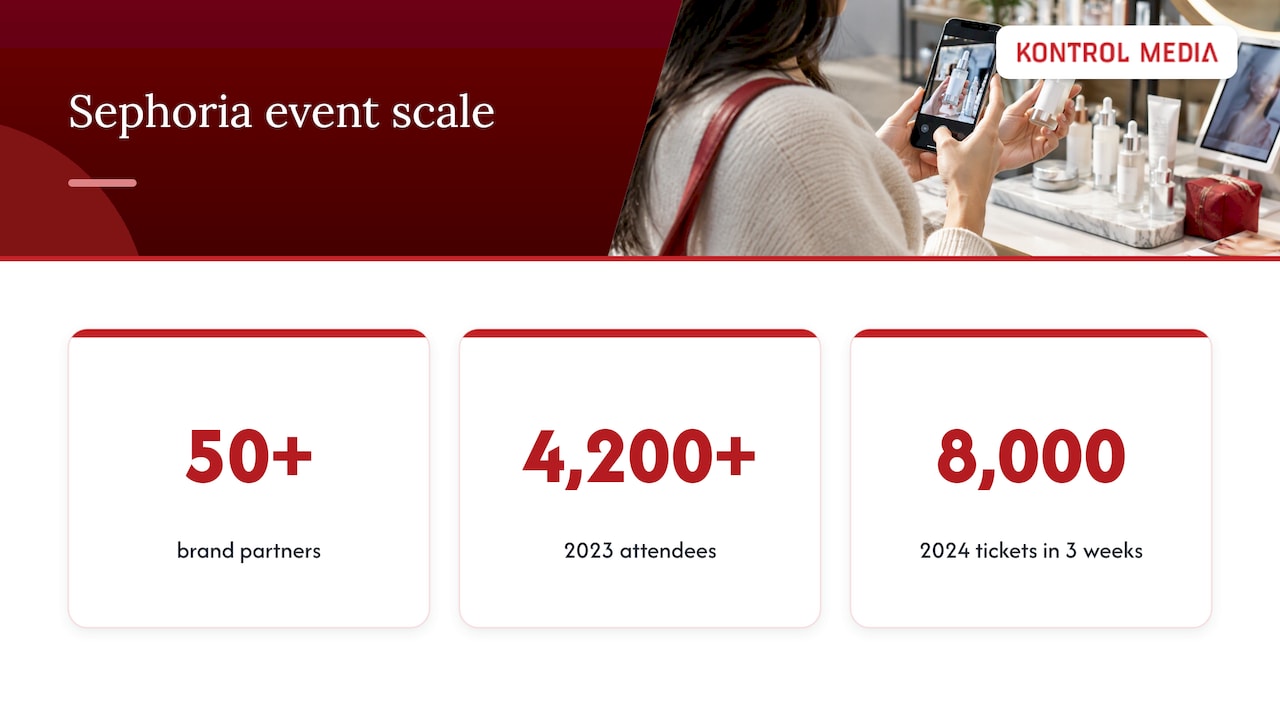
BeautyMatter’s reporting advises integrating events with social, e-commerce and loyalty programs, and encouraging sign-ups for post-event content, offers or loyalty perks. Sephoria shows the scale this can reach: BeautyMatter reported more than 50 brand partners, a 2023 physical event with more than 4,200 attendees, and a 2024 Atlanta stop that sold 8,000 tickets within three weeks.
The digital layer can also be a try-on tool. Drug Store News reported that Estée Lauder partnered with YouCam Makeup so shoppers could virtually try all 30 Pure Color Love lipstick shades, with in-store advisers demonstrating the app at Selfridges’ Carnaby Street store. The Drum described Sephora’s model as trying in store, buying online, scanning products for information, and running interactive campaigns like Swipe it. Shop it. The principle holds: the store and the phone should hand the shopper to each other.
Glossy reported that Tatcha’s earlier digital Indigo Overnight Repair room increased time on site by 26% and basket size by 50%, a reminder that experience-led formats can lift value per shopper, not just traffic.
How to measure whether it moved sales
Attendance is the metric everyone can see and the one that tells you least. BeautyMatter quoted experiential strategist Coppers advising brands to measure QR-code engagement, CRM growth, social engagement, content longevity and downstream behavior rather than headcount. The commercial question is what attendees do next.
Match the metric to the objective. Go-PopUp’s list runs from trial, sales and product mix to registrations, appointments, conversion and repeat signals, depending on the goal. A practical scorecard looks like this:
| Objective | Primary measure | Supporting measure |
|---|---|---|
| Trial and discovery | Samples or tests per hour | Sign-ups, feedback scores |
| Conversion | Retailer unit and dollar sales in activation stores | Product mix, basket size |
| Consultation | Appointments completed | Repeat purchase, CRM growth |
| Market test | Sales versus matched control stores | Operational consistency |
The No7 approach is a good template for the sales line: compare spend and units per customer in a period after the program with an equal period before. Better still, add stores that did not run the activation as a control, so seasonality and promotions don’t flatter the result. Our guides on measuring the ROI of marketing and advertising campaigns and key retail media metrics go deeper on attribution, incrementality and what to ask retailers for.
A simple 90-day plan
- Weeks 1 to 3: choose the retailer and the goal. One objective, a short list of stores, and an agreed set of sales data you will receive.
- Weeks 4 to 6: design and train. Build the experience around the shopper action, brief staff, and confirm shelf inventory and signage.
- Weeks 7 to 10: run it. Keep execution consistent, capture sign-ups, and log what shoppers ask.
- Weeks 11 to 13: read the results. Compare activation stores with control stores, review CRM growth and repeat purchase, and decide whether to scale, change or stop.
This is a planning rhythm, not a promise of timing. Retailer calendars and approval cycles set the real pace.
Our perspective: the activation is the start of a retail partnership
After years of working across retail media, commerce media and channel partnerships, we see the same mistake in beauty. Brands treat an activation as a standalone event and then wonder why the lift fades the week after. The brands that win treat it as one touchpoint in a relationship with the retailer.
That means the conversation with the retailer starts before the booth is built. What data will you share? How does the activation connect to the retailer’s own media, its email, its on-site and in-store placements? When the activation, the retail media spend and the first-party data all point at the same shopper, you can finally answer the question every CMO asks: did this make money?
Our approach combines strategy with hands-on execution, because the plan on paper rarely survives contact with a store floor. We would rather help you build a smaller program you can measure and repeat than a spectacular one you can’t explain to your CFO.
Mark Kapczynski
Where Kontrol Media fits
If you are a beauty brand trying to turn in-store activity into measurable growth, or a retailer that wants to package that activity for brands, we can help with the strategy and the execution. Our team works on business strategy, marketing and sales, and on standing up and operating retail and commerce media networks.
Retailers can explore how we stand up a retail or commerce media network so that brand activations connect to media revenue, and brands can see our full range of strategy, marketing and sales services. To talk through your program, start at kontrolmedia.com.
FAQ
What is the best in-store activation for a new skincare brand?
Sampling paired with a short consultation is a strong starting point, because it removes the biggest barrier, which is uncertainty about how the product feels and works on your skin. If your product needs days to show results, consider a take-home sample with a reason to return, as The Outset did with its month-long clinic.
How much does a beauty activation cost?
It depends on the format. Patrick Ta Beauty’s two-day West Hollywood pop-up cost about $500,000 according to Glossy, while a tester station or sampling program in existing stores is a far smaller commitment. Scope the cost around the single objective you chose, and ask the retailer what it will fund or co-promote.
How do I know if an activation increased sales?
Compare retailer sales in activation stores with a before period and with stores that did not run it. Track spend and units per customer, then add downstream signals such as CRM sign-ups and repeat purchase. Attendance alone does not show a sales effect.
Do I need a big retailer partner to run an activation?
A retail partner makes the sale and the measurement easier, because the shopper can buy on the spot and the retailer holds the sales data. Smaller programs can start with a handful of stores or a market test, then scale once the numbers support it.
Sources
- Beauty brand activations: what brands look for, Go-PopUp
- Hosting a Skincare Activation? Steal These Eight Tactics, Event Marketer
- Retail Beyond the Boutique, BeautyMatter
- No7 Beauty Scintilla case study, Walmart Data Ventures
- Inside the Patrick Ta Beauty pop-up, Glossy
- Tatcha’s experiential pop-ups are driving sales, Glossy
- Henkel Takes ‘Color on Tour’ Nationwide, Path to Purchase Institute
- Estée Lauder efforts point to omnichannel potential, Drug Store News
- How Sephora has reinvented the in-store experience, The Drum