
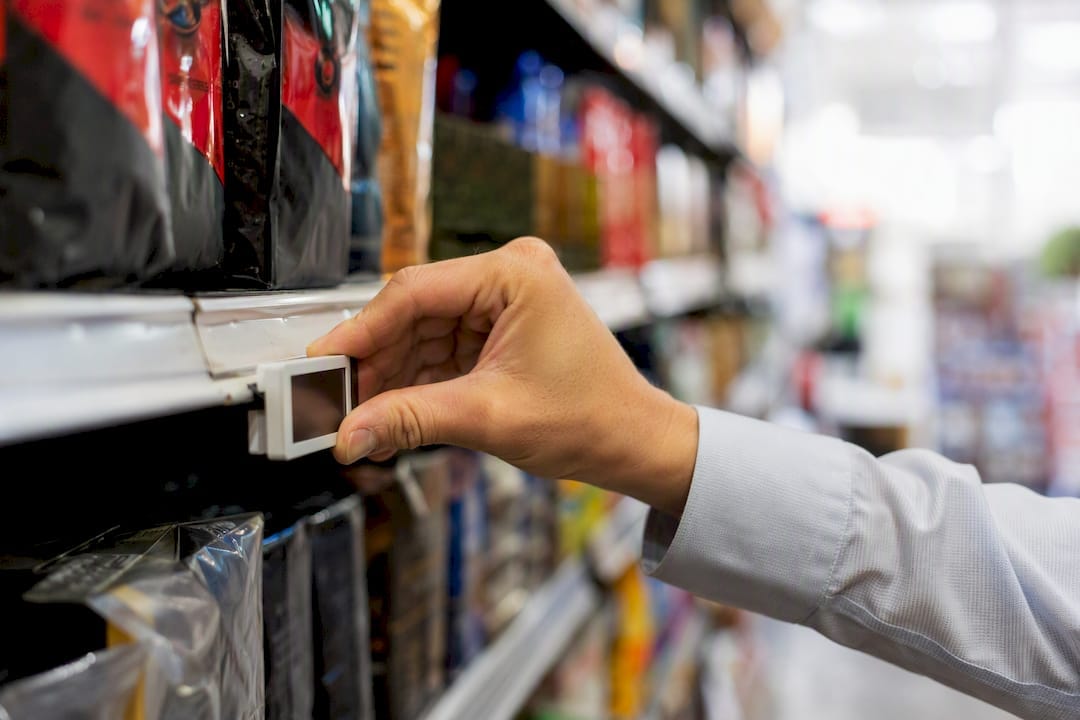

Retail media keeps growing into 2027, but the shape of that growth is changing. The next phase favors omnichannel activation over pure on-site expansion, and it rewards retailers who can prove closed-loop business impact rather than just ad delivery. Marketers should expect more scrutiny on measurement, more inventory in-store and off-site, and less patience for networks that can’t connect a dollar spent to a dollar earned.
TL;DR:
- Retail media spending will reach around $223.4 billion by 2027, with connected TV accounting for nearly 23% of that total, emphasizing the shift to sophisticated measurement.
- In-store retail media will grow significantly, utilizing proximity-based formats like digital shelf tags and smart carts to drive attribution at the point of purchase.
- Brand success will depend on implementing robust measurement infrastructure that links media exposure to sales lift and category share, not just on-page clicks.
- Fragmentation across multiple retail networks requires either building or licensing standardized ad-tech solutions to ensure consistent data access and reporting.
- AI will mainly enhance operational efficiency through bidding and anomaly detection, but effective measurement and governance remain essential for reliable results.
Table of Contents
- The Future Of Retail Media Networks Into 2027: What The Forecasts Actually Say
- How Will In-Store, DOOH, And CTV Formats Reshape Retail Media?
- What Does Closed-Loop Measurement Actually Require?
- Should Brands Build Or License Retail Media Infrastructure?
- Where Does AI Actually Help Retail Media Operations?
- What Should Marketers Prioritize Through 2027?
- How Kontrol Media Turns This Playbook Into Real Results
- Why Measurement Discipline Beats Chasing New Formats
- Get Retail Media Operations Built Right The First Time
- Sources
The Future Of Retail Media Networks Into 2027: What The Forecasts Actually Say
The headline number is hard to ignore. WARC projects retail media advertising spend will climb to roughly $223.4 billion by 2027, even as year-over-year growth rates cool from the breakneck pace of the past few years. That combination, more total dollars, slower percentage gains, tells you something important: retail media is graduating from a hypergrowth experiment into a mature media category with mature expectations attached.
Growth is not evenly distributed. Categories like consumer packaged goods and grocery still lean heavily on retail media networks (RMNs) because shopper intent data lines up so directly with purchase behavior. Categories further from the point of sale, such as apparel, home goods, and electronics, are pushing harder into off-site and video formats to compensate for thinner first-party signal.
Connected TV is becoming a real budget line rather than a rounding error. WARC reporting shows CTV now accounts for about 23% of retail media spending, and that share is likely to keep climbing as retailers strike more publisher and streaming partnerships.
Three things marketers should take from this data:
- Total spend growing while growth rate slows means budgets are shifting from “test the channel” to “prove the channel works.”
- Category concentration means a generic RMN strategy performs worse than one built around your specific vertical’s data strength.
- Video and CTV are no longer optional line items in a full-funnel retail media plan.
Statistic Callout: Retail media ad spend is forecast to reach approximately $223.4 billion in 2027, according to WARC, with connected TV alone representing close to a quarter of that total.
The practical implication is straightforward. Analysts increasingly frame the shift as one from scale to sophistication, where networks need to demonstrate contribution to business objectives like household penetration and category share, not just impressions delivered. If your team is still reporting click-through rate as the primary success metric in 2026, you are already behind where the market is heading.
How Will In-Store, DOOH, And CTV Formats Reshape Retail Media?
The next wave of retail media growth happens away from the browser. In-store retail media spend is expected to grow significantly between 2024 and 2028, and that acceleration is not a side bet; it is where retailers can finally close the loop between an ad exposure and a basket at checkout.
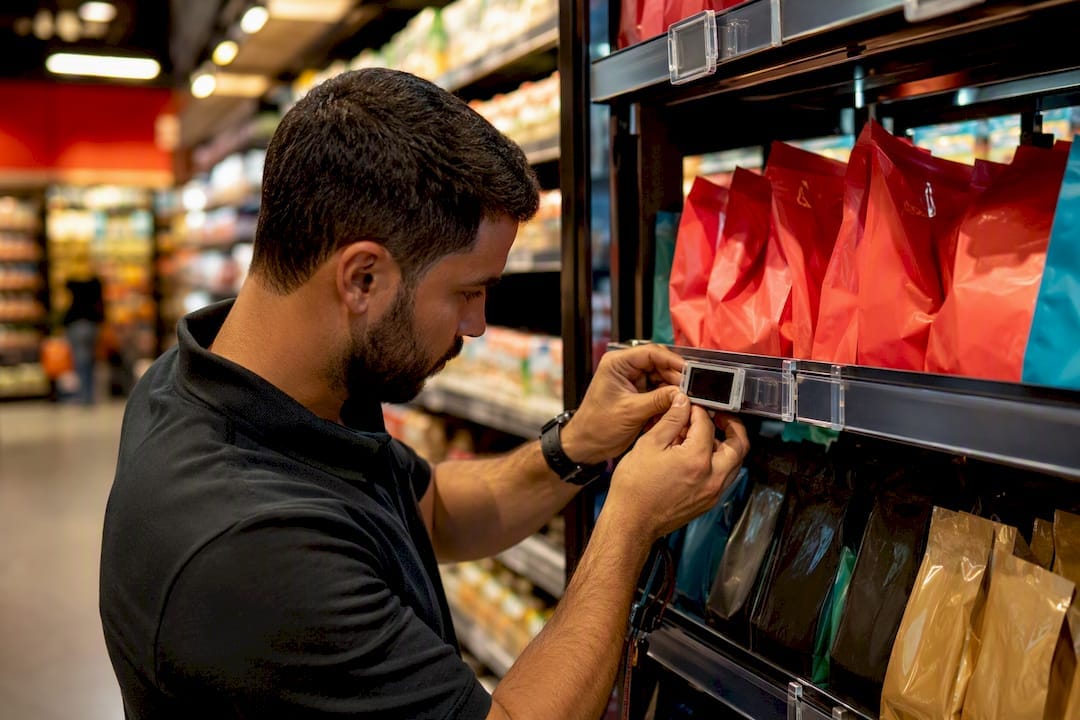
In-store activations, digital shelf tags, endcap screens, smart carts, matter because they sit inches from the purchase decision. Industry commentary describes the next growth phase as expanding beyond online channels into in-store and DOOH, precisely because that proximity produces attribution data online media can’t match. Near-store out-of-home reinforces the same behavior: research cited by OAAA found that a majority of shoppers notice OOH ads on their way to a retailer, which makes near-store billboards and transit ads a legitimate complement to in-aisle placements rather than a separate media plan entirely.
Off-site expansion runs on a parallel track. Retailers are striking deeper partnerships with streaming platforms and publishers, layering social integrations on top, so a shopper’s data profile follows them from a CTV ad into a retailer’s app and back out to a publisher’s site.
What this means for campaign planning:
- Sequence exposure so upper-funnel CTV and off-site video build awareness before lower-funnel on-site and in-store placements drive conversion.
- Build creative variants for each format early. A static product tile doesn’t translate to a 15-second CTV spot or a digital endcap.
- Treat DOOH and in-store as measurement opportunities, not just placement inventory. They generate proximity data that off-site channels cannot.
Pro Tip: Don’t wait for a retailer’s off-site product to mature before testing it. Early advertisers on new CTV and publisher integrations typically get better rates and more flexible creative slots than those who wait for the format to become standardized.
What Does Closed-Loop Measurement Actually Require?
Measurement is where most retail media strategies quietly fall apart. Retailers are shifting emphasis away from surface-level activity metrics toward business-growth indicators. Emarketer’s reporting on retail media’s next act describes networks measuring household penetration, loyalty, and category share instead of leaning solely on click-through rate or cost per click.
Getting there requires real infrastructure, not a dashboard redesign. Conversion APIs need to talk to point-of-sale systems. Loyalty data needs to link back to media exposure without violating the retailer’s own privacy commitments. And your team needs clarity on the difference between sales lift, the raw uplift attributable to a campaign, and incremental ROAS, which isolates the portion of that lift the media actually caused versus what would have happened anyway. Confusing the two is one of the most common ways brands overstate a campaign’s real value.
Standardization gaps are the quiet bottleneck. Every RMN names its metrics differently, structures its taxonomy differently, and gates self-service data access differently. Kontrol Media’s guide to key metrics for retail media breaks down how to translate one retailer’s reporting into a consistent internal standard, which matters more as brands run campaigns across five or six networks simultaneously.
A measurement roadmap that actually holds up:
- Run incrementality tests on your top two or three RMN relationships before expanding to a fourth or fifth.
- Establish internal naming standards for lift, iROAS, and attributed sales before comparing results across networks.
- Push retail partners for self-service access to raw conversion data rather than accepting only aggregated dashboards.
- Prioritize integrations that link loyalty ID to media exposure, since that pairing produces the most durable long-term signal.
Statistic Callout: Connected TV already represents close to 23% of total retail media ad spend, which means measurement roadmaps built only around on-site display will miss almost a quarter of the budget by 2027.
Kontrol Media’s iROAS measurement guide walks through how to separate incremental impact from baseline sales, a distinction that becomes non-negotiable once budgets scale past a few hundred thousand dollars annually.
Should Brands Build Or License Retail Media Infrastructure?
Fragmentation is the operational tax nobody budgets for. Brands now work with an average of six different retail media networks, according to Skai’s 2026 fragmentation research, and each network has its own login, taxonomy, reporting cadence, and creative specs. That friction multiplies headcount needs and slows every campaign launch.
Consolidation is the market’s answer, but it takes two different forms. Some brands unify reporting across networks through a single measurement layer. Others push retailers toward licensed ad-tech infrastructure so the underlying auction and inventory systems behave consistently across partners.
A short decision checklist for build versus buy:
- If your team lacks a dedicated data engineer or campaign operations lead, licensing infrastructure gets you to market faster than building custom tooling.
- If you’re running fewer than three retail media integrations, in-house management may still be cost-effective.
- If SLA requirements for data access are strict (real-time conversion feeds, for example), verify a licensed platform can actually meet them before committing.
- If your roadmap includes standing up your own retail or commerce media network rather than just advertising on others, the build-versus-buy calculus shifts entirely toward infrastructure investment.
Kontrol Media’s breakdown of the build versus buy verdict for retail media network setup walks through integration cost estimates and typical time-to-value for each path, which is worth reviewing before signing anything.
Where Does AI Actually Help Retail Media Operations?
AI’s real job in retail media right now is efficiency, not new revenue. Bidding optimization, pacing adjustments, anomaly detection on spend, and automated creative testing are where AI tools are already earning their keep across most networks.

That’s a deliberate, practical choice. Emarketer’s analysis notes that most RMNs are prioritizing AI for operational efficiency, bidding and reporting, rather than positioning it as a new monetized product in its own right. Automated bid management frees up ad ops teams to focus on strategy instead of manual adjustments across a dozen campaigns a day.
Governance still matters. Automated systems need human review checkpoints on creative approval, budget pacing thresholds, and any anomaly flagged as unusual spend. Retail media also has to protect the shopper experience it depends on: excessive ad load or intrusive placements risk damaging the long-term value of the retailer’s media inventory, which undercuts the very growth AI efficiency is supposed to support.
What Should Marketers Prioritize Through 2027?
Three priorities separate teams that win the next phase of retail media from teams that get left behind: measurement infrastructure, omnichannel creative investment, and governance around data access and ad quality.
Measurement comes first because everything else depends on it. Without clean incrementality data, you can’t justify shifting budget into in-store or CTV even when the underlying opportunity is real. Creative investment comes second, because the same static banner that worked on-site in 2023 doesn’t translate to a digital endcap, a CTV pre-roll, or a publisher’s native feed. Governance comes third, and it’s often skipped until a privacy complaint or an ad-load backlash forces the issue.
Budget allocation should follow the shift in where growth actually lives. Categories with strong first-party purchase data can keep a heavier weighting on-site. Categories further from checkout should be shifting incremental dollars toward off-site video and in-store activation, where the growth curve is steeper through 2027.
KPIs worth tracking on every retail media dashboard:
- Incremental ROAS by network, not blended across all partners
- Household penetration change among target segments
- Category share shift over a trailing 90-day window
- Off-site to on-site conversion path completion rate
- In-store attributed sales lift, where retailer data permits it
A 6-to-12-month starter checklist:
- Audit every current RMN relationship and rank them by data access quality, not just spend volume.
- Run one incrementality test per major network within the next quarter to establish a real baseline.
- Build creative variants for at least one off-site format (CTV or publisher partnership) before your next budget cycle.
- Negotiate self-service data access or a conversion API integration with your top two retail partners.
- Set internal governance rules for ad load and creative quality before scaling any in-store or DOOH placement.
Pro Tip: Start your incrementality tests with your highest-spend network first. The data quality you get from a large sample size will calibrate your expectations for every smaller network you test afterward, and it prevents you from drawing false conclusions from thin data.
Data governance deserves its own line item here. Privacy regulation is tightening how loyalty and conversion data can be shared between retailers and advertisers, and that trend isn’t reversing. Teams that build clean consent and data-sharing frameworks now will have a real advantage once regulatory scrutiny intensifies further into 2027, while teams that treat compliance as an afterthought will find their measurement roadmaps stalled by legal review.
How Kontrol Media Turns This Playbook Into Real Results
Kontrol Media builds and operates retail media and commerce media networks for retailers, and separately helps brands and agencies run advertiser acquisition programs against them. That dual vantage point, sitting on both sides of the transaction, is where this playbook comes from.
Our retail media network operations work covers exactly what Section 5 and 7 describe: closing measurement gaps, structuring ad sales programs, and setting governance rules before ad load becomes a shopper-experience problem. One mid-market retail client came to us running fragmented on-site-only campaigns with no incrementality testing; within two quarters of standing up a structured measurement framework and adding in-store activation, they had a defensible household penetration metric to bring to advertiser renewal conversations, the exact kind of proof point this article argues the market now demands.
Why Measurement Discipline Beats Chasing New Formats
The mistake I see most often isn’t underinvesting in retail media. It’s overinvesting in new formats before the measurement foundation can prove any of them work. CTV, in-store, and DOOH all deserve budget through 2027, but only alongside the incrementality testing that tells you which dollars are actually working. Skip that step, and you’re just guessing with better production values. If your team is weighing where to start, reach out to Kontrol Media and we’ll help you build the measurement layer first.
— Mark Kapczynski
Get Retail Media Operations Built Right The First Time
Most brands trying to keep pace with retail media’s shift into omnichannel end up choosing between two bad options: hiring an internal team they can’t fully staff, or signing with a generalist agency that treats retail media as a side service. Kontrol Media does neither. We operate retail media and commerce media networks directly and run advertiser acquisition programs for brands entering them, which means the measurement and governance guidance in this article isn’t theoretical for us, it’s the work.
If you’re a retailer deciding whether to build or license your retail media network setup, or a brand trying to structure advertiser acquisition strategies for media networks, the fastest next step is a direct conversation about where your current setup is leaking value. Visit Kontrol Media’s services page to see the full scope of what we run, and reach out to start mapping your 2027 roadmap now.
Sources
The forecasts and industry framing in this article draw from a small set of sources worth reading directly. WARC’s projection of $223.4 billion in 2027 retail media spend is the anchor figure for the entire category’s growth trajectory. AdExchanger’s reporting on retail media’s shift toward in-store and DOOH lays out the operational challenges networks face next. Emarketer’s coverage of business-growth measurement explains the shift away from surface-level ad metrics. Advertising Week’s analysis of in-store retail media’s growth curve and OAAA’s research on shopper attention to near-store OOH round out the case for physical-world formats.
- Ecommercenews
- Retail media’s next act: Proving business growth, not just ad performance — Emarketer
- Let’s say it: 2025 will be the year of in-store retail media — Advertising Week
- Over two-thirds of shoppers notice OOH ads en route to retailers — OAAA