


Non-endemic retail media means buying ad space on a retailer’s media network to reach shoppers, even though you don’t sell anything that retailer stocks. Test it when you can name a specific in-store or on-site behavior, like buying baby formula or booking a flight through a partner site, that predicts demand for your product. If you can’t define that behavioral bridge and measure it against a control group, hold off.
TL;DR:
- Success depends on clearly linking specific retail behaviors to demand forecasts before launching campaigns.
- Measurement must include rigorous control tests and defined KPIs to ensure credible attribution of incremental sales.
- Placement strategy should match the funnel stage, focusing on high-intent on-site or off-site locations aligned with campaign goals.
- Competition with endemic brands and measurement complexity pose significant but manageable risks, requiring transparency and small-scale pilots.
- Building a solid measurement framework prior to creative deployment is essential for demonstrating true ROI and securing future budgets.
Table of Contents
- What Is Non-Endemic Retail Media, and How Is It Different From Endemic?
- Why Non-Endemic Retail Media Is Gaining Ground Now
- Where Do Non-Endemic Ads Actually Run?
- How Do You Evaluate a Non-Endemic Opportunity?
- Best Practices for Creative, Targeting, and Shopper Experience
- What’s the Right Way to Measure Incrementality?
- A Practitioner’s Checklist for Getting Non-Endemic Right
- What Are the Real Risks of Non-Endemic Retail Media?
- Non-Endemic Retail Media: A Marketer’s Decision Checklist and Measurement Playbook
- How Kontrol Media Helps You Execute Non-Endemic Retail Media
- Sources
What Is Non-Endemic Retail Media, and How Is It Different From Endemic?
Endemic retail media is straightforward: a shampoo brand advertises on the shelf-adjacent digital screen or search results page of the retailer that sells its shampoo. Non-endemic advertising flips that logic. It lets retailers sell ad space to brands that don’t sell through the retailer at all, turning shopper data into a product the retailer can monetize regardless of category overlap. Near-endemic sits in between, think a credit card company advertising near the checkout of a home improvement chain, adjacent but not identical to what’s sold there.
The advertiser categories showing up most often include:
- Financial services (credit cards, insurance, personal loans)
- Travel and hospitality (airlines, hotel chains, booking platforms)
- Automotive (manufacturers, dealerships, financing)
- Telecom (carriers, streaming bundles)
Eligibility varies widely by network. Some retail media networks (RMNs) welcome non-endemic advertisers across every placement; others restrict them to a handful of low-friction spots.
Why Non-Endemic Retail Media Is Gaining Ground Now
Retail media spending in the United States crossed $60 billion in 2025, and that dollar volume is concentrated in a handful of dominant players. US retail media ad spend exceeded $60 billion in 2025, with Amazon and Walmart absorbing the largest share. That concentration is exactly why smaller and mid-sized RMNs are opening their doors to non-endemic categories.
Three forces are driving the shift:
- Endemic brand budgets are approaching saturation on the biggest networks, leaving little room for incremental growth.
- First-party shopper data has become more valuable as third-party cookies disappear, and retailers hold some of the richest behavioral data available.
- Off-site retail media spending, which often carries non-endemic inventory, is projected to grow significantly in 2026, at a pace that outstrips most other digital channels.
For retailers, non-endemic demand isn’t a side hustle. It’s becoming a core part of how they monetize the audience they already have.
Where Do Non-Endemic Ads Actually Run?
Placement choice should follow your funnel goal, not just what’s available. On-site inventory (search results, product detail pages, post-purchase confirmation screens) puts your ad in front of a captive, high-intent shopper, but many retailers restrict non-endemic advertisers to post-purchase pages to protect the core shopping experience.
Off-site activation, using the retailer’s audience data to target display, social, or connected TV outside the retailer’s own properties, gives you more creative room and works well when your message needs explanation, like a financial product or an insurance quote.
A quick placement map:
- On-site (post-purchase): Low friction, high relevance, but limited real estate and short dwell time.
- Off-site (display, social, CTV): More creative flexibility, better for considered purchases, but requires stronger identity matching.
- In-store digital and POS: Best when your offer connects naturally to the shopping trip itself, like a travel card ad near the luggage aisle.
How Do You Evaluate a Non-Endemic Opportunity?
Before committing budget, run every network through the same five checks.
- Audience alignment. Define your customer-behavior hypothesis first. What retail action predicts someone is a good fit for your product? A specialist retailer can offer a deeper, more contextually relevant cohort than a generalist network with more reach but less precision.
- Data access and quality. Ask about clean-room support, match rates against your first-party data, and how long the retailer retains behavioral signals.
- Placement and creative fit. Confirm which formats you’re eligible for and whether the network supports the creative length your message needs.
- Measurement capability. Look for holdout testing, a clear reporting cadence, and deduplication rules if you’re running on multiple networks at once.
- Commercial terms. Get clarity on fees, managed-service minimums, and attribution windows before you sign anything.
Pro Tip: Ask every prospective network how they handle clean-room disclosure, including aggregation thresholds and data retention windows, before you brief creative. Skipping that step is the single most common reason non-endemic pilots stall in legal review.
Best Practices for Creative, Targeting, and Shopper Experience
Every non-endemic ad you run is a guest in someone else’s house. Treat it that way. Tie your creative directly to the retail signal that qualified the audience. If someone bought camping gear, your travel insurance ad should reference the trip, not just flash a generic tagline.
A few rules that hold across networks:
- Limit frequency aggressively. Non-endemic ads that overstay their welcome generate complaints faster than endemic ones, because they feel less relevant to the shopping mission.
- Avoid placements that compete visually with the retailer’s own product assortment.
- Use exclusions and lookalike moderation to prevent your campaign from cannibalizing an endemic advertiser’s inventory or budget.
- Match creative length to placement: short, benefit-led copy for product detail page slots; longer narrative formats for connected TV or off-site video.
Pro Tip: If your landing page doesn’t load in under three seconds on mobile, you’re wasting the retail signal that got the click. Non-endemic traffic converts at a lower baseline than endemic traffic, so friction costs you more.
What’s the Right Way to Measure Incrementality?
This is where most non-endemic pilots succeed or fail. Retail signals do not guarantee performance without a credible counterfactual, so pilot with small, measurable holdouts and test-and-control designs before scaling any budget.
The measurement stack you should insist on:
- Test-and-control or randomized holdouts as the gold standard; matched-market or matched-audience comparisons when sample size is too small for a clean randomized split.
- KPIs tied to your actual business outcome: leads, quotes, bookings, new customer acquisitions, and a margin-adjusted cost per acquisition, not just click-through rate.
- IAB and MRC measurement standards, which cover audience measurement, viewability, incrementality, and reporting transparency that marketers should demand as a baseline before signing a contract.
- A defined pilot cadence: run four to eight weeks, validate the lift is statistically meaningful, then scale in stages rather than committing full budget on day one.
Tracking these metrics consistently across networks matters more once you’re running multiple pilots, which is where a structured KPI framework pays off.
A Practitioner’s Checklist for Getting Non-Endemic Right
The sequence that separates a working pilot from a wasted budget line is short: hypothesis, placement, landing experience, measurement. Skip any one of those and the campaign becomes unaccountable.
- Hypothesis first. Write down the specific retail behavior you believe predicts demand for your product before you talk to any network.
- Placement second. Match the format to the funnel stage, not to whatever inventory a sales rep is pushing that quarter.
- Landing experience third. The page a shopper lands on needs to acknowledge the retail context that got them there.
- Measurement fourth. Build the holdout design before launch, not after you’re wondering why results look soft.
Building and operating retail media network infrastructure is one of Kontrol Media’s core service lines, and that operator-side view of how RMNs price and prioritize non-endemic inventory is useful context for any brand evaluating where to spend. Whether you handle this in-house or bring in a partner often comes down to bandwidth: if your team can build a clean-room process and run a statistically sound holdout test on its own, do it. If measurement rigor is the gap, that’s exactly where outside execution earns its cost.
What Are the Real Risks of Non-Endemic Retail Media?
Relevance is the first risk, and it’s the one shoppers notice immediately. A shopper buying diapers doesn’t want a car insurance ad interrupting a fast checkout flow, and retailers know this, which is why so many restrict non-endemic inventory to post-purchase or off-site placements in the first place. Push too hard for on-site visibility and you risk the retailer pulling your access entirely.
Competition with endemic brands is the second risk, and it’s mostly invisible until you hit it. Retailers prioritize the advertisers who sell their products because that relationship reinforces the retailer’s own merchandising strategy. Non-endemic advertisers often get the leftover inventory, meaning the best placements go to endemic brands first, and non-endemic buyers compete for whatever remains.
Measurement complexity is the third and most underestimated risk. As more RMNs open to non-endemic advertisers, attribution gets harder, not easier, because you’re now running holdout tests across networks with different reporting cadences, different match rates, and different definitions of a “conversion.” A financial services brand running pilots on three networks simultaneously needs deduplication logic just to avoid double-counting the same converted customer. Agencies generally advise starting with a large, well-instrumented network before branching into smaller specialist platforms, simply because the measurement infrastructure is more mature and the sample sizes are large enough to trust.
None of these risks are disqualifying. They’re reasons to pilot small, document your assumptions, and demand transparency before you scale.

Non-Endemic Retail Media: A Marketer’s Decision Checklist and Measurement Playbook
Most of the advice circulating about non-endemic retail media treats it like a media buy: pick a network, pick a placement, run the ad. That framing is backwards, and it’s why so many pilots produce ambiguous results. The advertisers getting real incremental revenue out of this channel are the ones treating it as a measurement problem first and a media buy second.

The conventional wisdom oversells reach and undersells relevance. A generalist network’s massive audience means little if you can’t articulate why a specific retail behavior predicts your customer. I’d rather see a brand run a tight pilot on a mid-sized specialist network with a clear hypothesis than burn budget on a household-name RMN with a vague targeting brief.
What should marketers prioritize first? Build the holdout test before you build the creative. Every non-endemic dollar you spend without a control group is a dollar you can’t defend in the next budget review. Retail media buyers who can walk into a leadership meeting with a matched-market lift number, not just an impression count, are the ones who get their budget renewed. That’s the actual differentiator here, not the network you chose.
— Mark Kapczynski
How Kontrol Media Helps You Execute Non-Endemic Retail Media
This agency operates as an execution partner, building the retail media network infrastructure, advertiser relationships, and measurement framework described in this playbook, helping brands avoid trial-and-error on their first non-endemic pilot.
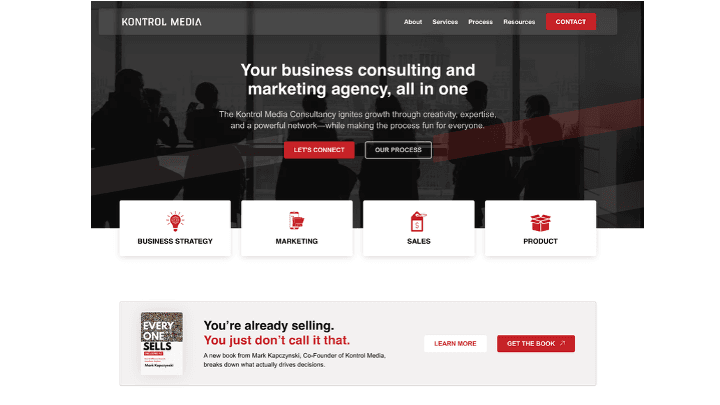
Our service lines map directly to what you’ve just read: retail media network setup for retailers deciding whether to open inventory to non-endemic categories, advertiser acquisition and partnership development for brands entering the space, and measurement design so every pilot has a real holdout, not a guess dressed up as an insight. Clients typically seek validated incremental revenue, not just vanity impressions, and the outcome is built toward from the first strategy call.
If you’re weighing whether to pilot non-endemic placements on an existing network or build your own from scratch, talk to Kontrol Media about which path fits your current data maturity and budget.
Sources
- What you need to know about non-endemic retail media advertising
- Non-Endemic Retail Media Guide 2026 | Eva