
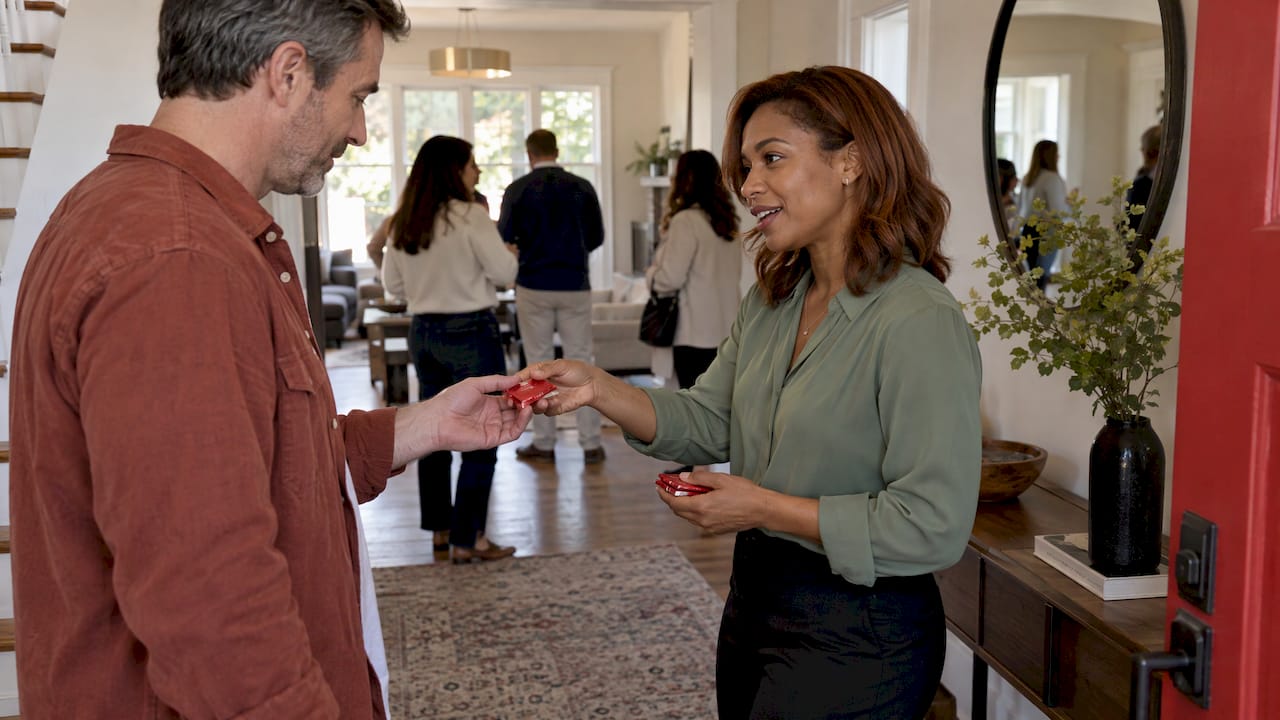

Brand sampling through realtors means getting your product into the hands of home buyers and homeowners through the agents who guide them, at moments when habits are already changing: the open house, the showing, the closing, the first week in a new home. Done well, it is a partnership with a clear value exchange for the agent, a compliant message for the consumer, and a measurement plan that ties a sample to a purchase. Done carelessly, it is a box of product sitting in a trunk.
We work on the real estate channel every day, and the pattern is consistent: the brands that win treat agents as a distribution channel to be recruited and supported, not a billboard to be rented. This guide walks through the campaign models, how to find agents worth partnering with, how to plan the physical logistics, what the rules say, and how to prove the program worked.
TL;DR
- Realtor sampling works because a move is a rare moment when household routines reset, and an agent is a trusted person present at that moment.
- Four models cover most programs: open house and showing sampling, closing and move-in gifts, agent-delivered email or social, and co-branded events.
- Recruit agents by offering something that helps them win clients, and start with a small cohort before scaling.
- Disclose material connections. FTC endorsement rules and NAR ethics guidance both apply when an agent recommends or hands out your product.
- Build tracking into the sample itself with QR codes, unique URLs and standardized field reporting.
Table of Contents
- How brand sampling through realtors works
- Four campaign models brands can use
- Recruiting agents and building a value exchange
- Planning samples, packaging and logistics
- Disclosure, ethics and the rules that apply
- Measuring reach, engagement and revenue
- Scaling across markets without losing quality
- Running realtor sampling with Kontrol Media
- FAQ
- Sources
How brand sampling through realtors works
The mechanics are simple. A brand supplies product, a message and a reason to engage. A real estate agent, team or brokerage places that product in front of a buyer or homeowner at a point in the transaction. The consumer tries it, scans or clicks to learn more, and the brand tracks what happens next.
Why agents? Because buying or selling a home is one of the few life events that rewrites a household’s spending. New homeowners suddenly need cleaning products, appliances, internet service, insurance, paint, pet supplies, groceries from a different store. The agent is already in the room, has the relationship, and is looking for reasons to stay useful after the keys change hands. If you want a deeper look at who these consumers are and when they are most open to switching, our guide to who the home buyers audience is covers it, and our piece on new homeowner marketing in the first 30 to 90 days covers the timing.
There is useful precedent for sampling where people live rather than where they shop. A New Hope report describes brands placing products in vacation rentals, which gives guests a longer, more natural trial than a store aisle. It notes that brands can supply products for at least 100 properties per trial, and that the format encourages QR code and opt-in use, producing richer data than in-store sampling. Realtor sampling borrows the same logic: a sample in a home setting, tied to a moment, with a trackable response.
Four campaign models brands can use
Not every program looks the same. Here are the four we see most often, along with what each one is best at.
| Model | Where the sample reaches the consumer | Best for | What the agent gets |
|---|---|---|---|
| Open house and showing sampling | Kitchen counter, entryway, welcome basket during tours | Food, beverage, home fragrance, cleaning and personal care | A more memorable event and a reason for visitors to linger |
| Closing and move-in gifts | Closing table or doorstep on move-in day | Household staples, tools, appliances, services with a trial offer | A client gift that carries their name without the cost |
| Agent-delivered digital sampling | Email, text or social post with a sample offer or coupon | Categories where shipping or redemption is easy | Content that helps them stay in touch with clients |
| Co-branded events | Client appreciation events, community classes, neighborhood gatherings | Wellness, lifestyle, local services, experiential brands | A ready-made event and shared promotion |
In practice, strong programs combine two of these. An open house sample earns the first impression, and a follow-up message to the same household after closing turns trial into a second purchase.
One real-world example from the luxury end shows how far the idea can stretch. Inman reported on a listing where agents supported a collaboration that gave small samples of branded fragrance products to potential buyers who visited the home. Most programs are far more modest, but the principle is the same: the property becomes the sampling environment.
Agents also run community partnerships themselves. One Temecula team publishes local business partnership opportunities that include discounts for homebuyers, newsletters to engaged buyers and homeowners, social spotlights, co-branded events and client appreciation gifts with partner discounts. That is a useful picture of what agents already expect from a brand partner, and what they are willing to offer in return.
Recruiting agents and building a value exchange
The hard part is rarely the product. It is getting the right agents to care. An agent’s time is their inventory, so your program has to make them money, save them money or make them look good to clients.
Start with fit, not volume. Channel guidance from Ansira suggests screening partners for market access, expertise, capabilities, values and conflicts with existing partnerships. For realtor sampling, translate that into a short checklist:
- Does the agent or team work the neighborhoods and price points where your customer lives?
- Do they already host open houses or client events at a steady pace?
- Are they active with email or social content you could support?
- Do they have a competing arrangement with a brand in your category?
Then go where agents are. A builder-focused piece from 2-10 suggests approaches that translate well: holding open houses, attending local office sales meetings and meeting agents with sales teams. Its adviser, Steve Hoffacker, recommends asking the broker or office manager to point you to a motivated newer agent who is an aggressive marketer, then telling that agent you can help them make money. That framing matters. Lead with what the agent earns, not what your brand needs.
A workable value exchange for agents usually includes some mix of the following:
- Free product and materials, so participating costs them nothing.
- Co-branded content they can post or send, so they look generous and current.
- A reason to contact past and present clients, which keeps them top of mind.
- Access to exclusive offers they can pass along to buyers and sellers.
- Where appropriate and permitted, a share of revenue or a performance reward.
If you want to see how we structure the front end of this, our walkthrough of channel partner recruitment from fit to first revenue in 45 days lays out the sequence, and our revenue playbook for real estate agent partnerships covers the commercial structure.
Planning samples, packaging and logistics
A sample has one job: make the right person try the product in the right moment. Everything else is detail, but the details decide whether agents keep using the kit.
Choose the sample for the setting. An open house favors single-serve, no-prep items that a stranger will pick up in thirty seconds. A closing gift favors something useful on move-in day: a starter kit, a full-size item, a trial offer for a service. A digital sample favors anything redeemable with a code.
Package for the agent as well as the consumer. Agents will not assemble anything. Give them ready-to-place units, a short card that explains the product in a sentence, and a QR code that leads to a landing page built for that program. Include a one-page guide so the agent knows what to say and what not to say.
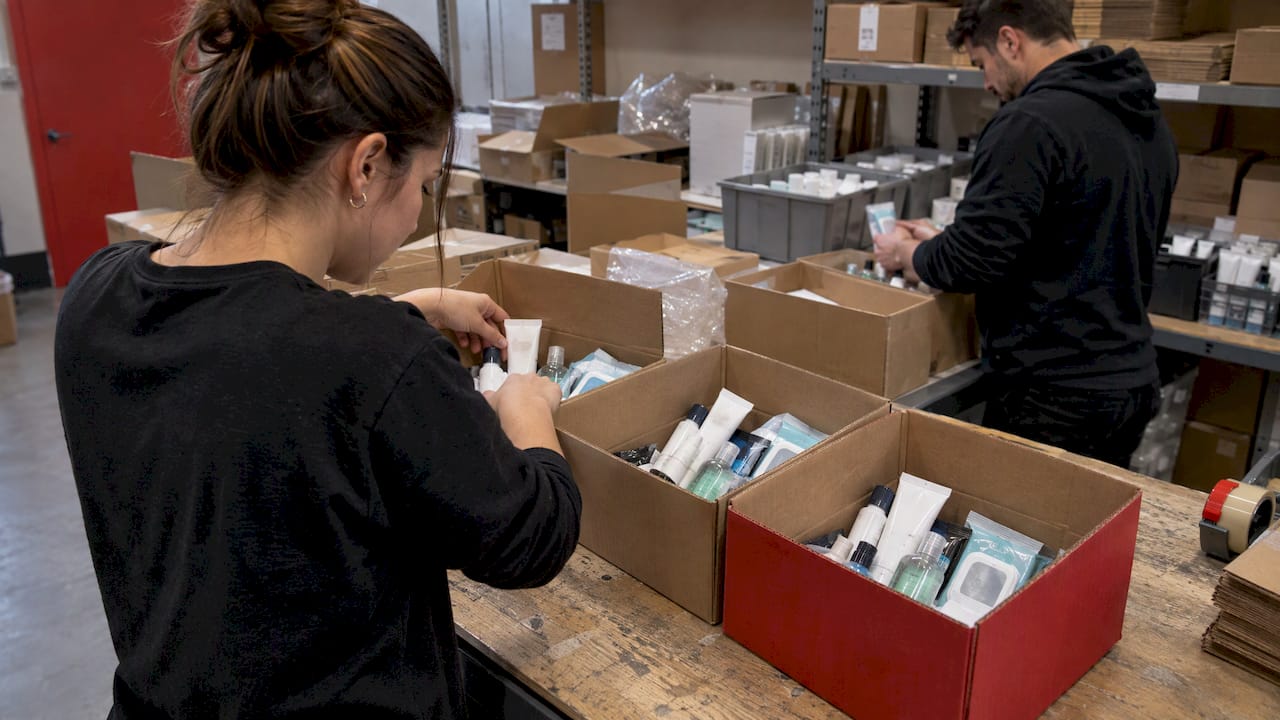
Plan fulfillment before you recruit. If you cannot ship to hundreds of individual agents, consider regional hubs or brokerage offices as drop points. The New Hope report notes that when direct shipping is not feasible, brands can ship pallets to a sampling fulfillment warehouse for break-down and repack into kits. The same approach works for realtor programs: bulk in, kits out.
Time the drops to the real estate calendar. Spring and early summer typically bring more listings and showings, while closings are steady year-round. Match the product to the season. Cleaning and organization products land well in spring, and cold-weather comfort items earn attention in fall. Within a transaction, the three most useful windows are the open house, the closing and the first two weeks after move-in.
Start small and refill on demand. A pilot with a small group of agents tells you which kit components people actually use. We recommend proving the model before you scale, and our approach to proving a channel partner strategy in 90 days with four KPIs and a small cohort is built around that idea.
Disclosure, ethics and the rules that apply
Sampling through a trusted professional is powerful precisely because the recommendation carries weight. That is also why the rules matter. We are marketers, not lawyers, so run your final program past counsel, but these are the main frameworks to know in the United States.
FTC endorsement rules
The FTC’s Endorsement Guides, codified at 16 CFR Part 255, say endorsements must reflect the honest opinions, findings, beliefs or experience of the endorser and cannot convey a misleading representation. The same rule makes advertisers liable for misleading or unsubstantiated statements made through endorsements and for failing to disclose unexpected material connections. The FTC’s own Q&A adds that if a connection would not be expected by a significant minority of consumers and could affect how they weigh the endorsement, it should be disclosed clearly and conspicuously, and that this is usually true when an endorser has been paid or given something of value.
In practice: if an agent posts about your product after receiving free product, a fee or a reward, the post should say so plainly. Give agents approved language, and tell them not to claim they used a product if they did not. Do not hand agents performance claims you cannot substantiate.
NAR ethics guidance
Agents who are REALTORS® have their own obligations. NAR’s Article 6 guidance states that REALTORS® must disclose to clients any financial benefits or fees they or their firm may receive as a direct result of recommending real estate products or services, other than referral fees. The same guidance says they shall not accept a commission, rebate or profit on expenditures made for a client without the client’s knowledge and consent. McKissock’s risk management summary gives examples that include homeowner’s insurance, warranty programs, mortgage financing and title insurance. Those categories are where compensation structures need the most care.
The practical takeaway: a branded sample or a general-interest product gift is a different conversation from compensated recommendations of transaction-related services. Design the program so agents can always disclose what they receive. A mortgage professional who runs listing promotions, for example, will tell you the same thing about promoting a listing with clear disclosure: transparency with the client is part of the product, not an add-on.
Two more habits keep programs clean. First, put the disclosure rules in the agent’s kit and in the agreement. Second, respect consumer privacy: if a QR code or form captures contact details, say what you will do with them and let people opt out.
Measuring reach, engagement and revenue
The biggest advantage of sampling in a home setting is that you can design for tracking from the first unit. The same New Hope report notes that guests can use QR codes, URLs and opt-in tools to give feedback, which lets brands track post-trip purchases and product use, whereas store sampling reveals far less about who tried what and what they thought.
Build a measurement stack with four layers:
- Distribution. Samples shipped, samples placed, agents active. Check in with new agents in the first weeks to see who has actually placed product.
- Engagement. QR scans, landing page visits, coupon claims, email sign-ups, each tied to an agent or event code.
- Conversion. Redemptions, first purchases and repeat purchases, matched to the sample code or opted-in email.
- Business impact. Revenue per sampled household, cost per acquired customer, and lift against a comparison group that did not receive samples.
For events and live sampling, standardization matters as much as the tools. A field-marketing guide from Elev8 recommends collecting the same data points at every stop: engagements and interactions, samples distributed, lead capture volume and quality, staff compliance and consumer sentiment, tracked in a standard format so you can compare performance and spot outliers. Apply the same discipline to agent-hosted events: a simple post-event form that each agent completes in two minutes beats a perfect dashboard nobody fills in.
Finally, be honest about attribution. Samples seldom drive a purchase on the same day. Use a holdout group, a defined lookback window and a consistent revenue definition. Our guide to measuring the ROI of marketing and advertising campaigns goes through the methods in more detail.
Scaling across markets without losing quality
A program that works in one metro can fall apart in five if every agent hears a different story. Consistency is a process problem.
The Elev8 guide recommends giving every staff member the same core briefing before a multi-city tour begins: brand background, key messaging and approved talking points, prohibited statements, appearance standards, interaction flow, what to do if something goes wrong, and contact details. It treats that document as the brand standard in written form that gets updated between stops. Agents are not staff, but the same logic holds: a one-page agent playbook, the same kit contents, the same disclosure language and the same reporting form in every market.
A few scaling rules we follow:
- Expand by cohort, not by leap. Add one market or one brokerage at a time, and only after the previous cohort hits its target metrics.
- Keep a named point of contact for agents. Questions about refills or disclosure should get answers in a day.
- Retire what does not work. If agents in one market never use a component, remove it.
- Recognize your best agents. Top performers become your recruiting engine for the next office.
Our perspective
We have spent years on both sides of this channel, working with brands that want to reach home buyers and homeowners and with the agents who hold those relationships. The mistake we see most is treating realtor sampling as a one-time giveaway. A sample handed out at an open house with no follow-up is a nice gesture and a lost opportunity.
The programs that pay back are built as partnerships. The agent gets something that makes them look generous and stay in touch. The consumer gets something useful at a moment when they are open to new habits. The brand gets a measured path from trial to revenue. When all three are served, the agent keeps showing up, and that is the spine of the program.
We also believe the channel is bigger than sampling. The same agents can send your offer to their clients, share it with their social following, and feature it in ad programs. Sampling is often the first handshake. Layering email, influencer content and advertising on top of it is where the revenue compounds.
Our advice is to start narrow, measure honestly, and invest in the agents who deliver. Growth in this channel is earned one relationship at a time, and it is far more fun than another round of impressions.
Mark Kapczynski
Running realtor sampling with Kontrol Media
If you want to move faster than a DIY pilot, we build and operate programs that put brands in front of home buyers and homeowners through real estate agents. Our real estate offering includes media partnerships, in-market homebuyer emails, an agent email program, an agent ad program and an agent influencer network. You can see the full set on our real estate channel page, and the agent influencer program shows how agent-created content can carry a sample offer.
We handle strategy and execution together, from recruiting agents through reporting, so your team is not stuck managing dozens of agent relationships. If you are a CMO, head of growth or agency lead weighing this channel, talk to us about a program. For more on the advertising side, read our guide to advertising to home buyers through real estate agents.
FAQ
Is it legal to give agents free product to share with clients?
Generally yes, but disclosure rules apply. The FTC expects material connections between an advertiser and an endorser to be disclosed when consumers would not expect them, and NAR’s ethics guidance requires REALTORS® to disclose certain financial benefits to clients. Have your counsel review the agreement and the language agents will use.
What kinds of products work best for realtor sampling?
Products people use right away in a home do well: cleaning, kitchen, fragrance, food and beverage, personal care and household starter items. Services with a trial offer also work when they are delivered digitally through an agent’s email or social channels. Choose products that fit a short interaction and have a clear next step.
How many agents do I need to start?
Start with a small cohort that you can support closely, and expand once you have data on usage and redemption. A pilot lets you refine the kit, the message and the tracking before you commit budget across markets.
How do I know if sampling through agents worked?
Give every sample a trackable path: a QR code or unique URL tied to the agent, an opt-in for follow-up and a consistent post-event report. Then compare purchase and repeat behavior against a comparison group that did not receive samples.
Sources
- How Builders Partner With Real Estate Agents (2-10 Blog)
- Community Partnerships, The Tuer Team Temecula Realtors
- Managing Channel Partner Relationships (Ansira)
- Why brands are turning to vacation rentals for product sampling (New Hope)
- Inman: a Bel Air mansion with its own fragrance
- 16 CFR Part 255, Guides Concerning Use of Endorsements and Testimonials
- FTC’s Endorsement Guides: What People Are Asking
- NAR Code of Ethics, Article 6 case interpretations
- Real Estate Risk Management (McKissock Learning)
- Staffing Tips for Multi-City Brands (Elev8)