
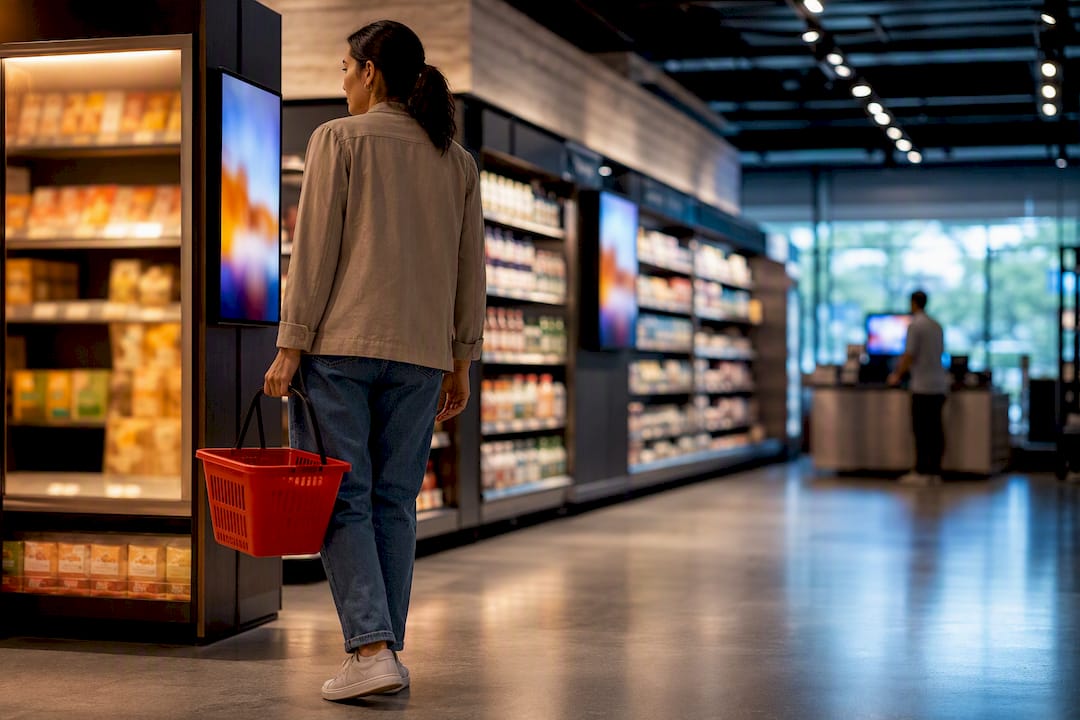

In-store retail media is advertising sold and measured inside the physical store, on screens, audio, carts, and shelf displays that reach shoppers at the exact moment they are deciding what to buy. Its value comes from that point-of-decision proximity, but the entire category lives or dies on one thing: whether the impressions are measured against standards like IAB Europe’s In-Store Retail Media Standards, with zone-level dwell and viewability data disclosed. Without that, you’re buying a promise, not a media plan.
TL;DR:
- In-store retail media’s success depends heavily on measurement standards like dwell time and viewability metrics, not just the impressions reported.
- Only screens, audio, and smart carts currently support advanced data-driven targeting, while shelf displays and sampling remain harder to quantify at scale.
- Scaling programs effectively requires starting with small pilots focused on a single objective, reliable measurement, and building from verified results.
- Genuine success relies on transparent measurement practices, disclosing zone-level data and avoiding blended impression counts, to build trust and justify larger budgets.
- Organizational issues, such as siloed decision-making and infrastructure costs, remain the main barriers to broader in-store media adoption beyond technological capabilities.
Table of Contents
- What Counts as In-Store Retail Media Inventory?
- How Big Is the Commercial Opportunity in Grocery?
- What Measurement Standards Should You Demand From Vendors?
- How Do You Launch and Scale an In-Store Retail Media Program?
- What Are the Biggest Barriers to Scaling In-Store Media?
- Where Kontrol Media Fits in Building an In-Store Program
- How Should Retailers Handle Privacy and Data Security In-Store?
- What Makes In-Store Creative Actually Work?
- What Do Successful In-Store Retail Media Campaigns Look Like?
- How Will AI and IoT Change In-Store Retail Media?
- Why Measurement, Not Screens, Determines Success
- Ready to Build or Scale Your In-Store Retail Media Program?
- Sources
- FAQ
What Counts as In-Store Retail Media Inventory?
In-store retail media covers any paid, retailer-owned touchpoint inside the physical store, which sets it apart from online retail media, where inventory lives on the retailer’s website or app instead of the sales floor. The formats differ in cost, targeting sophistication, and what they’re actually good for.
- Digital screens at endcaps, in aisles, and at checkout support dayparted, sometimes programmatic creative and work best for awareness and last-minute product consideration.
- In-store audio reaches shoppers throughout the store and pairs well with promotional announcements or seasonal pushes.
- Smart carts and handheld scanners deliver personalized offers tied to loyalty data, making them strong for trial and basket-building.
- Shelf displays sit closest to the purchase decision and are effective for immediate SKU-level lift.
- Sampling and activations build trial and brand memory but are harder to measure at scale.
Only screens, audio, and smart carts currently support real programmatic or data-driven targeting. Shelf displays and sampling remain closer to traditional in-store promotions, bought manually and measured after the fact.
How Big Is the Commercial Opportunity in Grocery?
Grocery is the near-term prize. A large majority of food and beverage sales still happen in physical stores, and a large share of grocers plan to deploy in-store retail media within the next 18 months, according to EMARKETER’s 2024 in-store retail media analysis. That’s not a niche opportunity, it’s the category most exposed to in-store’s core advantage: catching a shopper’s attention while the product is inches from their hand.
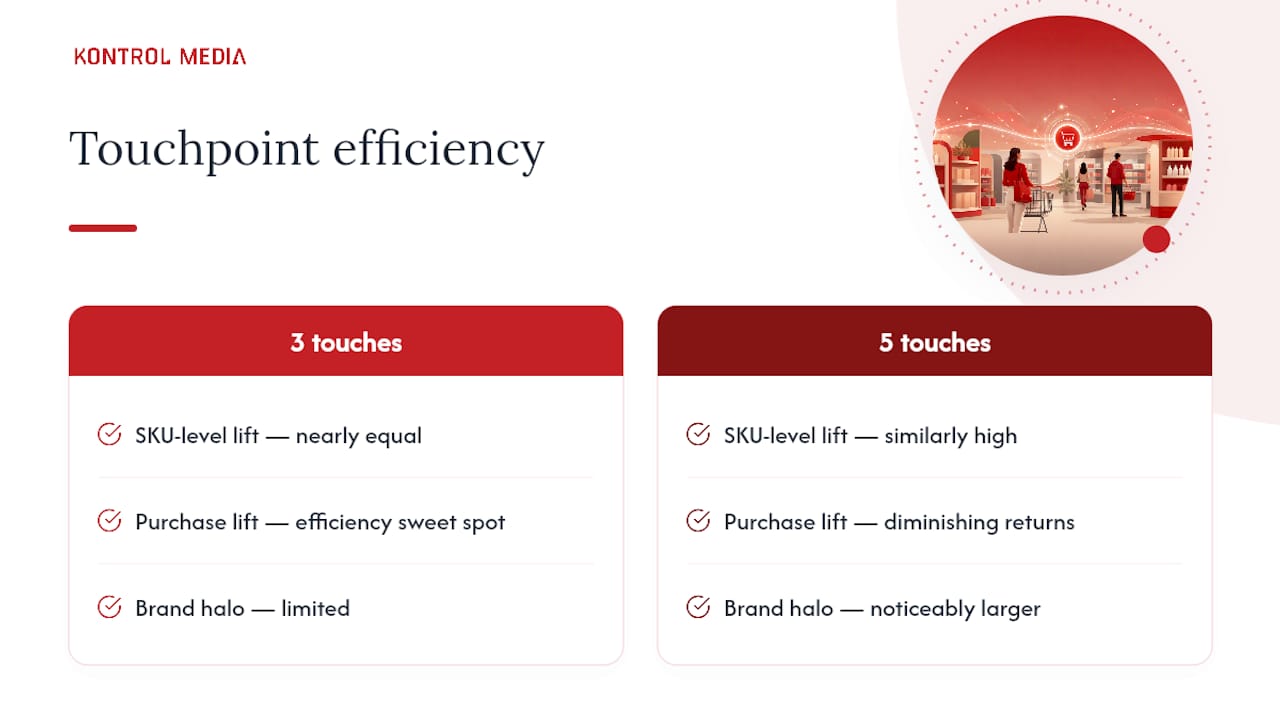
The efficiency number worth remembering: three touchpoints in a shopper’s path typically deliver SKU-level lift close to what five touchpoints would deliver, according to EMARKETER research. Five touchpoints add broader brand halo effect, but if the goal is immediate purchase lift, three is the efficiency sweet spot.
The catch is scale. In-store made up roughly 3.3% of non-Amazon retail media spend in 2025, even as overall retail media spend keeps climbing. That gap between demand and execution is the whole story of this channel right now.
What Measurement Standards Should You Demand From Vendors?
This is where most buyers get burned, and it’s why measurement has to be the organizing principle for any in-store retail media strategy, not an afterthought bolted on after the campaign runs.
IAB Europe’s standards define a strict impression hierarchy, and you should know exactly where a number you’re being handed sits on it:
- Ad play is simply confirmation the creative ran, nothing about who saw it.
- Gross impression estimates the number of people who passed the screen’s zone, whether or not they looked.
- Opportunity to see (OTS) narrows that to people within a defined distance and angle of the display.
- Likelihood to see (LTS) applies a modeled probability that a person in that zone actually looked at the creative.
The standard also requires disclosure of dwell time and impression level across five defined store zones, along with a distance-to-screen viewability matrix, per IAB Europe’s specification. If a vendor’s reporting collapses all of that into one blended “impressions” number, you have no way to compare it against a competing offer, and no way to know what you actually paid for.
The IAB’s framework for maturing in-store measurement recommends retailers adopt a phased baseline now rather than waiting for a perfect standard. On sales lift specifically, expect a pre-exposure and post-exposure lookback window often around 30 days as the default, though campaign objectives should flex that window shorter or longer.
Pro Tip: Sensor-verified “views,” where a sensor confirms presence, facing, and dwell while the creative is actually playing, are emerging as a stronger evidence tier than modeled LTS, but they’re not yet standardized across vendors. Ask any network directly what methodology sits behind their view count, visibility scoring approaches vary widely, and a vendor unwilling to explain their math is telling you something.
How Do You Launch and Scale an In-Store Retail Media Program?
Retailers and brands that try to launch in-store media at full scale on day one almost always regret it. The sequence that works looks more like a controlled test than a big-bang rollout.
- Pilot small. Pick one format, one store cluster, and one advertiser category where shelf and POS data are already clean.
- Confirm your pre-flight checklist. You need visibility into shelf-level stock data, working integration between POS and loyalty systems, an ad server or creative-scheduling tool that can rotate content by daypart, and one internal owner accountable for the whole program, not three departments loosely coordinating.
- Map placements to a single objective per campaign. The IAB’s measurement framework recommends designing each buy around one goal, new-product discovery versus immediate purchase uplift, rather than a generic “awareness” buy layered across every touchpoint.
- Layer touchpoints deliberately once the single-objective campaigns prove out, moving toward the three-to-five touchpoint range depending on whether you’re optimizing for SKU lift or brand halo.
- Build closed-loop reporting that ties impressions (labeled by OTS or LTS, never blended) to actual sales lift data before you approach a second wave of advertisers.
Retailers that prove out onsite results before chasing a broader footprint tend to have a much easier time scaling into offsite retail media later, because the measurement discipline transfers.
What Are the Biggest Barriers to Scaling In-Store Media?
The barriers are structural, not creative. Screen and sensor infrastructure costs real capital, and most retailers weigh a capex build against a managed-service model that trades margin for speed.
- Internal silos between merchandising, IT, and marketing slow decisions, since retail media touches all three but usually reports to none of them cleanly.
- Fragmentation across store formats and banners limits scale, so prioritize your highest-traffic, cleanest-data locations first instead of a nationwide rollout.
- Dirty shelf and stock data undermines everything downstream. Retailers that fix shelf-level visibility before monetizing the space report better advertiser outcomes and higher lifetime value.
- No single commercial owner means ad sales stall waiting for consensus that never arrives.
Where Kontrol Media Fits in Building an In-Store Program
Retail media network setup is a build versus buy decision, and An experienced consultancy can help retailers and brands make that call with a clear operating plan instead of guesswork. Sequencing pilots, getting measurement infrastructure right before scale, and supporting advertiser acquisition once the data is clean enough to sell against confidently are key steps.
Key KPIs to insist on contractually include labeled impression type (never blended), zone-level dwell breakdowns, and creative-by-daypart granularity. If a vendor won’t put those in writing, that’s a sign about whether they can support real budget.
How Should Retailers Handle Privacy and Data Security In-Store?
In-store retail media collects a different kind of data than online advertising, and that difference matters more than most rollout plans account for. Smart carts and loyalty-linked screens can tie a shopper’s identity to their in-aisle behavior, while sensor-based dwell tracking, even when anonymized, still captures movement patterns tied to a specific time and location.
The safest architecture treats sensor and camera-based audience measurement as aggregate and anonymized by default, never storing individual facial or gait data beyond the count needed for OTS and LTS calculations. Retailers that link media to loyalty programs carry a heavier obligation, since that data is identifiable and typically falls under the same consumer privacy frameworks that govern loyalty data generally, not a separate “advertising” carve-out.
Practically, this means three things for anyone building a program. First, get legal and privacy teams into the room before the pilot, not after a vendor contract is signed, because retrofitting consent language into an existing loyalty app is far harder than designing it in from the start. Second, demand that vendors specify exactly what raw data they retain versus what they discard after generating an aggregate metric. Third, treat any smart cart or personalized-offer feature as requiring explicit shopper opt-in, since silent personalization based on loyalty ID is the fastest way to erode the trust that makes loyalty programs valuable in the first place.
None of this is unique to in-store media, but the physical, camera-adjacent nature of the channel makes shoppers more sensitive to it than they are to a website cookie banner. Programs that get ahead of this with clear signage and simple opt-out mechanisms tend to avoid the backlash that hits retailers who treat privacy as a legal afterthought.
What Makes In-Store Creative Actually Work?
Creative built for a website banner fails in a store, because the environment, attention span, and viewing distance are completely different. Shoppers glance at an endcap screen for roughly a second or two while pushing a cart, not scrolling a feed with time to read a paragraph of copy.
That constraint should drive every creative decision. Keep messaging to a single dominant visual and five words or fewer of primary copy, legible from the distance the IAB Europe viewability matrix actually measures, not from three feet away on a designer’s monitor. Motion helps capture peripheral attention near a checkout lane, but excessive animation on shelf-adjacent screens can feel chaotic in a space already full of visual noise.
Daypart matters more in-store than almost any digital channel. A breakfast-category screen running lunch-hour creative at 7 a.m. wastes the exact contextual advantage that makes in-store retail media valuable over generic in-store promotions. Match creative rotation to actual shopper flow data, not a fixed hourly schedule set once and forgotten.
Audio creative needs its own discipline: a jingle or voice prompt competing with store PA announcements and other shoppers’ conversations needs to be short, brand-distinct, and repeatable without becoming irritating on the fifth listen of the day. And every format benefits from testing against the zone it actually occupies. Creative built for a checkout screen, where a shopper is captive for thirty seconds, should look nothing like creative built for an aisle-facing display that gets a two-second glance in passing.
What Do Successful In-Store Retail Media Campaigns Look Like?
Grocery remains the clearest proving ground, since food and beverage purchases are still overwhelmingly made in physical stores rather than online. A campaign built around new-product discovery for a packaged-food brand, run across endcap screens and shelf displays in a limited store cluster, gives a clean read on trial lift because the purchase decision happens within feet of the ad exposure.
The pattern that separates a successful pilot from a wasted one is objective discipline. Programs that map a single placement type to a single goal, say, shelf displays tied strictly to immediate SKU lift rather than brand awareness, produce measurable results because the creative, placement, and metric all point the same direction. Campaigns that try to accomplish awareness, trial, and loyalty simultaneously across the same touchpoint tend to produce murky results that satisfy no one’s dashboard.
The three-touchpoint efficiency finding matters here in practice, not just theory. A brand running creative across three well-chosen zones, say, an aisle screen, a shelf display, and a checkout screen, can expect SKU lift close to what five touchpoints would deliver, according to EMARKETER’s analysis. That’s a real budget efficiency lesson: chasing more placements past that third touchpoint mostly buys brand halo, not incremental sales, which is a fine goal but a different one.
The common thread across programs that hold up under measurement scrutiny is simple: they picked clean data, a single objective, and a defined lookback window before launch, rather than measuring backward after the fact and hoping the story fit.
How Will AI and IoT Change In-Store Retail Media?
The next phase of in-store retail media is less about new screen formats and more about what feeds the decisions behind them. Sensor-verified viewership, tracking actual presence, facing, and dwell while creative plays, is emerging as a stronger measurement signal than the modeled likelihood-to-see estimates that dominate today’s reporting. It isn’t standardized industry-wide yet, but it’s the direction measurement is heading.
IoT integration is already showing up in smart carts and shelf sensors that detect stockouts in real time, which matters for advertising because a beautifully targeted ad promoting a product that’s out of stock on the shelf wastes the entire impression. Retailers that connect inventory sensors directly to their ad-serving logic can pause or redirect creative automatically when a SKU runs low, something manual campaign management can’t do fast enough to matter.
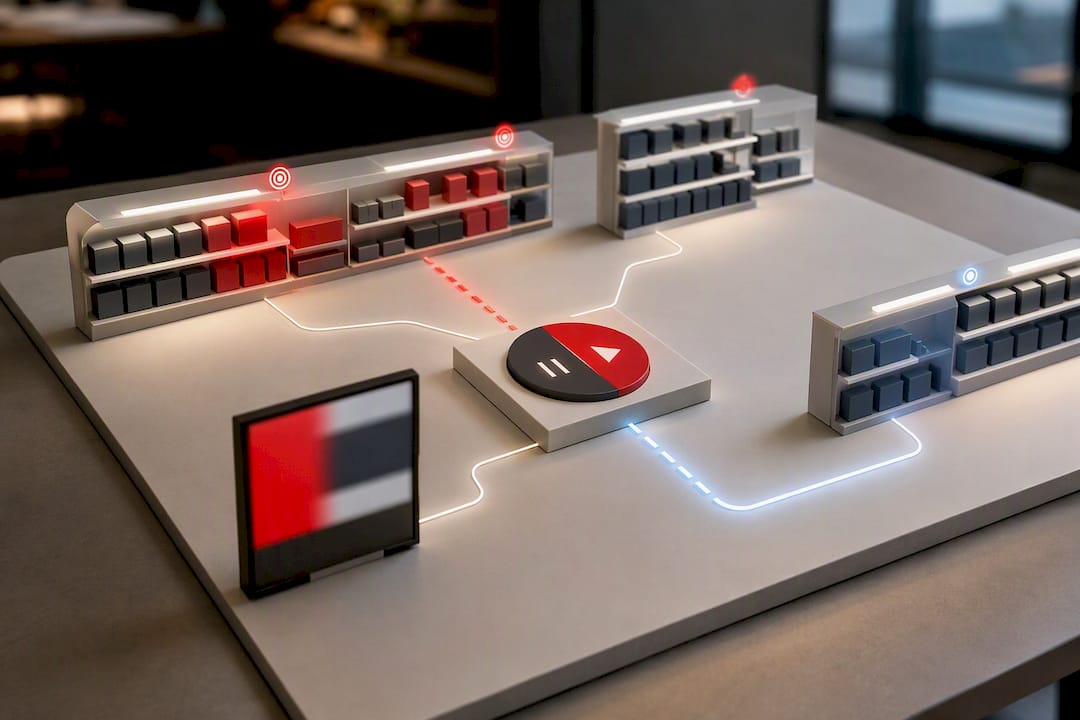
AI’s near-term role is mostly in optimization rather than novelty: dynamic dayparting based on actual foot-traffic patterns instead of fixed schedules, automated creative rotation tied to loyalty segment data on smart carts, and predictive models that flag which store zones will deliver the strongest OTS-to-LTS conversion before a campaign even launches. None of this replaces the measurement standards; it makes hitting them cheaper and faster.
The honest outlook is incremental, not revolutionary. In-store retail media’s growth will track how fast retailers fix the operational basics, clean shelf data, integrated POS, a single accountable owner, more than how advanced the screen technology gets. The technology is mostly ready. The organizational readiness is what’s lagging.
Why Measurement, Not Screens, Determines Success
The conventional pitch on in-store retail media focuses on the hardware: better screens, smarter carts, flashier sampling activations. That’s the wrong starting point, and it’s why so many pilots stall out after an initial burst of enthusiasm.
What the standards work from IAB and IAB Europe actually tells you is that this channel scales on trust, specifically, whether a retailer can hand a brand a number and have that brand’s measurement team believe it. A gross impression count dressed up to look like an OTS figure isn’t a rounding error, it’s the reason budgets stay small and pilots don’t graduate to renewals.
My take, having watched adjacent media categories go through this exact maturation curve: retailers who treat measurement disclosure as a competitive advantage, not a compliance burden, will out-earn ones chasing the next screen format. Ask what impression tier you’re buying before you ask about creative specs. Demand zone and dwell data in the contract, not as an optional add-on report. The retailers doing this now are building the trust that lets them charge premium rates later, while everyone else keeps discounting to compensate for reporting nobody fully believes.
— Mark Kapczynski
Ready to Build or Scale Your In-Store Retail Media Program?
If you’ve made it this far, you already know the hard part of in-store retail media isn’t picking a screen vendor, it’s the operating discipline: clean shelf data, a real measurement stack, and someone internally accountable for the whole program. Kontrol Media builds that operating layer directly, helping retailers decide whether to build or buy their retail media network setup, then running the day-to-day operations playbook that turns a pilot into a renewable advertiser relationship.
Consultants often work with retailers at the pilot-to-scale inflection point, designing the first test cluster, setting up OTS/LTS-compliant reporting, and ramping advertiser acquisition once the data holds up to scrutiny. If your team is weighing whether to build in-house or bring in operational support to hit measurement standards without a two-year runway, reach out to Kontrol Media to talk through what your first 90 days should look like.
Sources
- IAB Europe In-Store Retail Media Standards — FAQs
- A Viable Framework for Maturing In-Store Media Measurement — IAB
- In-Store Retail Media 2024 — EMARKETER
FAQ
What Is Walmart’s Retail Media Network Called?
Walmart’s retail media network is called Walmart Connect, and it operates both onsite digital advertising and an expanding in-store media footprint across its stores.
What Are the Top Retail Media Networks?
The largest retail media networks by scale generally include Amazon Ads, Walmart Connect, and networks run by major grocery and home improvement retailers, though rankings shift as more retailers launch in-store programs alongside their online inventory.
Does Home Depot Have a Retail Media Network?
Yes, Home Depot operates a retail media network that sells advertising across its digital properties and in-store touchpoints, joining the broader wave of retailers building media businesses around their existing traffic.
What Does “In-Store Marketing” Mean?
In-store marketing refers broadly to any promotional activity inside a physical store, from traditional signage and end-cap displays to paid, measurable in-store retail media like digital screens and smart carts. The key difference is that in-store retail media is bought and reported against standardized impression metrics, while traditional in-store marketing typically isn’t measured with the same rigor.
How Long Should a Sales Lift Measurement Window Be?
A 30-day pre-exposure and 30-day post-exposure window is the common baseline recommended in IAB Europe’s measurement guidance, though the window should flex based on whether the campaign is a short promotion or a longer brand push.